The usual advice is to “graduate” from a foamie to a shorter board. That makes the board rack sound like a school syllabus. Your next board should make the next thing you want to learn easier, while still letting you catch enough waves to practice it.
Start with an honest account of your last few sessions. Were you mostly standing up in whitewater? Catching unbroken waves without a push? Angling along the face and beginning to turn? Those are different buying decisions, even if all three surfers have spent the same number of months on a soft top. Surf Simply’s coaching levels use observable skills for exactly this reason.
If you are still working on your pop-up, keep the easy board
If you need help getting into a wave, or your rides often end a second after you stand, a hard board is unlikely to solve that. Keep your foamie, try another size, or take a lesson. A larger, stable soft top gives you more chances to rehearse the basics; Surfing England recommends one for this stage. You can also choose a more responsive soft deck when you are ready for a different feel without giving up the forgiving surface.
There is no shame in owning both. The foamie can stay useful on crowded, mellow days and when a friend wants to learn. Buying a hard board is a change in how it handles and how carefully you must handle it, not proof that you have “finished” the soft board.
If you catch green waves, look at a minimal or funboard
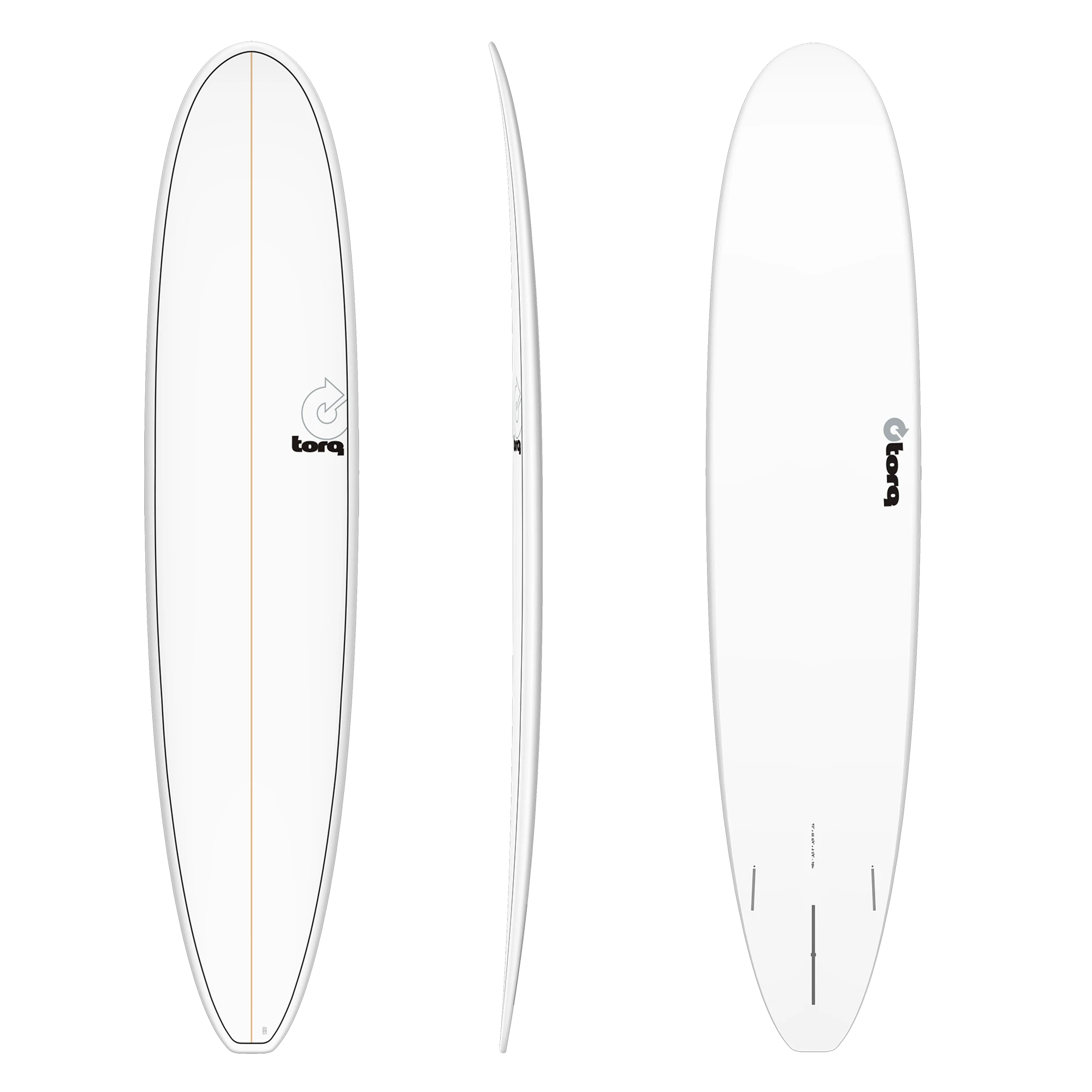
This is the broadest answer for someone who can paddle into small unbroken waves independently and wants to learn to trim and turn. Look for a generous outline, a nose that carries some width, and enough length to preserve wave-catching. Surfing England describes a minimal as the common step after a foamie, generally around 7'0" to 8'6". Its board-selection guide places funboards around 7–8 feet and reserves performance shortboards for experienced surfers in steeper waves.
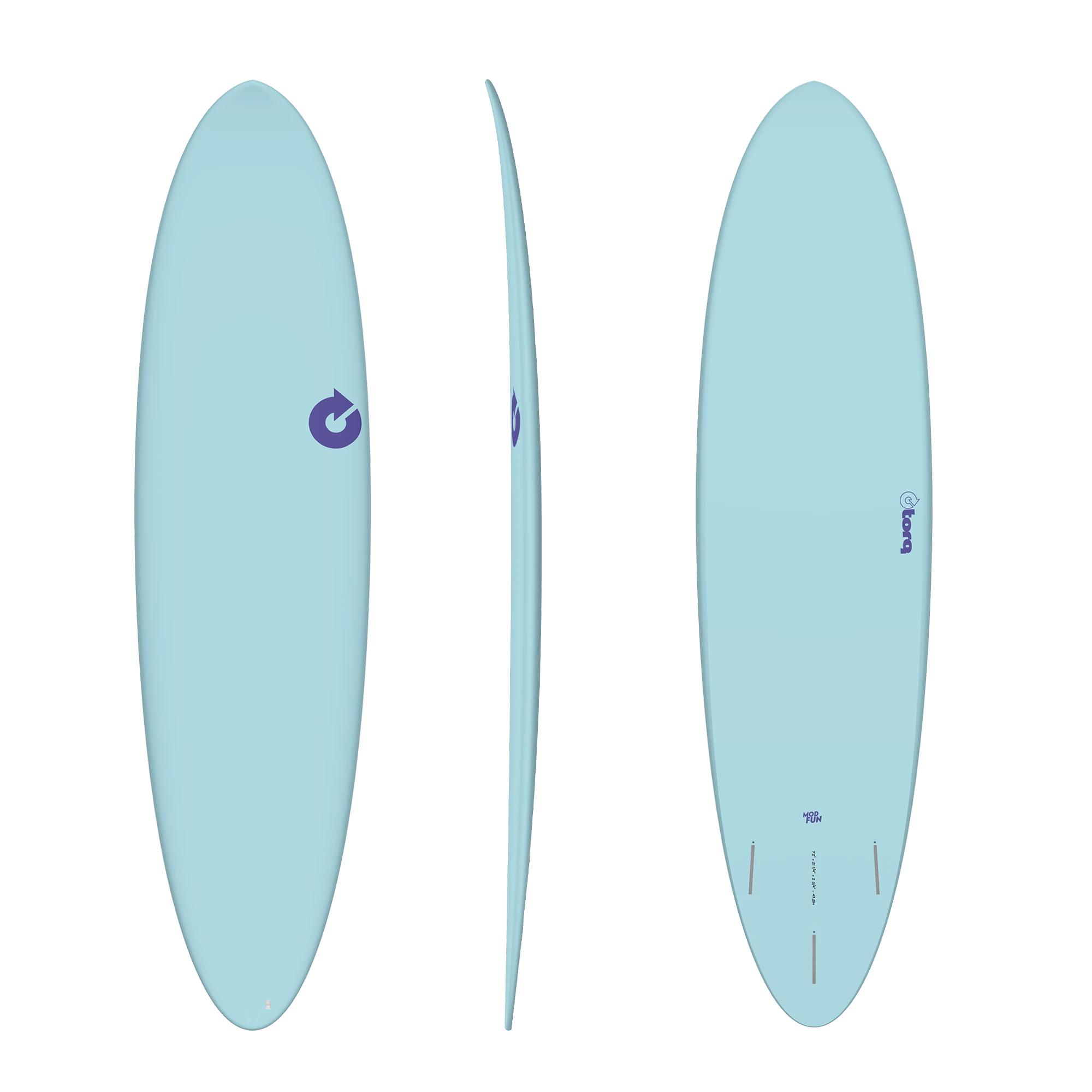
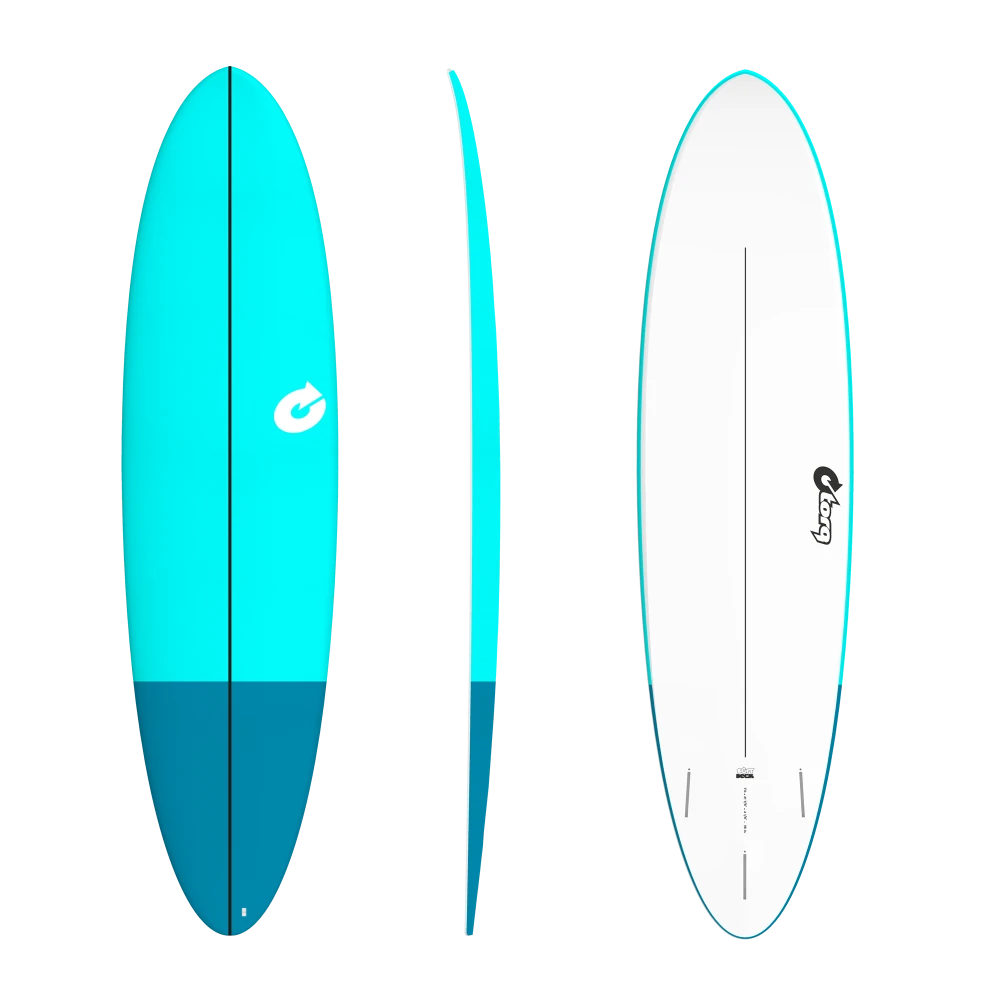
Two useful reference shapes: the Torq Mod Fun has width under the chest, a relatively low-to-medium nose rocker and a pulled-in tail; its listed sizes are 6'8", 7'2" and 7'6". The NSP Funboard Elements pairs a semi-rounded nose and low entry rocker with a more drawn-in rounded pin tail, and lists 6'8", 7'2" and 7'6" sizes. These are examples of the kind of outline to inspect, not a universal prescription or a claim that the two boards ride alike. You can compare the Torq Mod Fun in the Board Hogs catalog, then browse other mid-lengths.
If your local waves are especially soft or you enjoy drawn-out trim more than quick direction changes, do not rule out a longer board. A longboard can remain your everyday board rather than a temporary rung on the way down. Surfing England notes that longboards continue to offer room for more advanced maneuvers as your surfing improves.
If you already trim and turn, you can consider a shorter shape
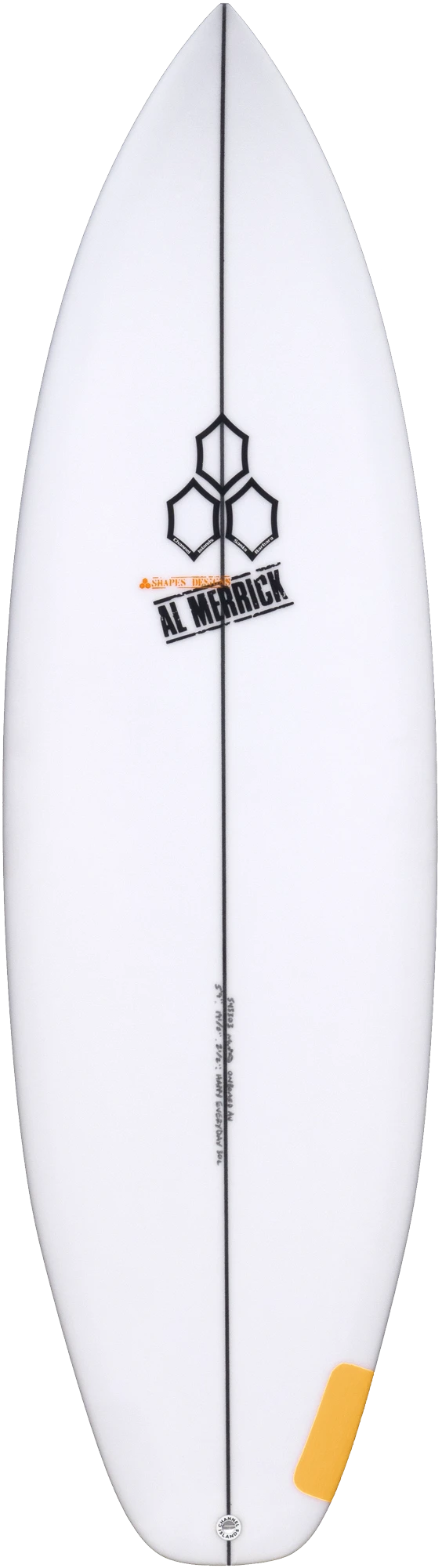
Perhaps the board you borrow now feels cumbersome in tighter waves, and you are already making the drop, setting a line, and turning back toward the pocket. A shorter, fuller mid-length or a forgiving hybrid might make sense. This is when a fish can become interesting. It is still not automatically the right second board: a short, wide board may paddle well for its length, yet it asks you to position more accurately and produce speed after takeoff. Surfing England describes fish as a small-wave shape aimed mainly at intermediate and advanced surfers.
The key question is whether a shorter board will let you practice a maneuver you already attempt, or simply cut your wave count. Surf Simply’s volume discussion makes this point plainly: board size is a tool for learning a maneuver, not a badge of ability. If you are repeatedly missing waves on a demo board, that is useful evidence, not a challenge to overcome with an expensive purchase.
Don't buy by liters alone
Volume matters, especially relative to your weight and paddle fitness, but it cannot describe the whole shape. Two boards with the same liters may put their foam in different places, carry different rocker, and have very different rails. Surf Simply explains why dimensions and volume need to be read together. Rather than copying a stranger's liter target, compare a candidate with the foamie you ride now and ask where its flotation sits. A shorter board with a much narrower nose will feel like a bigger step than its volume figure may suggest.
Your conditions also matter. If you surf only on weekends or usually meet weak waves, preserve enough board to get in early. If you regularly surf clean, steeper waves and catch them consistently, you have more room to trade glide for control. Your local shop or shaper can help translate those conditions into a size, especially if you bring the dimensions of the board that currently works for you. Surfing England recommends that conversation when choosing a first board.
A practical way to make the call
Rent or borrow the closest candidate before buying, ideally in the waves you usually surf. Keep the test simple: can you paddle it comfortably, catch waves without someone pushing, make your usual takeoff, and attempt the turn you are working on? Compare it with your foamie on an ordinary day, not the best waves of the year. If you get half as many useful rides and cannot explain what skill the new board is helping, try a longer or fuller version.
Check the whole purchase too: a hard board may need a suitable bag, wax, leash and compatible fins. Inspect a used board for open dings and repairs. And give other surfers extra room while you learn how the harder rails and fins move through a wipeout.
Choose a funboard or minimal if you are catching green waves and want more response without losing the easy paddle. Choose a longer board if weak waves, limited sessions or flowing trim define your surfing. Wait on the shortboard if your takeoff and wave selection still depend on the extra glide of a foamie. The best next board is the one you can actually practice on.