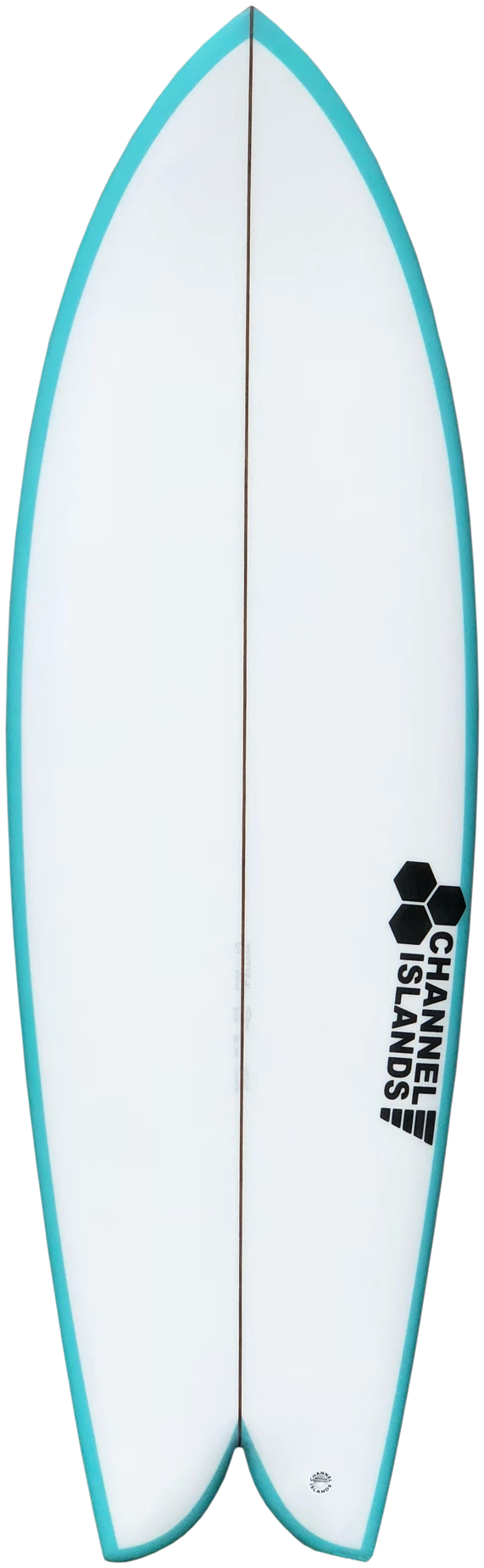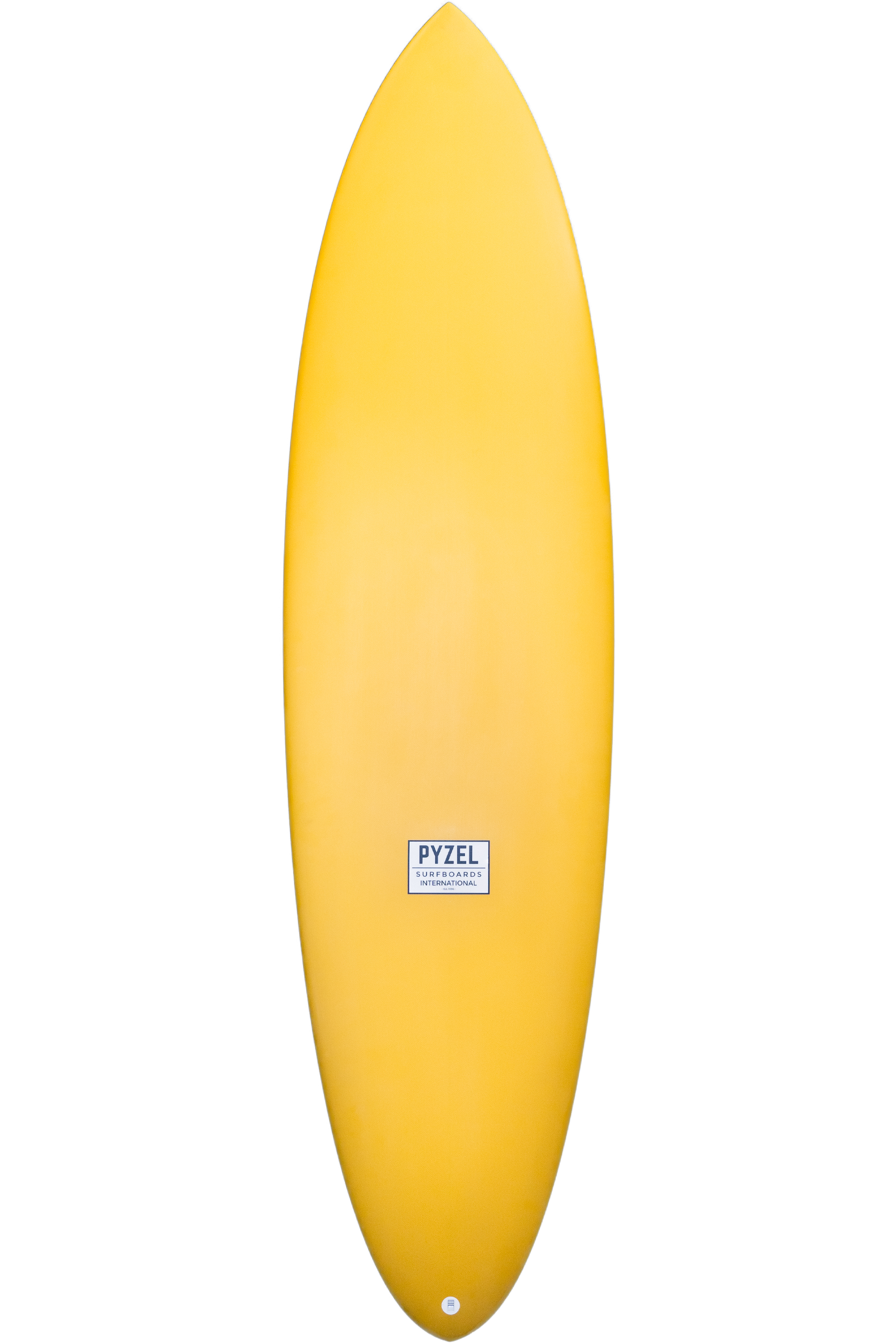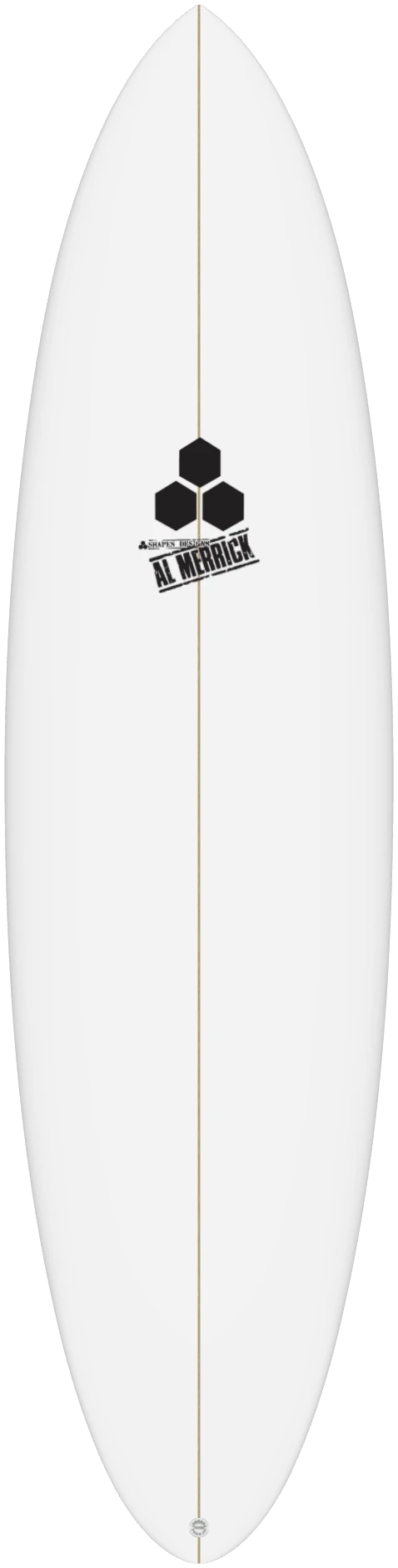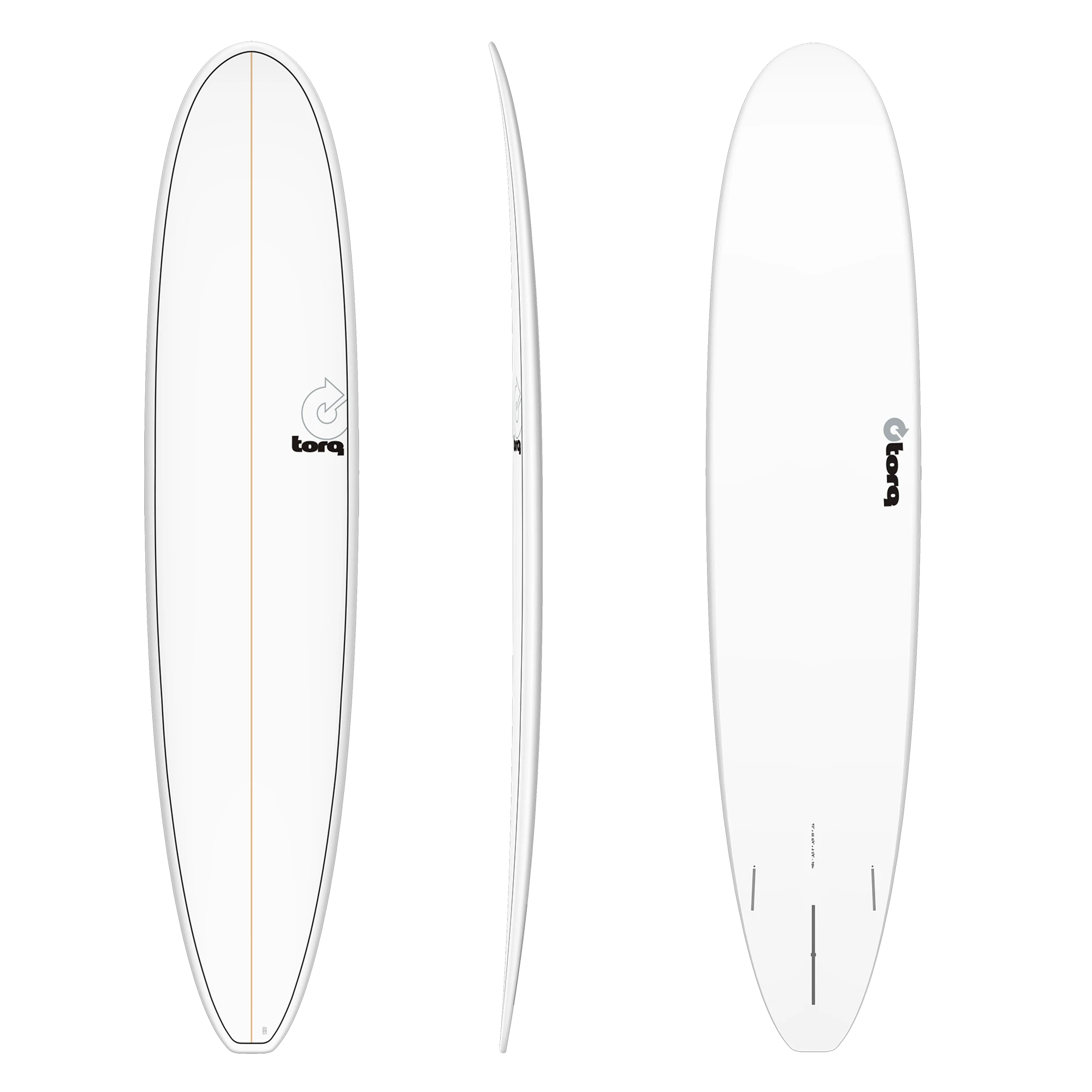
The two boards can look like close relatives from the beach. Both have more rail and more glide than a shortboard. But picture the session you actually want: do you want to get in early, settle into trim and walk toward the nose, or take a line along the face and redirect the board through a turn? That distinction will tell you more than the number on the stringer.
Here's the short version: a longboard gives you more wave-catching margin and space to move your feet; a mid-length gives you a smaller, more manageable board for drawing turns. Both can be wonderful everyday boards. Neither is a guaranteed shortcut around learning to read a wave.
First, what do the names mean?
Surfing England describes longboards as typically nine feet or longer, with plenty of width and float. Its mid-length and minimal guide puts minimals roughly in the 7′0″–8′6″ range, while noting that a modern mid-length can be more performance-oriented than a beginner minimal. The categories blur around eight feet: length gives you a clue, not a complete account of a board's outline, rocker, rails or fins.
That blur matters when shopping. A full-nosed 8′0″ minimal and a narrow 8′0″ egg ask different things of the surfer. So does a traditional log compared with a longboard designed to turn more sharply. Read the actual design description, then look at the board in profile and from above.
Choose by the wave you surf most
If your usual break serves up soft, rolling faces, the longboard's extra length and glide are hard to ignore. It can let you enter the wave earlier, establish a line and make use of sections that might pass under a smaller board. Surfing England's board guide recommends longboards for small waves and beginners because of their stability, paddling power and glide. Those advantages also appeal to experienced surfers who simply like that style.
On a cleaner, more defined shoulder, a mid-length can feel like a better match if your aim is to bank through turns while keeping some of the paddle ease of a longer board. Channel Islands, for example, describes the CI Mid as an egg-inspired shape with low entry rocker and foam set forward for paddle and trim, then a more responsive tail. It particularly points to point surf, while also claiming it handles flatter, smaller sections. That is the maker's design intent, not a promise about every break.
For short, closeout-heavy beach breaks, neither category is automatically the answer. A longboard may be awkward to turn before a quick section shuts down; a drawn-out mid-length might also have more rail than the wave gives you room to use. Try the board where you surf, rather than relying on an idyllic point-break video.
Choose by the surfing you want to practice
Still working on catching unbroken waves, angling your takeoff or standing consistently? Keep the wave count in the calculation. Moving from a forgiving foamie to a slim mid-length because it looks like progress can leave you with fewer chances to practice. A fuller minimal or longboard may be a more useful next board. Surfing England calls minimals a common move after a foamie precisely because they preserve stability and wave-catching.
Already catching waves reliably and trying to improve your turns? A mid-length offers a way to trade some longboard glide for a board you can redirect with less length in front of you. It still rewards getting your back foot into the right place and choosing a section to turn on. If those skills are new, a demo may tell you more than a volume calculator.
If you want to learn cross-stepping, trimming from different places on the deck or noseriding, buy a board that actually gives you room for that project. Surfing England's longboard description makes the point that these skills can occupy a surfer for years. A longboard is not merely a starter board you are supposed to graduate from.
Two real boards show the difference
Channel Islands lists a stock 7′0″ CI Mid at 44.9 liters, with a 2+1 fin setup. Its egg-like outline and design notes aim for trim speed and flowing turns. See Channel Islands' dimensions and design notes.
Firewire lists a 9′0″ Special T at 71.3 liters, also with a 2+1 option. Firewire describes a flatter rocker, a wide nose and a rounded pintail, with traditional longboarding and stability at the tip in mind. See Firewire's Special T specs and description.
That 26.4-liter difference is real, but the two boards are doing different jobs. You could choose the CI Mid because you want the feel of a longer rail through a turn, or the Special T because you want the glide and footwork of a log. Don't pick the CI Mid solely because it is less board to carry, and don't pick the Special T solely because the bigger volume number looks forgiving. The shape, your skill and the wave all count.
There is variation within longboards too. Firewire describes its Gem as a longboard intended to combine trim with more turning options. It even sells sizes below nine feet. The model name and catalog category are less useful than the particular size and setup you're buying.
A practical way to decide
- Choose a longboard if your favorite sessions are on soft, peeling waves; you want to improve trim and footwork; or you still need reliable wave entry to practice the basics. Think twice if your regular break is steep, fast and short, or if carrying and storing nine feet of board means it will rarely leave the house.
- Choose a mid-length if you already catch waves consistently and want to draw more turns without jumping to a shortboard. Think twice if you're expecting it to catch every ripple a full longboard will, or if its narrower outline removes the stability you currently depend on.
Before paying, compare a candidate against a board you know: note its length, width, thickness and what happens when you paddle, catch waves and try to turn. Borrow or demo if you can. Then browse mid-length models and longboard models in the Board Hogs catalog, and take your shortlist to a local shaper or shop. The best answer is the board that fits your ordinary surf and the kind of session you actually look forward to.