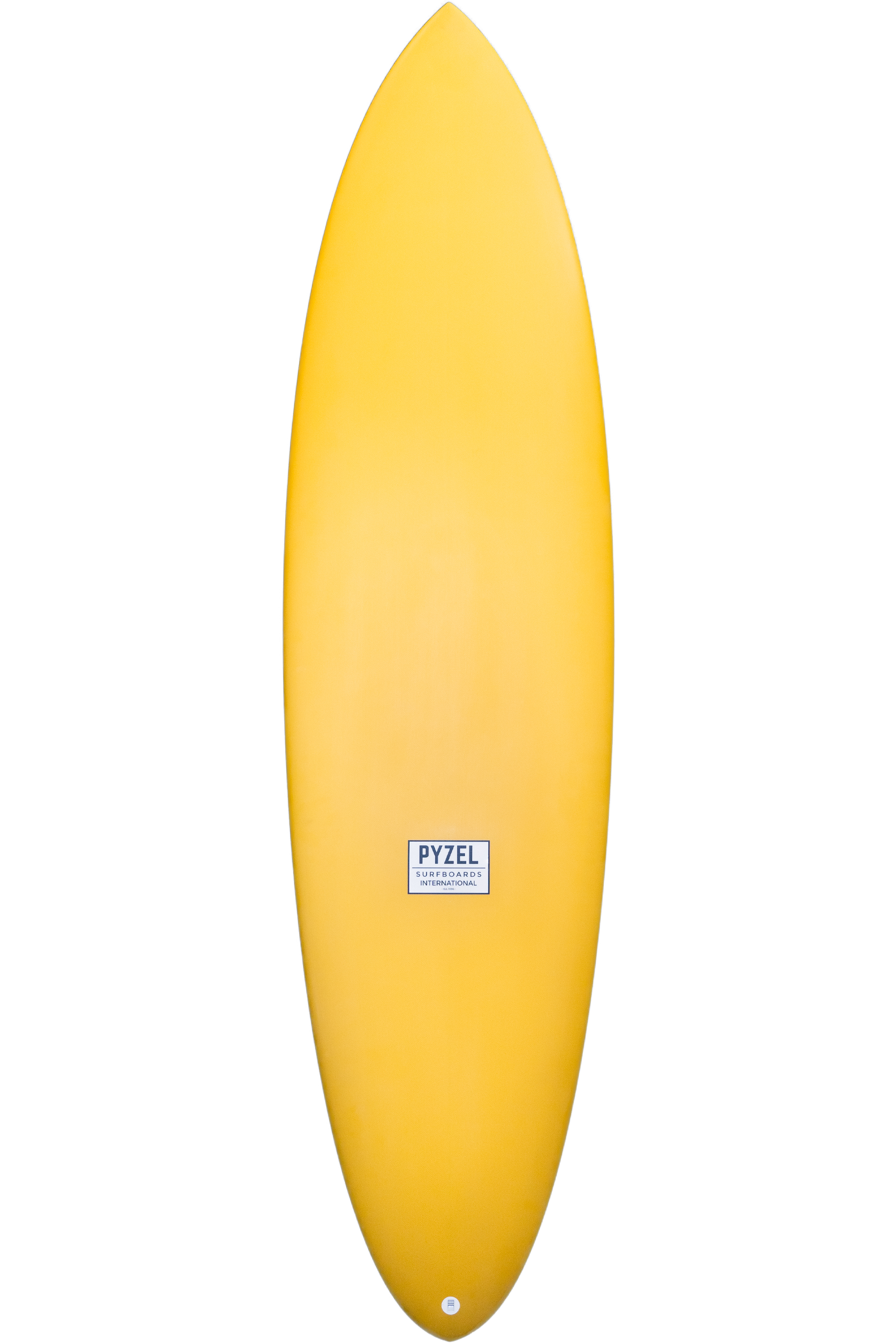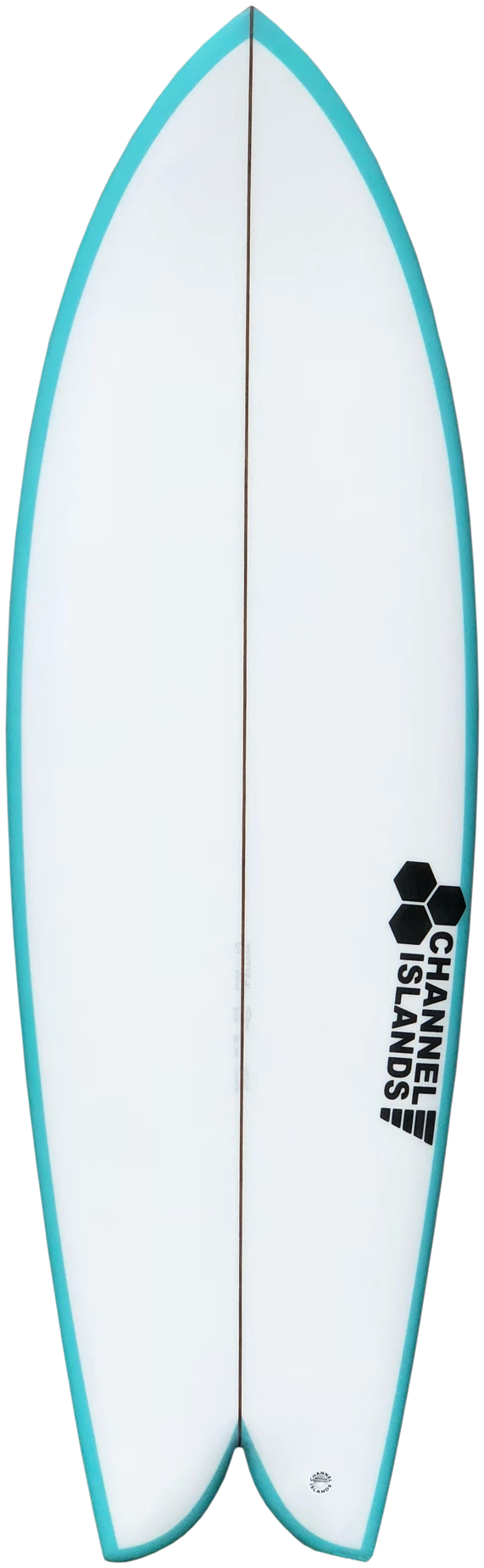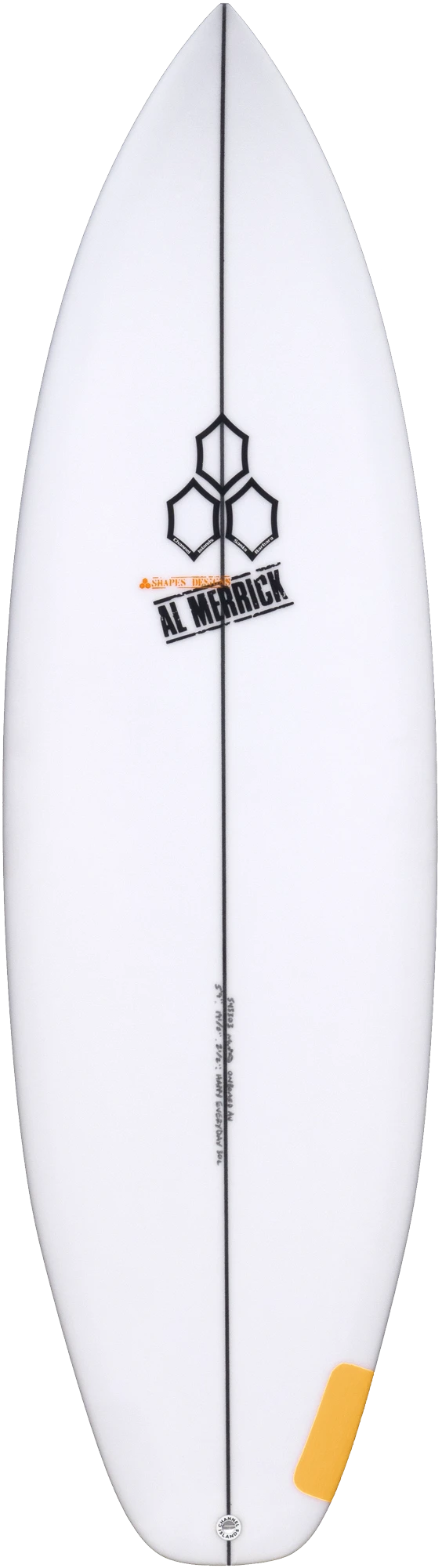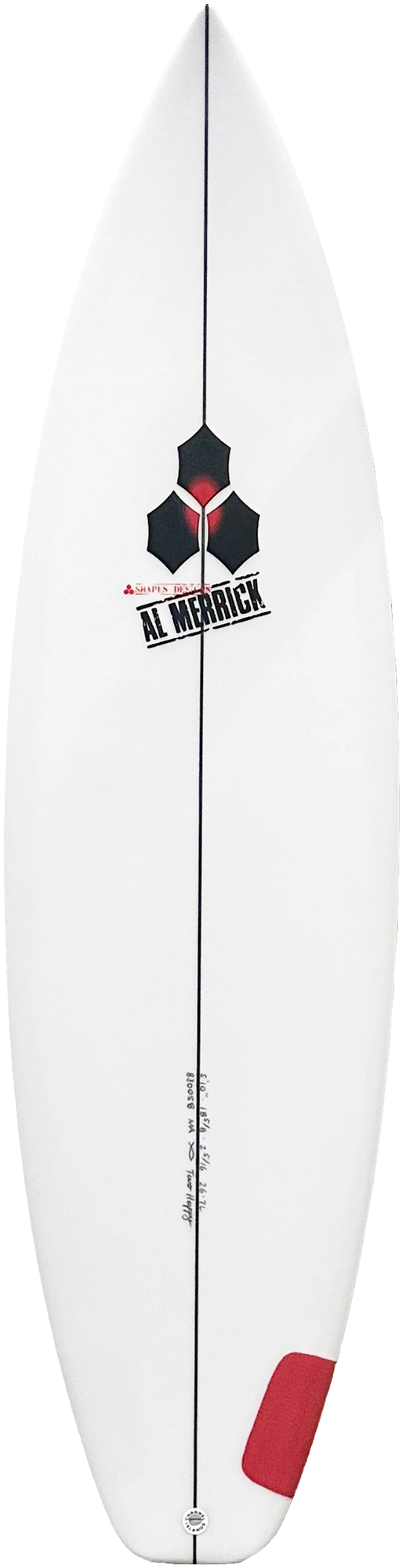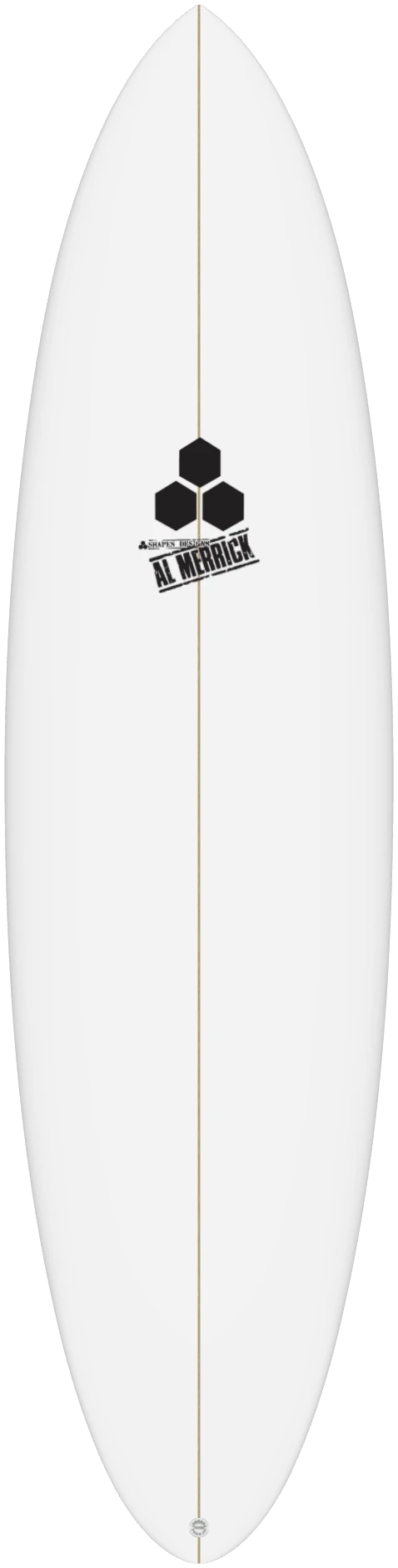
Two boards can both be seven feet long and still ask you to surf differently. That's the useful distinction between the Channel Islands CI Mid and M-23. The first is an egg-inspired midlength built around trim and long, connected turns. The second is a foamier hybrid that Channel Islands says rides more like a shortboard. If you're shopping from photos and a liter number, it's easy to miss the difference.
This is a comparison of Channel Islands' published designs and dimensions, not a claim that we've ridden either board. Here is how to turn those specifications into a sensible shortlist.
The quick decision
| Choose the CI Mid if… | Choose the M-23 if… |
|---|---|
| You like carrying speed across the face, drawing an arc and moving forward to trim. | You want a longer, easier-paddling board but still expect to surf mainly from the back foot. |
| A 2+1 fin setup and the option to adjust the center fin appeal to you. | You prefer the familiar response of a thruster. |
| Clean, running waves and open faces are what make you eager to paddle out. | Your regular waves vary, and you want one hybrid for a broader mix of breaks. |
Those are buying inferences from the CI Mid design and M-23 design, rather than guaranteed outcomes in the water. Your size, fin choice, skill and the wave itself still matter.
What the shapes are trying to do
Channel Islands developed the CI Mid with Devon Howard. The company describes a relatively sleek, egg-like outline, low entry rocker and foam set a little forward. Its description points to easy paddling and trim speed, then calls out double concave, increasing rocker and harder rails toward the tail to keep it responsive through turns. In other words, this isn't a board meant only to glide straight; its design starts with the appeal of an egg and adds features intended to let you redirect it. Channel Islands singles out shoulder-high to nearly double-overhead point surf as a place where the board distinguishes itself, while also saying it runs through smaller, flatter sections. Read the CI Mid design notes and stock chart.
The M-23 comes from the older M13 line. Channel Islands makes the comparison unusually plain: relative to the CI Mid, it has more foam, fuller rails and a sleeker nose outline. The brand positions it as a high-performance hybrid that paddles well while surfing more like a shortboard, with a wider claimed range of wave conditions and break types. That's a manufacturer's description, not a promise that it will replace every board in your rack. Read the M-23 design notes and stock chart.
The practical question is what you want after you catch a wave. If you want to set a line early, cross a flatter patch and make an unhurried arc, the CI Mid's design brief sounds closer. If your instinct is to get back over the fins and redirect more like you would on a shortboard, the M-23 is the clearer fit. Neither choice is a shortcut around learning to position and turn a longer board.
Fins change the purchase, too
The stock CI Mid is a 2+1: a center fin with two smaller side bites. Channel Islands says it designed a dedicated set with Devon Howard and True Ames, and that shifting the center fin changes how the setup feels. The M-23's recommended setup is a thruster. This matters if you already own fins, and it matters to the way you intend to surf: the stock setups point toward different approaches even when the lengths look similar. Check the boxes on the exact board you buy, especially a used one; don't assume that owning one fin set covers both. CI Mid fin details · M-23 fin recommendation.
Compare a real size, not an abstract volume target
At 7'0", Channel Islands' stock chart lists the CI Mid at 21 1/8" × 2 3/4" and 44.9 liters. The stock M-23 is 21 1/4" × 2 7/8" and 47.1 liters. That's 2.2 liters more in the M-23 at the same length, along with a different outline, foil and fin setup. At 6'10", the charts list 42.3 liters for the CI Mid and 43.4 liters for the M-23. The numbers support Channel Islands' “more foam” distinction, but the liters alone don't tell you which one will turn the way you want. CI Mid chart · M-23 chart.
Start with a board you know well. Write down its length, width, thickness and volume, then ask what you want to change: earlier entry, more stability while waiting, a smaller turning arc, or a different line on the face. Compare the whole shape against that reference. A shorter board with similar liters can put its foam somewhere else; a same-length board with extra volume can still feel different under your feet. If possible, borrow a midlength and a hybrid in the lengths you're considering before buying either.
Don't size a CI Mid by copying an M-23 liter number, or vice versa. If your priority is preserving glide, cutting length to hit a volume target may defeat the reason you liked the CI Mid. If your priority is paddling with a fuller rail while retaining a thruster feel, the M-23's stock chart gives you a different starting point. The manufacturer's charts are useful comparisons, not personal size prescriptions.
When to pass on each board
Pause on the CI Mid if the board you actually want is a conventional longer thruster that you can drive from the tail in a wide variety of beach breaks. Its 2+1 setup and trim-oriented outline may be exactly why someone else loves it, but those aren't your stated priorities.
Pause on the M-23 if the attraction is the egg-like line itself: forward trim, a long rail engaged through an arc, and the option to tune a center fin. Extra foam and a familiar thruster setup won't recreate that design brief. And if most of your surfing is in truly tiny, gutless waves, compare both against a dedicated small-wave shape rather than treating “more liters” as the entire answer.
You can browse Channel Islands models on Board Hogs and compare the wider board catalog. Use the official charts to narrow your length, then check the actual board's dimensions and fin boxes before paying—especially when a listing is for a custom or used build.