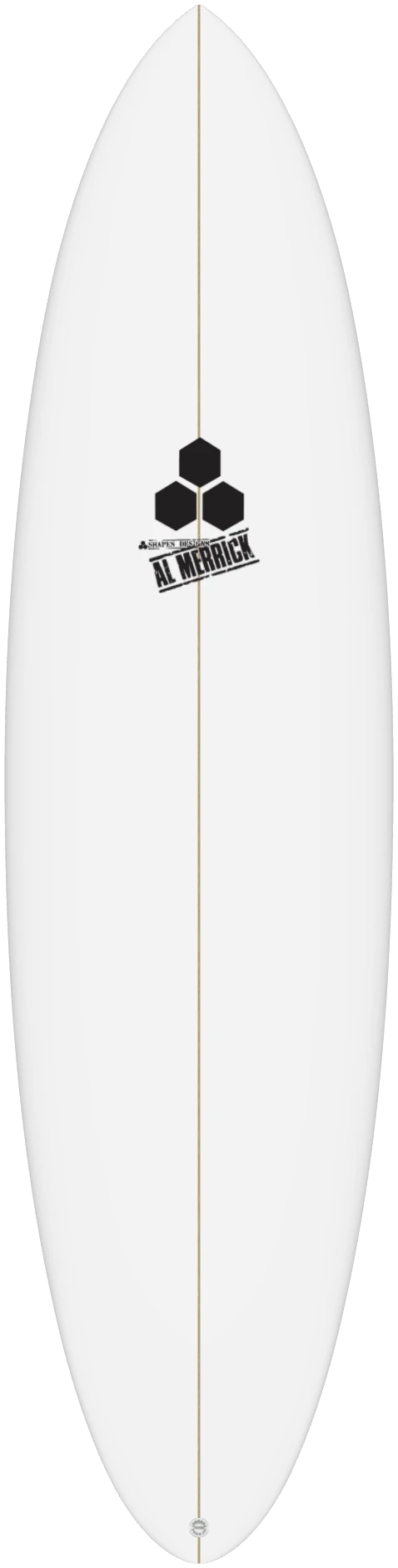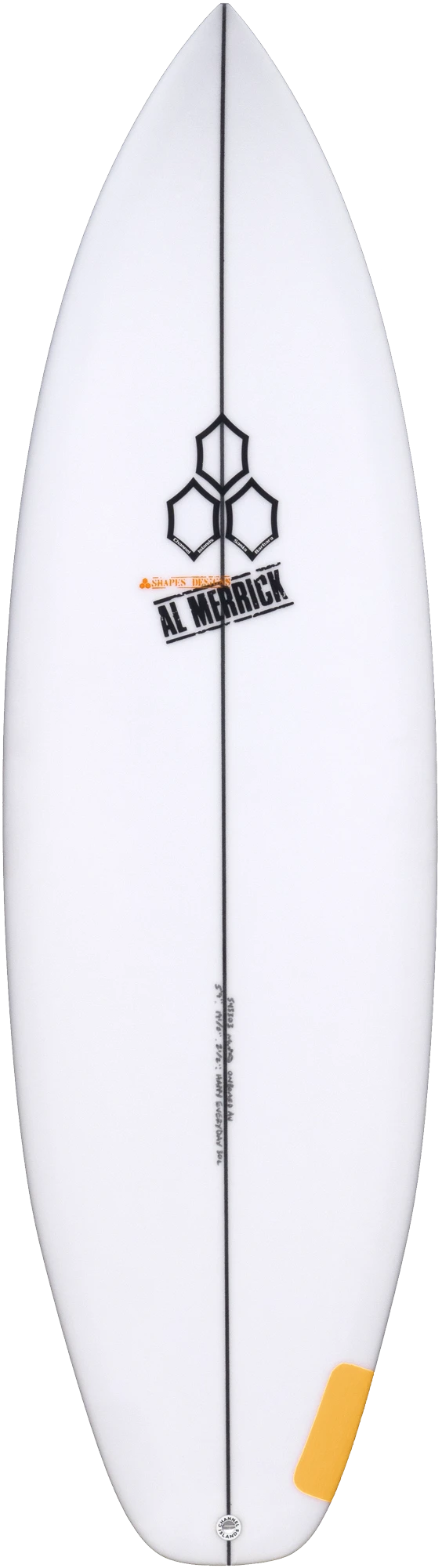
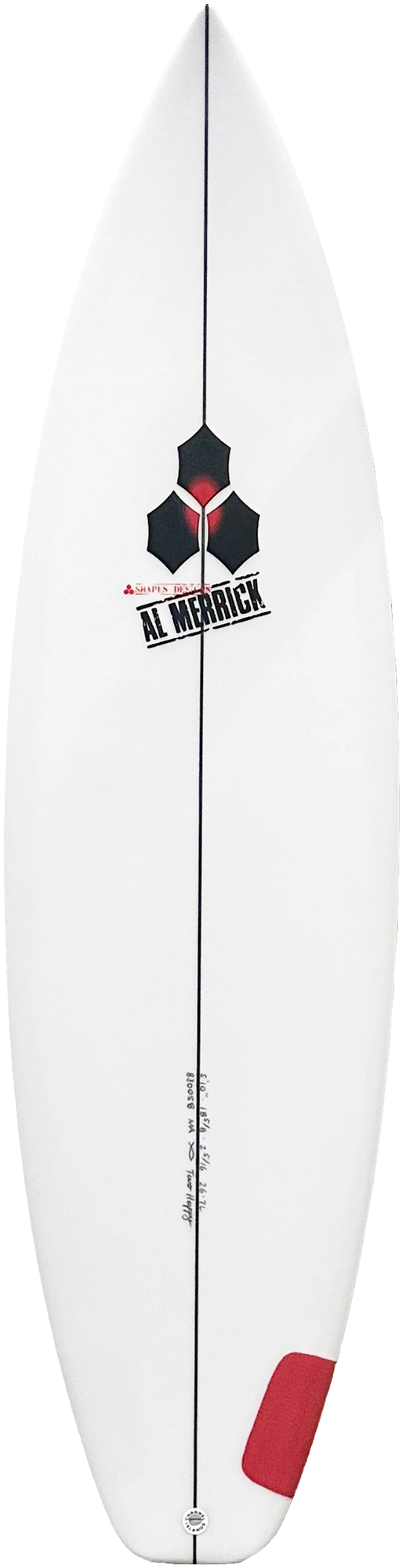
There is a particular kind of surfboard frustration: your shortboard feels great when a wave has a proper wall, but on the other four days you spend the session chasing speed. The Happy Everyday and Two Happy sit close enough in Channel Islands' lineup that either can look like the answer. The useful question is whether you want to make ordinary waves more lively, or make good waves more rewarding.
This guide compares Channel Islands' published designs and stock charts. It is a buying comparison, not a claim that we have ridden either board.
The short answer
| If your usual session looks like… | Start with | What you give up |
|---|---|---|
| Small to shoulder-high surf with a face, but frequent flat sections | Happy Everyday | Some of the Two Happy's more performance-focused pocket feel |
| Consistent, more energetic waves where you already generate your own speed | Two Happy | Some of the Happy Everyday's help in slower sections |
| Barely breaking, weak surf most of the time | A dedicated groveler or more board | Neither of these is designed to replace every small-wave shape |
Channel Islands itself positions the Happy Everyday between the Two Happy performance shortboard and the Rocket Wide step-down/groveler. That is a useful map of design intent, not a guarantee that one model works in every wave marked “small” or “good.” A punchy waist-high beach break and a soft shoulder-high point can ask very different things of a board.
What changed between them?
The Happy Everyday began with the Two Happy as its starting point. Channel Islands says Britt Merrick shortened the rail line to create more curve through the outline, especially near the tail. He lowered both the entry and exit rocker to improve paddling and planing speed, kept single concave under the front foot, and used generous double concave through the fins. Put together, those choices aim to make a shortboard easier to get moving on the waves most surfers meet more often. The maker explains the changes here.
The Two Happy is already a more approachable performance board than the original Happy, according to Channel Islands. Its added entry rocker and increased double concave are intended to loosen the board and help it roll rail to rail and carve in the pocket. Fuller rails and a wider, thicker tail block are there to keep paddling and acceleration from becoming a chore. That combination matters: choosing the Two Happy does not mean choosing an impossibly thin contest board. It does mean putting more emphasis on the quality of the wave and the turns you want to make once you are up.
These are the manufacturer's claims about what each design is meant to do. Your fins, chosen size, technique, and actual waves will change the result.
The stock charts make the difference visible
At the same 5′9″ length, the Happy Everyday chart lists 19½″ × 2 7/16″ and 29.4 L. The Two Happy chart lists 18⅜″ × 2¼″ and 25.3 L. The Everyday is wider and thicker on paper, with 4.1 L more volume at that length. That is too large a gap to treat the two as interchangeable “5′9 shortboards.”
If you aim for roughly 30 L instead, the stock options come surprisingly close in volume but not in length: the 5′9″ Happy Everyday is 29.4 L, while the 6′0″ Two Happy is 29.7 L. Buying by liters alone could move you three inches longer and into a different rocker and outline. Use your current board as a reference: what length lets you stand where you want, what volume has been enough to catch waves, and where does its speed disappear? Surf Simply's volume discussion is a good reminder that a board size is a tool for a surfing goal, not a badge.
Both models list a thruster as their recommended setup on the official pages. Fin count will not settle this choice for you. If you are buying a specific stock or used board, check whether its three boxes take FCS II or Futures; Channel Islands lists both systems among its stock boards. Check the dimensions written on that actual board too. A custom order can depart from the standard chart. Happy Everyday setup and stock sizes · Two Happy setup and stock sizes.
Choose for the sessions you keep having
Choose the Happy Everyday if your current performance shortboard is fun only when the surf cleans up, and you still want to surf with a shortboard approach on the ordinary days. Its flatter rocker and fuller stock dimensions are a deliberate answer to that complaint. It is especially worth comparing if your current board already handles good waves but leaves a gap in medium or less powerful surf. Compare the Happy Everyday in the Board Hogs catalog.
Choose the Two Happy if you regularly find a wave with a usable pocket and want a board that encourages more committed turns there. You do not need to be a pro, but you should be comfortable catching waves and making speed on a shortboard without asking the shape to do all the work. If your current everyday board already covers soft days, the Two Happy may give your two-board quiver a clearer second job. See the Two Happy catalog entry.
Pause on both if you are still learning to catch unbroken waves independently, or if most sessions are on rollers that never form a real face. A forgiving mid-length or a true weak-wave design may buy you more useful waves. The Happy Everyday is the easier-going shortboard of this pair; that does not turn it into a beginner board or a dedicated groveler.
If possible, demo the two on the sort of day you usually surf. Count waves and notice what happens after the first turn, not just how easily you paddle into the first one. If you cannot demo, compare other shortboards and grovelers alongside these two, then take your current board's dimensions to a local shop or shaper. The right answer is the board that fixes your recurring session, not the one whose category sounds more ambitious.