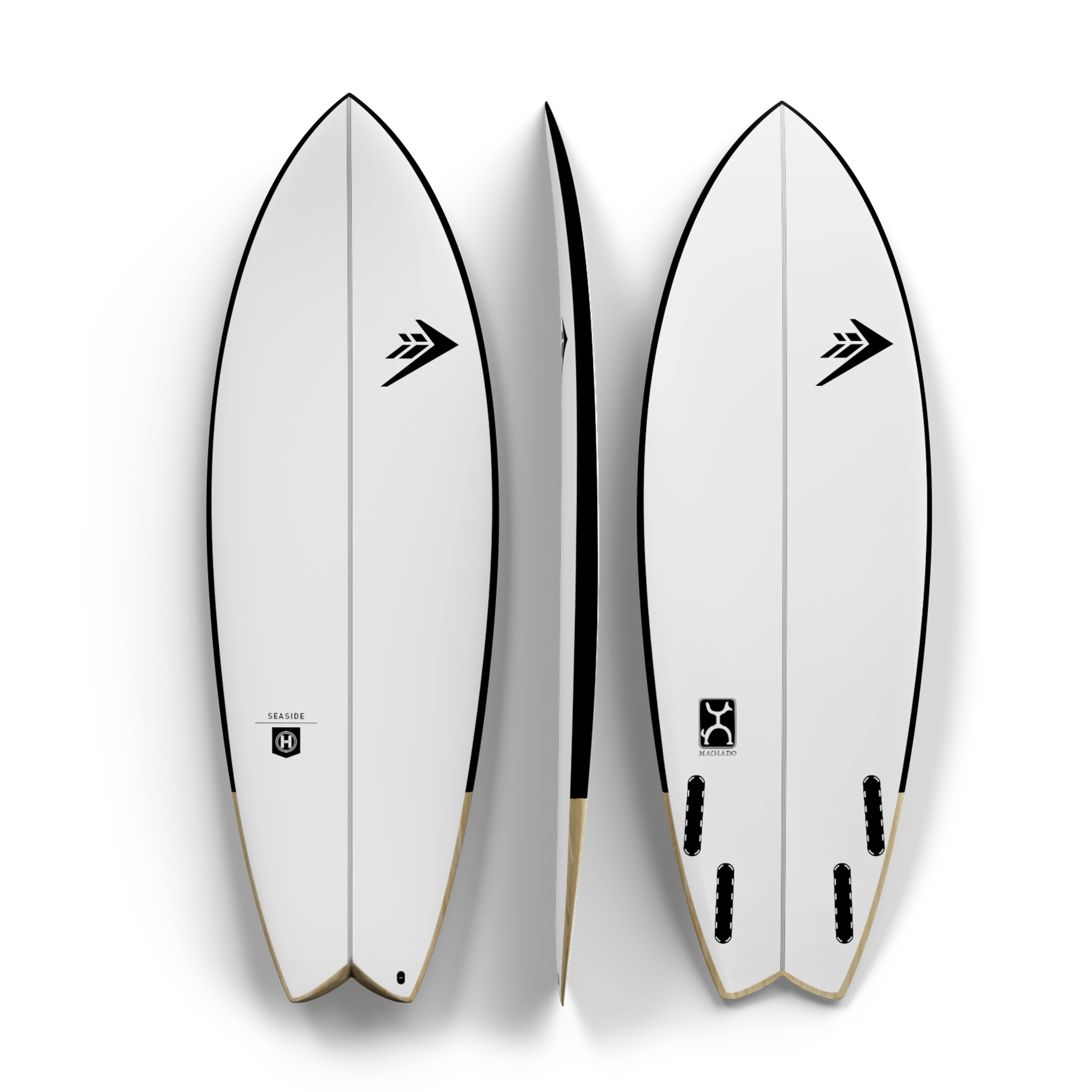
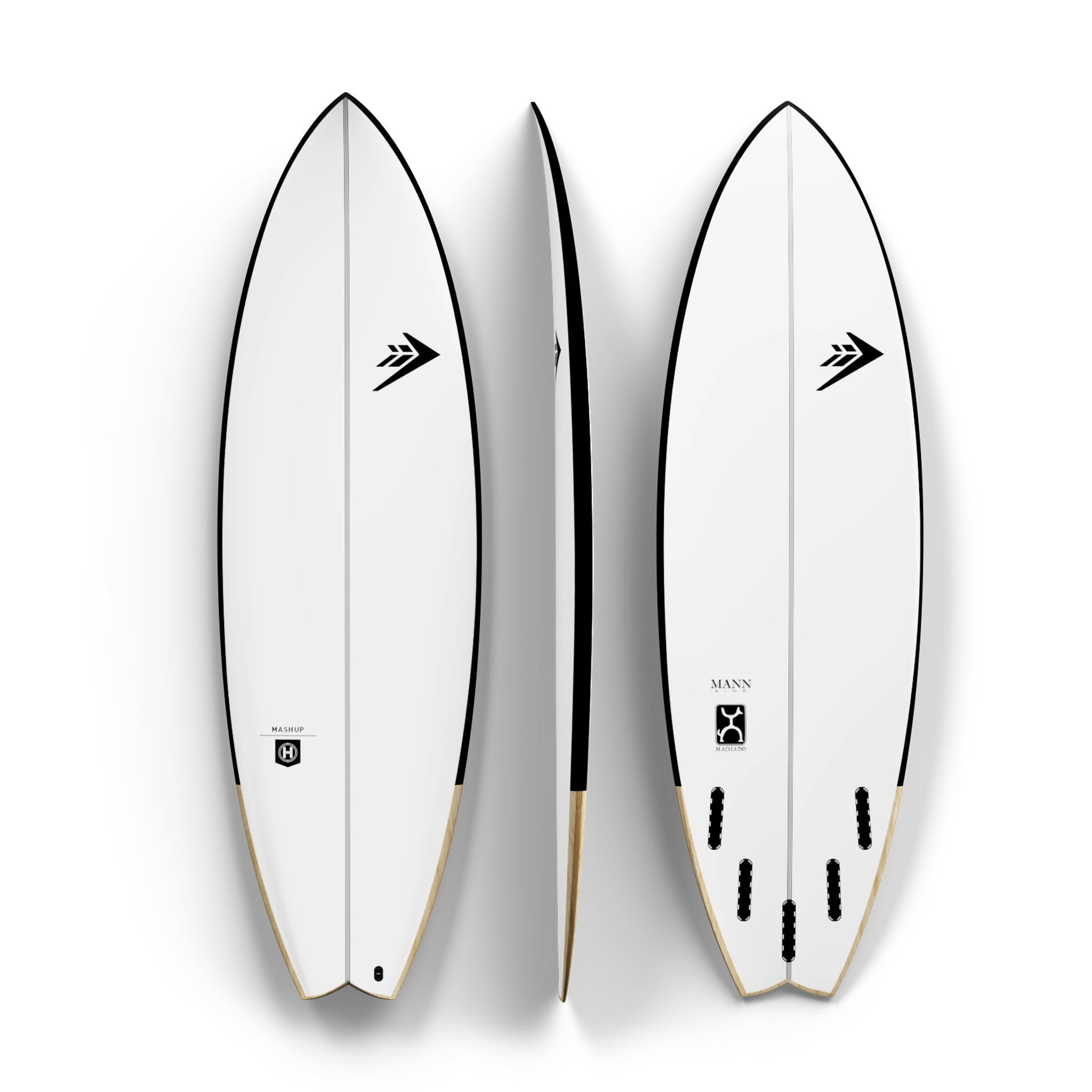
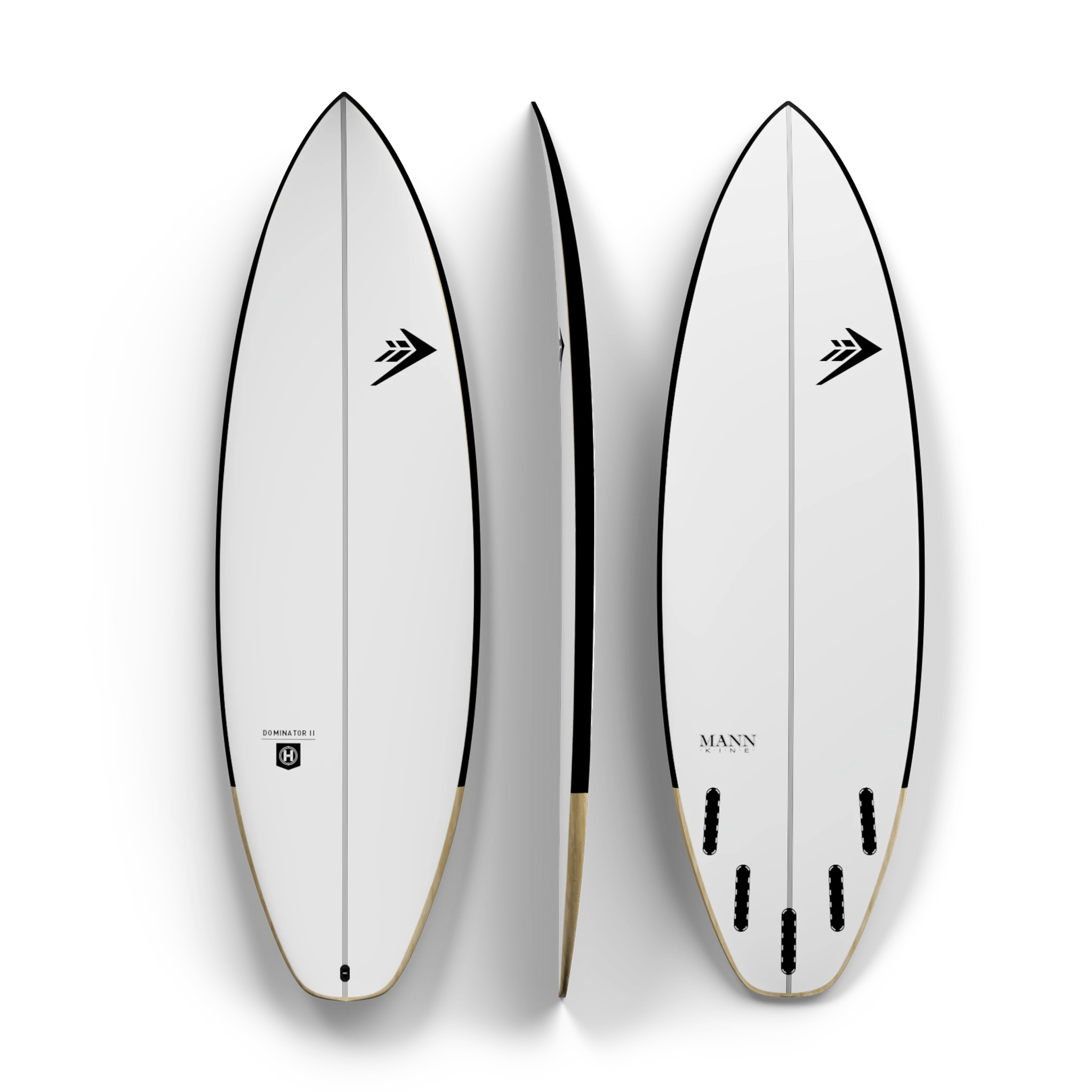
Three Firewires, three plausible answers to “I want one short board for my usual waves.” The names can blur together on a shop rack, especially when you find all three near the same volume. Their jobs are clearer if you start with the waves you actually catch.
The quick read: Choose the Seaside when small, soft waves are the main event and you want a dedicated quad. Choose the Mashup if those waves are common but you also want to draw more vertical lines when they improve. Choose the Dominator 2.0 if you want the most conventional shortboard direction of the three, with an outline designed to cover a wider range of conditions. Those are design-based recommendations, not a claim that we have surfed all three.
| If your usual session looks like… | Start with… | Think twice if… |
|---|---|---|
| Weak beach-break runners and small points | Seaside | You want to switch to a thruster or regularly surf steep, punchy faces |
| Mostly average waves, with occasional better ones | Mashup | You want maximum glide from a wide fish-style plan shape |
| Mixed conditions and a more familiar shortboard approach | Dominator 2.0 | Your surf is usually too soft to push a shortboard around |
Seaside: make the small days worth paddling out
Firewire calls Rob Machado’s Seaside a quad groveler. Its listed sweet spot is small and weak surf; the plan shape keeps width forward while the swallow tail is pulled in compared with the older Go Fish. Machado describes the changes as an attempt to get tighter turns from a fish-derived board. The Seaside is also quad only: he says its concaves were designed around that setup, so “I’ll just try a thruster later” is not an option on this shape.
This is the appealing choice when your complaint is that ordinary shortboards make your everyday waves feel like work. It is less convincing as your only board if your local break gets steep and quick whenever it has size. Firewire’s stated 1–5 foot range is a design guide, not a guarantee that every 5-foot wave suits it; wave shape and your ability matter more than a number on a forecast. Compare the Seaside in the Board Hogs catalog.
Mashup: the overlap board
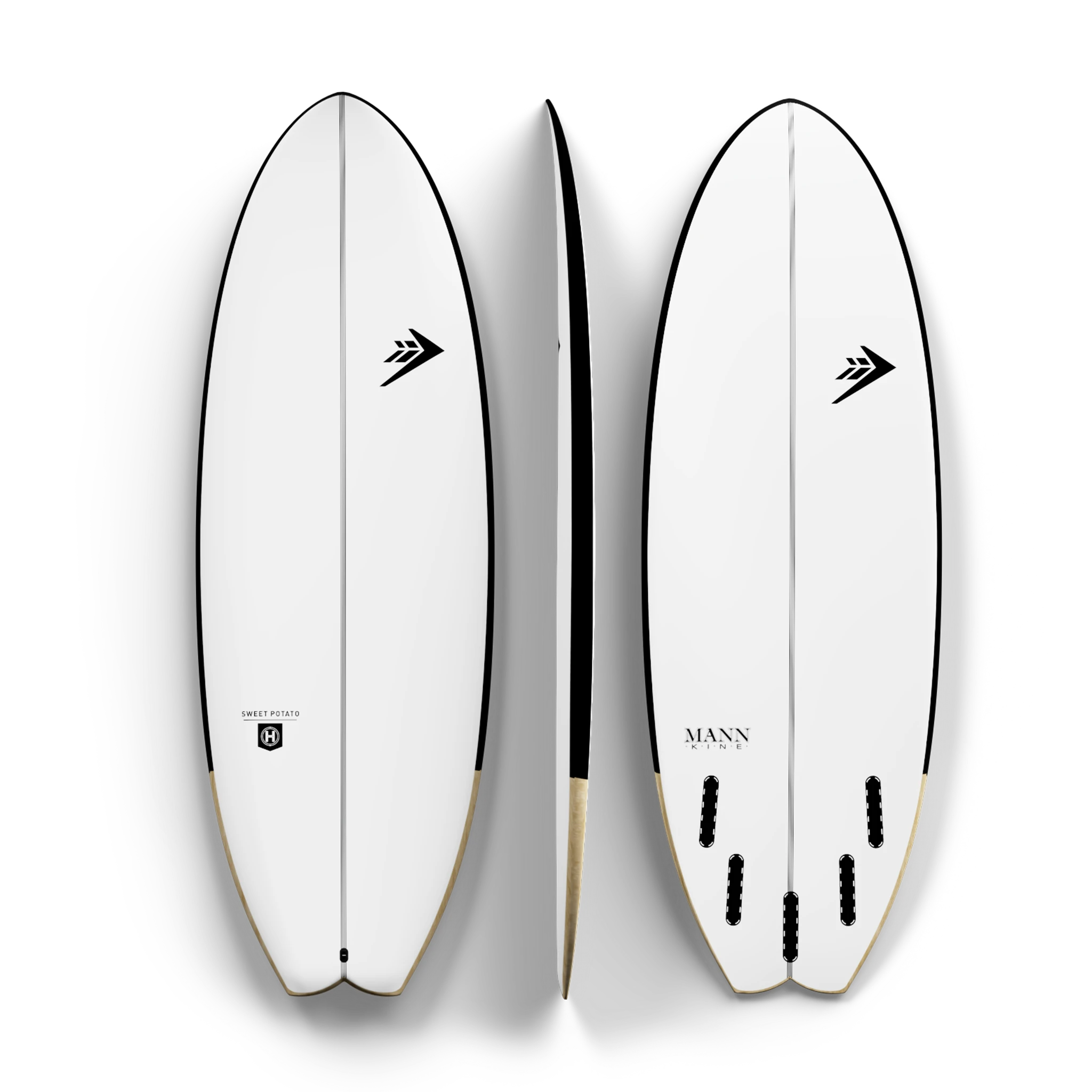
The Mashup combines ideas from Machado’s Seaside and Dan Mann’s Spitfire. Firewire describes a fuller hybrid nose for paddle power, step rails toward the back, and a double concave that becomes more pronounced toward the tail. Its stated intent is speed in weak waves with more vertical drive when the wave offers a pocket. Firewire places it in 1–5 foot surf, tilted toward average or poor conditions.
That makes it a sensible middle answer if your week includes both mushy mornings and the occasional clean, punchier session. It does not magically erase the trade-off: if your surf is almost always flat-faced, the Seaside’s wider, fish-derived outline may be the more deliberate tool; if good surf is the reason you are buying, you may want to look farther toward a performance shortboard. Firewire includes the 2026 Mashup in its five-fin lineup, leaving room to experiment with quad and thruster setups. Confirm the boxes and the fin system on the exact board you buy, especially used. Compare the Mashup’s catalog specs.
Dominator 2.0: a shortboard with room to work
Dan Mann presents the Dominator 2.0 as an update of his original Dominator with a broader working range. Compared with that older board, he changed the round tail to a squash, refined the rails, and added a subtle double-barrel and vee toward the tail. Firewire’s description is about more release and performance without turning the design into a pure, demanding high-performance shortboard. Firewire has also shown a stock Dominator 2.0 ridden with both quad and thruster fin setups.
If you already enjoy shortboard surfing and want one board to take through changing everyday conditions, this is the one I would examine first. If your local waves barely stand up, do not buy it simply because its volume matches a Seaside you liked. You would be choosing a different outline and tail for a different job. Browse Firewire models in the catalog, and check the official Dominator 2.0 page for the current version.
Why the same liters do not settle it
Firewire’s current stock charts make the point unusually well. A 5'5 Seaside is 20 15/16 inches wide at 31.5 L. A 5'7 Mashup is 19 11/16 inches wide at 31.4 L. A 5'9 Dominator 2.0 is 20 1/8 inches wide at 31.5 L. Those figures come from the Seaside, Mashup, and Dominator 2.0 stock charts. Nearly identical displacement has been distributed into three distinct lengths and outlines. It cannot tell you which board will enter your wave sooner, turn the way you want, or fit your stance.
Use your current board as the reference. What size is it, and where does it fail you: paddling in, maintaining speed across a flat section, or fitting a turn into the pocket? Compare the candidate’s length, width, rails, tail, and fin setup with that familiar board. If a shop has demos, ride the size you are considering before treating a manufacturer chart as a prescription. On a used listing, also confirm construction and fin-box system; the model name alone does not tell you what fins are in the board in front of you.
The decision I would make
If the best waves you surf most months are weak, buy for those waves: start with the Seaside. If you need one board for weak surf and a bit more pocket, start with the Mashup. If you are already comfortable on a shortboard and need an everyday shape that asks more of your turns as conditions improve, start with the Dominator 2.0. None is the right upgrade merely because its liters line up with a spreadsheet target.
Browse Firewire models on Board Hogs, then check the exact size and fin setup you can actually buy. That comparison is worth more than declaring one model the universal winner.