
You paddle out on a waist-high day. The first wave gives you a clean wall; the next stands up for two seconds and goes soft. You want a board that makes both waves worth catching. Is that a fish or a groveler?
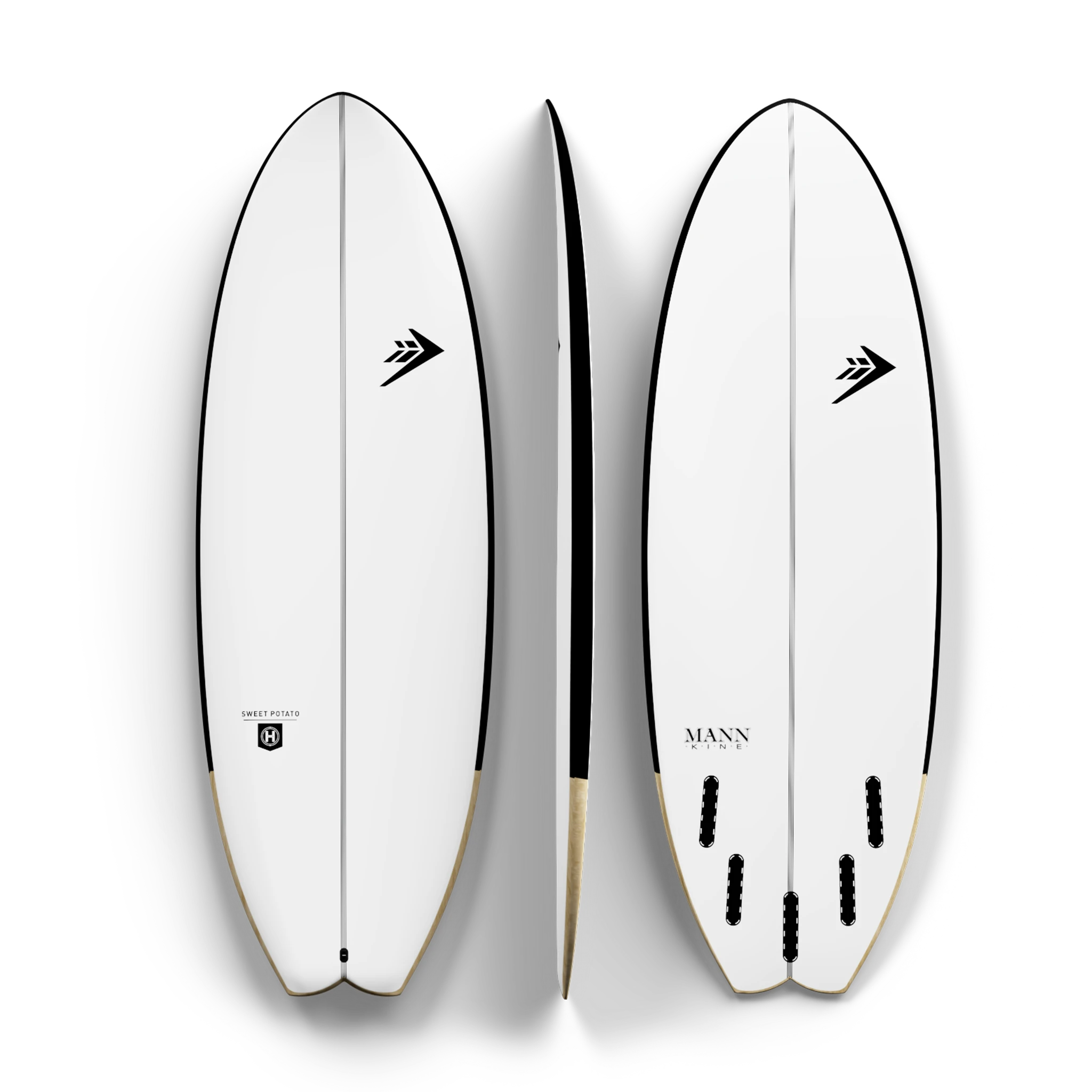
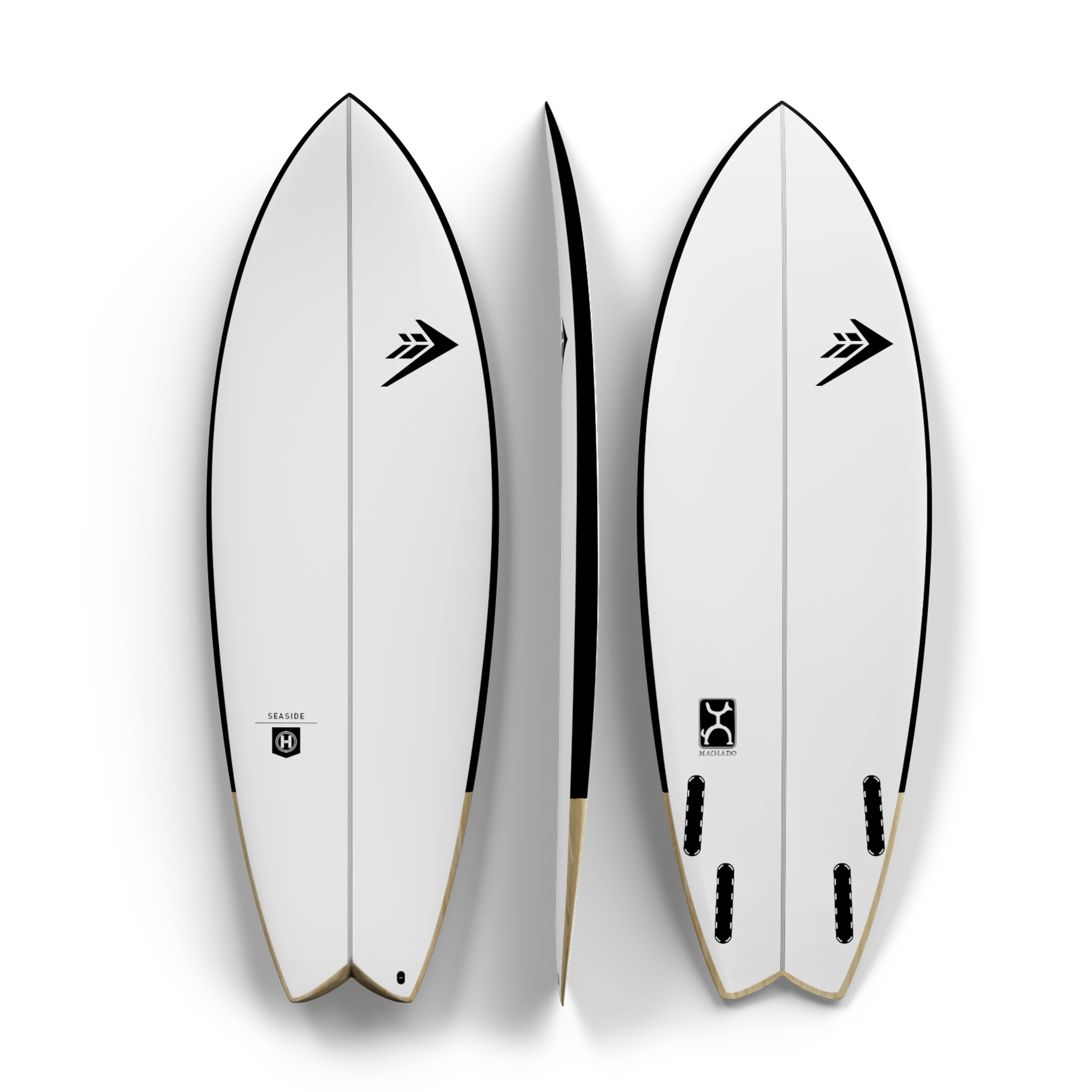
The names overlap more than a shop wall suggests. Fish describes a family of shapes; groveler describes a job. A fish can be a brilliant small-wave board, and a groveler can have a swallow tail. Firewire even calls its fish-shaped Seaside a “quad groveler.” Start with the wave and the way you want to surf it, then inspect the actual outline, rocker, rails, and fins.
The useful difference
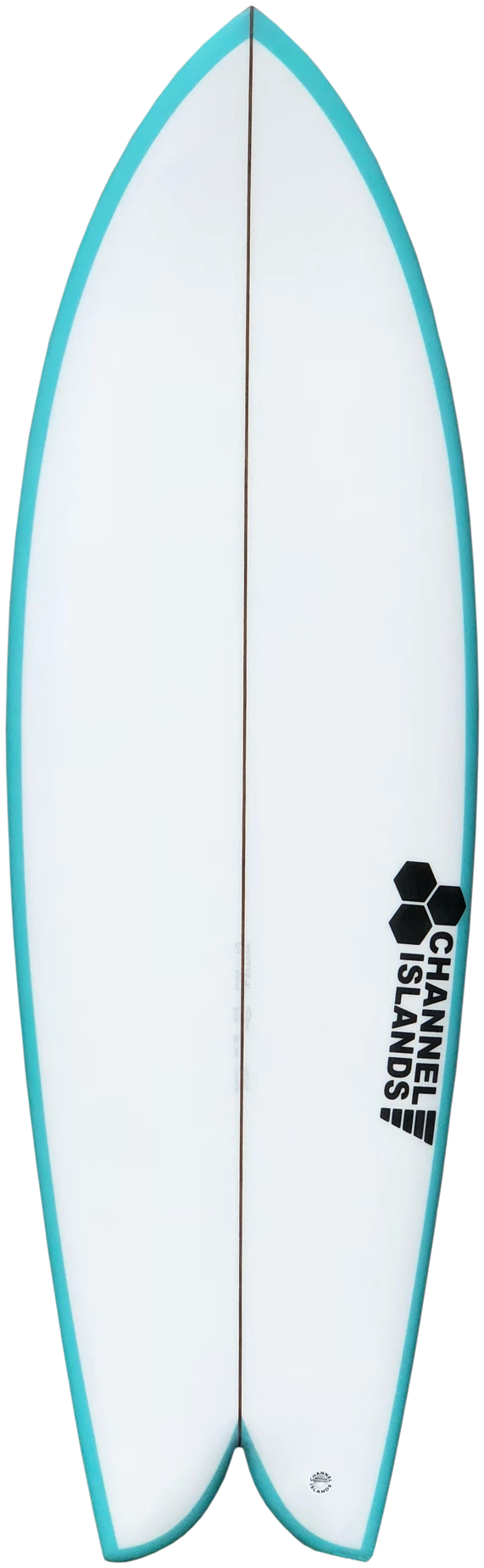
The traditional fish has a short, wide plan shape, modest rocker, a split tail, and twin keels. Its roots are more interesting than the “tiny-wave toy” label: Steve Lis designed the original for punchy San Diego surf, and the shape later proved fast in weak waves too. Surf Simply's fish history traces both sides of that story. Modern fishes range from loose, full-outlined cruisers to much more refined boards, so the word fish alone tells you surprisingly little about the usable wave range.
A groveler starts with the problem of a wave that will barely push a conventional shortboard. It commonly puts more planing area under you, especially through the front and tail, and uses a flatter rocker to keep speed through the dull bits. That does not mean every groveler is a wide, flat plank. The Original Puddle Jumper ’25 has a broad outline and a concave-to-vee bottom; its maker positions it for easy wave entry and top-to-bottom surfing. The more pulled-in Puddle Jumper Pro adds length and nose rocker for surfers who want a stronger shortboard feel. Both live in Lost's groveler range, yet they are different answers to the same problem.
Choose the wave before the board
If your usual wave has a wall but not much size, try a fish first. A twin-keel fish rewards a high line, smooth transitions, and carrying speed into the next section. You may enjoy that approach even when the waves improve. Channel Islands describes its CI Fish as a twin-keel design for an average grovel session and clean head-high points. That is a manufacturer’s claimed range, not a promise that every surfer will feel comfortable at the top end.
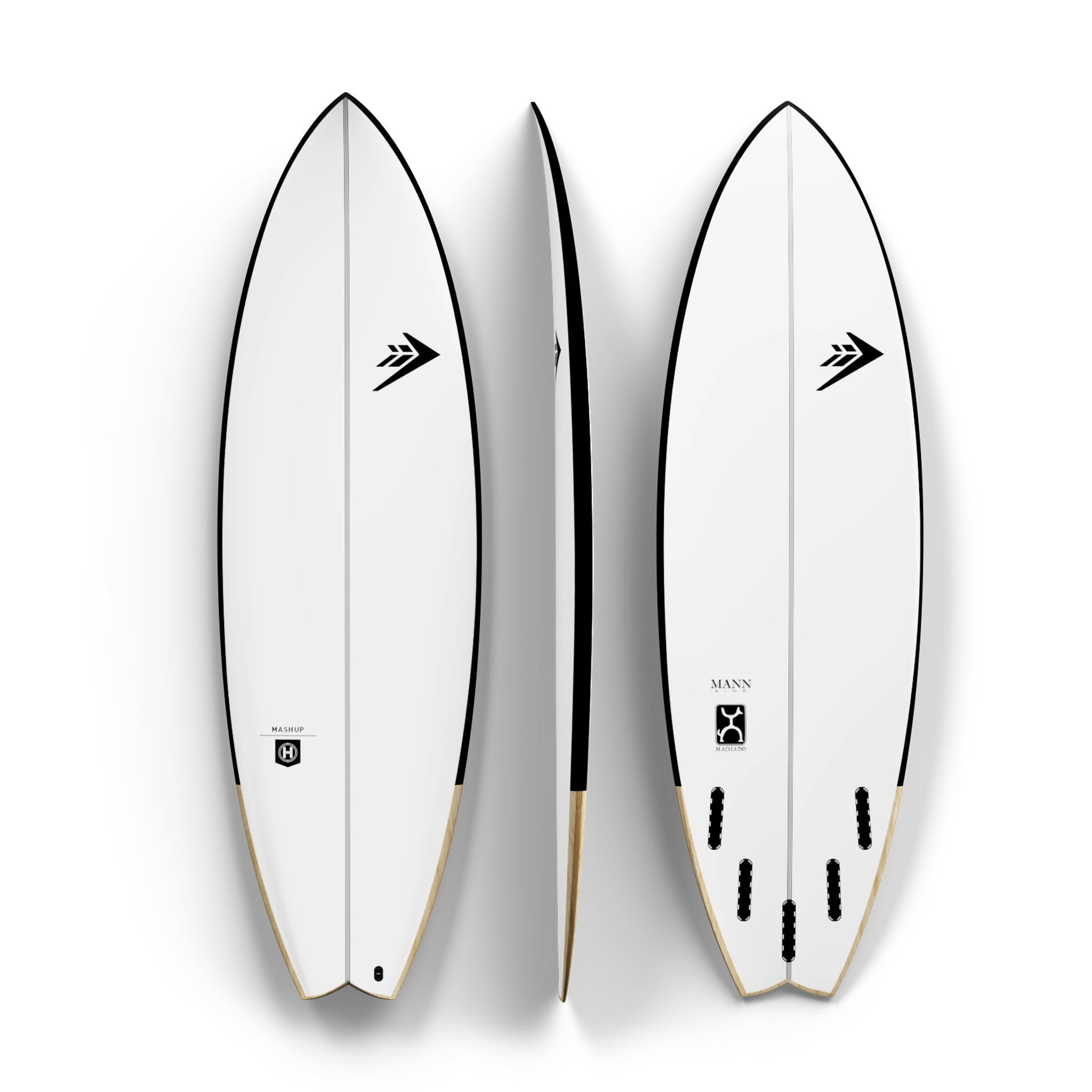
If the wave repeatedly goes flat and you still want to fit turns into what remains, look hard at grovelers. The width and low-speed lift of a board like the Original Puddle Jumper ’25 are built around those frustrating sections. A groveler with a familiar thruster or quad setup can also make the switch from your everyday shortboard feel less strange than a keel-fin fish. The specific fin options matter: do not assume a groveler takes three fins, or that every swallow tail takes two.
If both descriptions sound right, they probably are. The Seaside is the neat counterexample to a rigid category rule. Rob Machado says he narrowed the nose and swallow-tail tips from the Go Fish to make tighter turns; Firewire sells the result as a quad-only small-wave board. Its product page is useful precisely because it describes the intended change in feel, not just a silhouette. A modern fish like that may cover the same weak-wave slot as a groveler while riding differently from a classic keel fish.
Decide what you want your feet to do
Picture the good wave of an average session. If your favorite part is trimming fast across a shoulder, drawing a long line, and letting the board run, the fish is a compelling choice. If you keep looking for the next pocket and want to redirect quickly, a shortboard-like groveler may be the more natural tool. Neither choice is a verdict on your ability or style; it is a way to buy for the surfing you actually enjoy.
Your current board is another clue. If it already paddles well and turns comfortably, a groveler that is only a little wider may duplicate it. A distinct fish could add a new kind of session. If you own a lovely fish but keep wishing it would snap through tiny beach-break pockets, a more performance-oriented groveler could fill the gap. Lay the candidates beside the board you know. Compare where the width sits, how full the rails feel, the curve of the rocker, and the fin boxes—not just the length printed on the stringer.
Volume helps you narrow sizes, but it cannot settle this decision. For example, Channel Islands lists a 5′8″ FishBeard at 29.2 L, while Lost lists a 5′4″ Original Puddle Jumper ’25 at 29.75 L. Those almost-matching numbers sit in boards of different lengths, outlines, and design intent. If you are comparing sizes, use the liters as a starting point and inspect the whole shape. Better yet, ask a local shop or shaper what size works for your paddling, ability, and waves.
A quick buying verdict
| Your everyday session | Start here | Watch out for |
|---|---|---|
| Small waves with a running face; you like flowing, drawn-out lines | A fish, especially if you want a different feel from your shortboard | Buying a classic twin because it looks fun, then expecting it to turn exactly like your thruster |
| Gutless beach break; you want to catch more waves and still attack the pocket | A groveler designed for weak surf | Sizing a performance shape up so much that it loses the response you wanted |
| Some weak days, some clean shoulder-high days; one board must do both | Compare modern fish and less extreme groveler models side by side | Treating either category name as a wave-height guarantee |
If you can, borrow or demo a candidate on a wave you surf often. A board that feels electric in a clean point-break clip may not solve your local two-turn beach break. If a demo is impossible, compare real models in the fish catalog and groveler catalog, then take two or three size options to a shop. The best everyday board is the one that makes your ordinary session better, not the one with the most exciting category label.