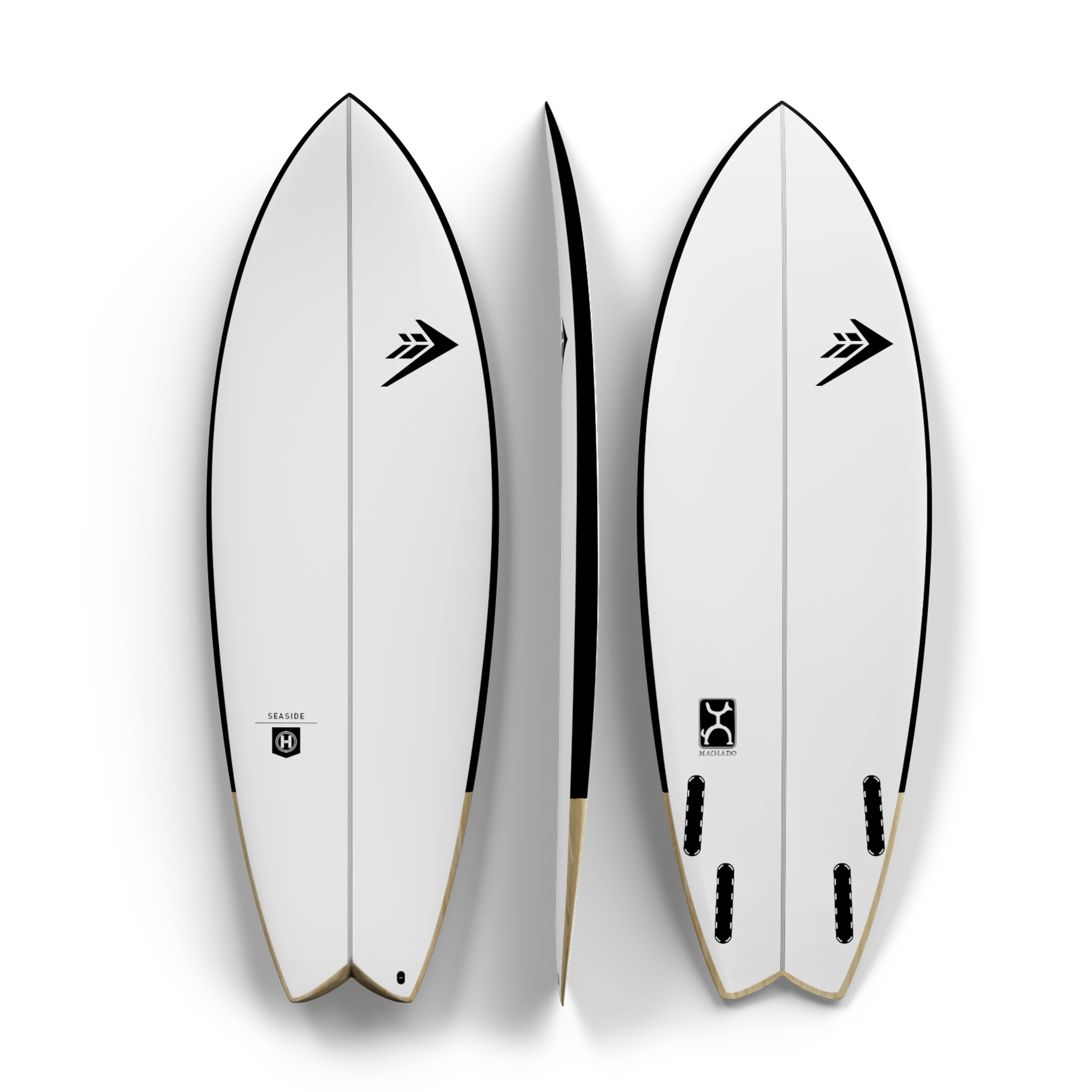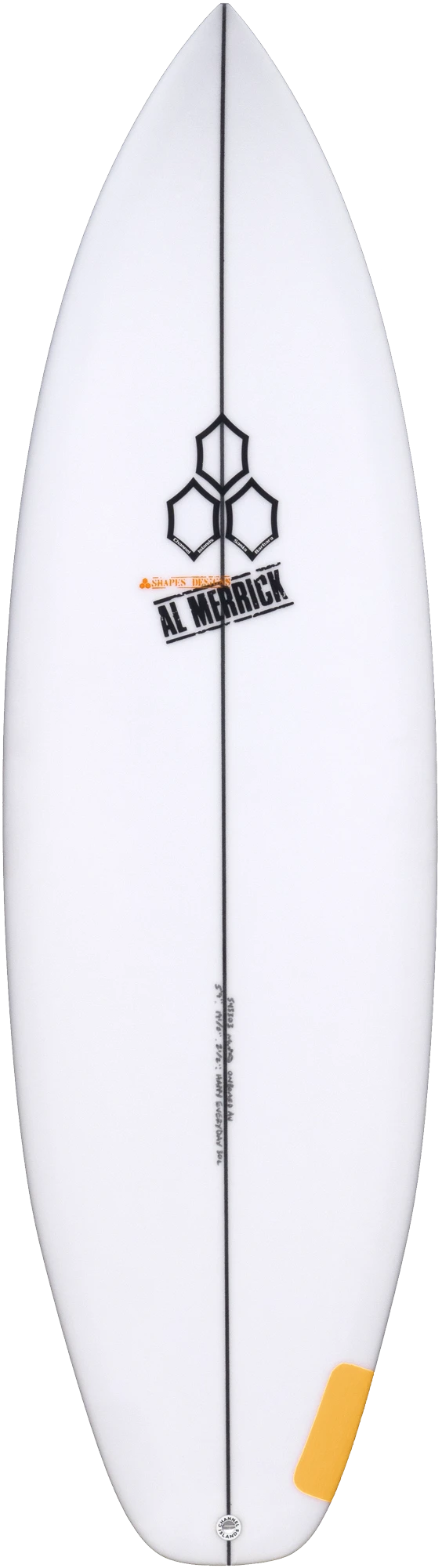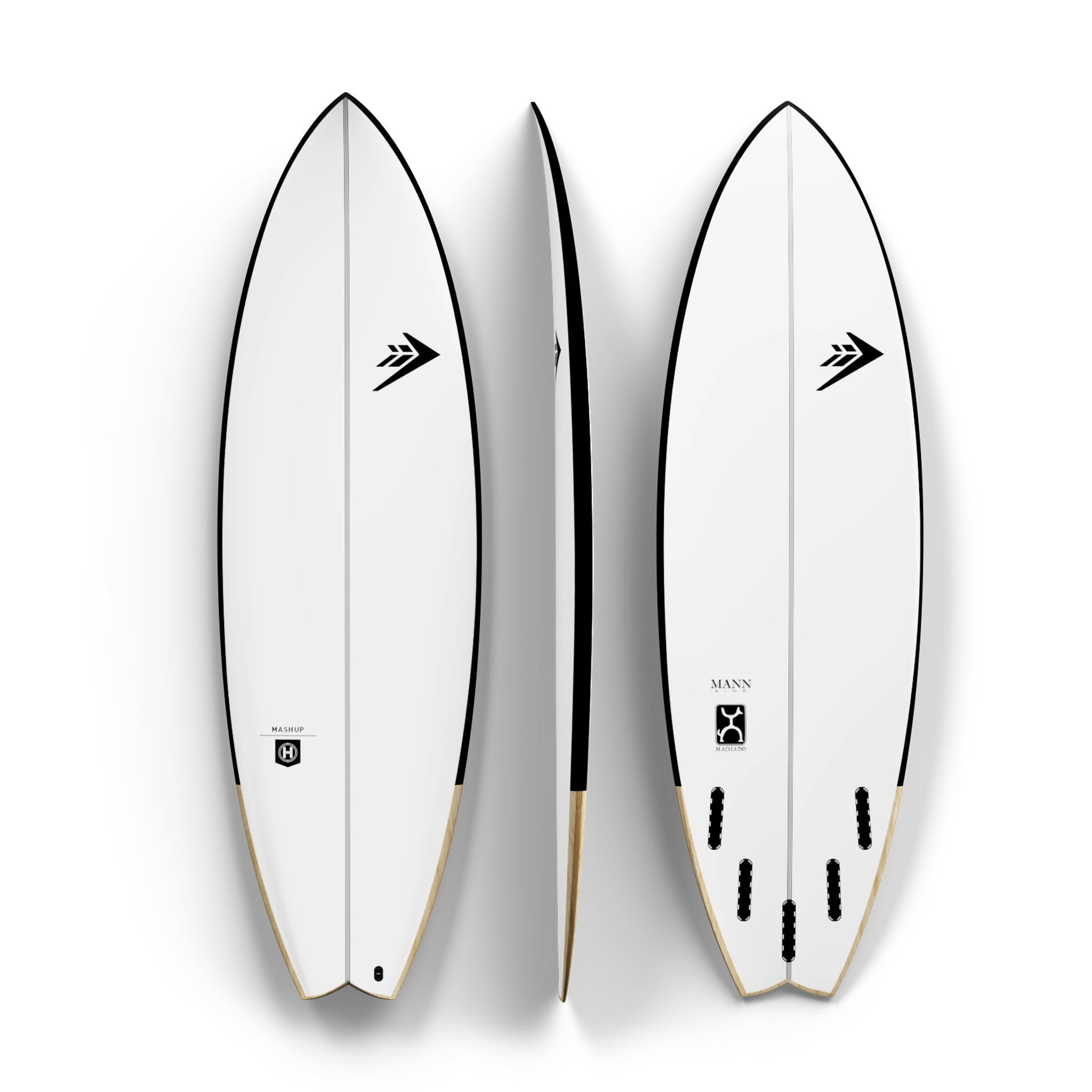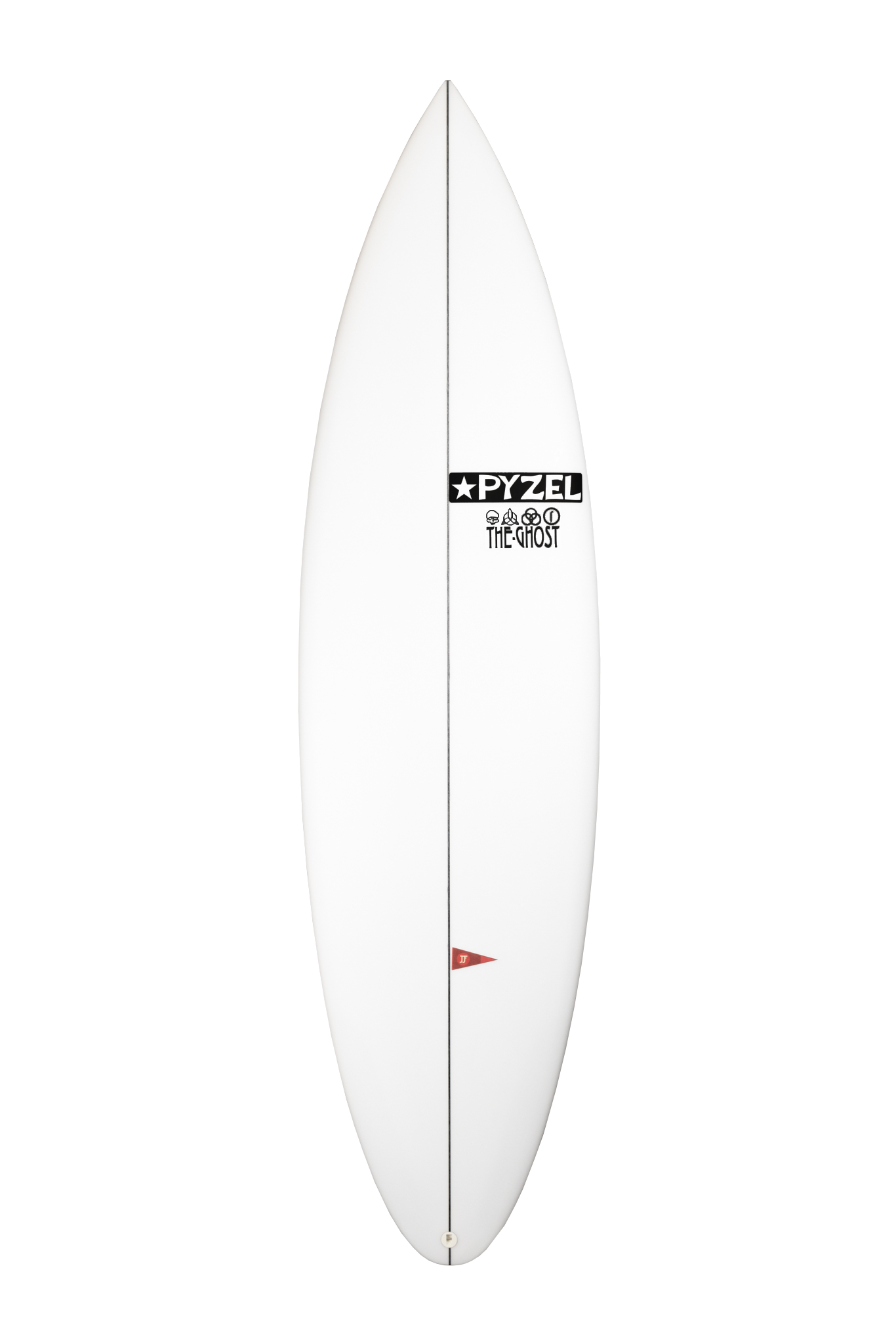
A used board from a coveted shaper can be tempting. For the same money, a new board from a value range may come with a clean deck, a receipt and no mysteries under the wax. The logo is the least useful way to settle this. First decide which board fits your surfing; then decide which particular board is the better purchase.
Those are separate decisions. A sound, beautifully made shortboard is still a poor buy if your regular wave calls for a longer, more forgiving shape. A brand-new board is not automatically the safe choice if its outline is wrong for you.
Start with the job, not the original price
Write down the waves you surf most often, the board you ride now, and what you want to change. More waves per session? Easier turns in a steep pocket? A different feel on clean, running shoulders? Compare candidates with the board you know: length, width, thickness, volume, outline, rocker and fin setup. Surf Simply's volume guide explains why two boards with similar measurements can still be very different designs.
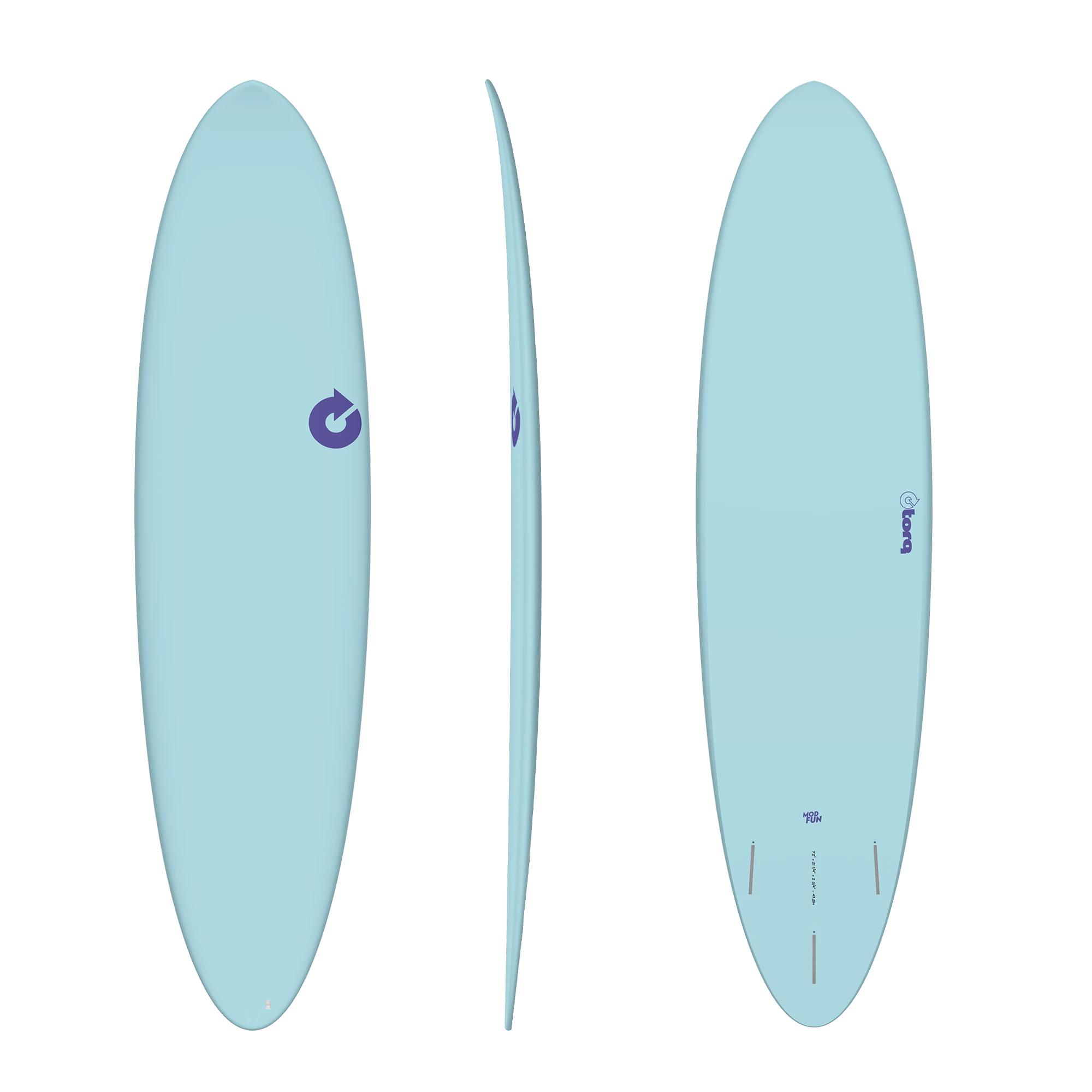
For example, a used Channel Islands CI Mid and a new Torq Mod Fun might both appear on a mid-length shortlist. The stock CI Mid at 7′0″ is 44.9 L and uses a 2+1 fin arrangement; Torq lists its 7′2″ Mod Fun at 47.2 L and describes width under the chest with a pulled-in tail. That does not make them interchangeable. The comparison tells you what to inspect and which questions to take to a shop, not which one wins on a spec sheet. Custom and older boards may also differ from today's stock charts.
If you cannot explain why both candidates belong on your shortlist, resolve that before comparing their prices. You can use the Board Hogs model catalog to identify alternative shapes rather than assuming the expensive label is the right design.
What the new board buys you
A new board gives you a known starting condition. You can check its printed dimensions, inspect it before accepting delivery, and ask the retailer exactly what support comes with it. Value-range does not necessarily mean a thinly built throwaway. Torq says its TET construction uses an EPS core, biaxial fiberglass, epoxy resin and a molded outer skin, with durability and value as explicit design goals. Those are Torq's claims about its own build, not a guarantee against damage. Firewire makes the same broader point in its FAQ: even boards built for durability can ding or break.
There are tradeoffs. A stock shape offers less room to customize the foil, rails or fin placement for you. A construction sold for toughness may have a different weight and response from the board you are used to. Decide whether those differences matter for your intended waves instead of treating “epoxy” or “PU” as a quality grade. And ask what is actually in the sale: Surftech's FAQ says its boards generally do not include fins unless stated otherwise. The full cost may include fins, leash, bag and transport even when the board itself is new.
What a good used board can offer
The appeal of used is real: you may find a shape, construction or custom size that suits you better than a currently available stock board. If its condition is honestly documented, a repaired ding does not automatically make the board worthless. The issue is whether the repair was sound, the core stayed dry, and the asking price reflects what you are taking on.
Inspect the board clean and in good light. Look along the rails and bottom for cracks, soft areas and fresh patches; inspect fin boxes and leash plug; ask what was repaired, when and by whom. Ask to see the dimensions written on the board rather than relying on a listing's model name. A photograph cannot tell you whether a core is wet or a soft area is spreading. If damage is unclear, get a local repairer's view and a quote before you pay. Surftech's repair guidance recommends a repair shop when the extent of damage is uncertain.
Material matters to that quote. Torq's repair FAQ says its EPS/epoxy boards require epoxy repair resin, not a polyester ding kit. Firewire's care guide likewise warns against polyester resin on its EPS-based boards and explains how water can enter damaged laminate. You do not need to diagnose a board in the parking lot. You do need to avoid pricing an unknown repair as if it were a harmless scratch.
Do not assume the warranty follows the board
A receipt can matter, but policies differ by maker, retailer, place and date. Surftech's current limited warranty, for instance, covers manufacturing defects and calls for proof of purchase from an authorized dealer and a visible serial number. It excludes normal wear and previous repairs. Firewire's quality-claim instructions ask for proof of purchase, the board serial number and photos. Neither page is a promise that a secondhand buyer inherits coverage. Ask the maker or selling shop about the exact board before assigning any value to a supposed transferable warranty.
Returns are a separate question. A new board may be easier to inspect before use, but do not assume you can surf it and return it if you dislike the feel. Retailers set conditions; Firewire's published return terms require an unused, unwaxed board for the policy described there. Check your seller's local terms before buying either option.
Compare the full purchase, then choose
| If this is your situation | Start here | Check before paying |
|---|---|---|
| The used shape is clearly better suited to your waves and passes an in-person inspection | Used premium board | Repair history, core and fin boxes, actual dimensions, price of any needed work |
| Both shapes fit, but the used board has unexplained damage | New value board | Construction, what is included, retailer support and final setup cost |
| The new board is a poor design fit, even at a comfortable price | Keep looking | A different stock model or a sound used board in the right shape |
Treat repair work, missing fins, travel and your time as part of the purchase—not as surprises after it. Browse used listings in the marketplace and compare their stated condition with current model information. If a seller cannot show you the board clean, explain a repair, or let you inspect it properly, let that one go. Another board will turn up; your first session on the wrong one cannot be refunded.