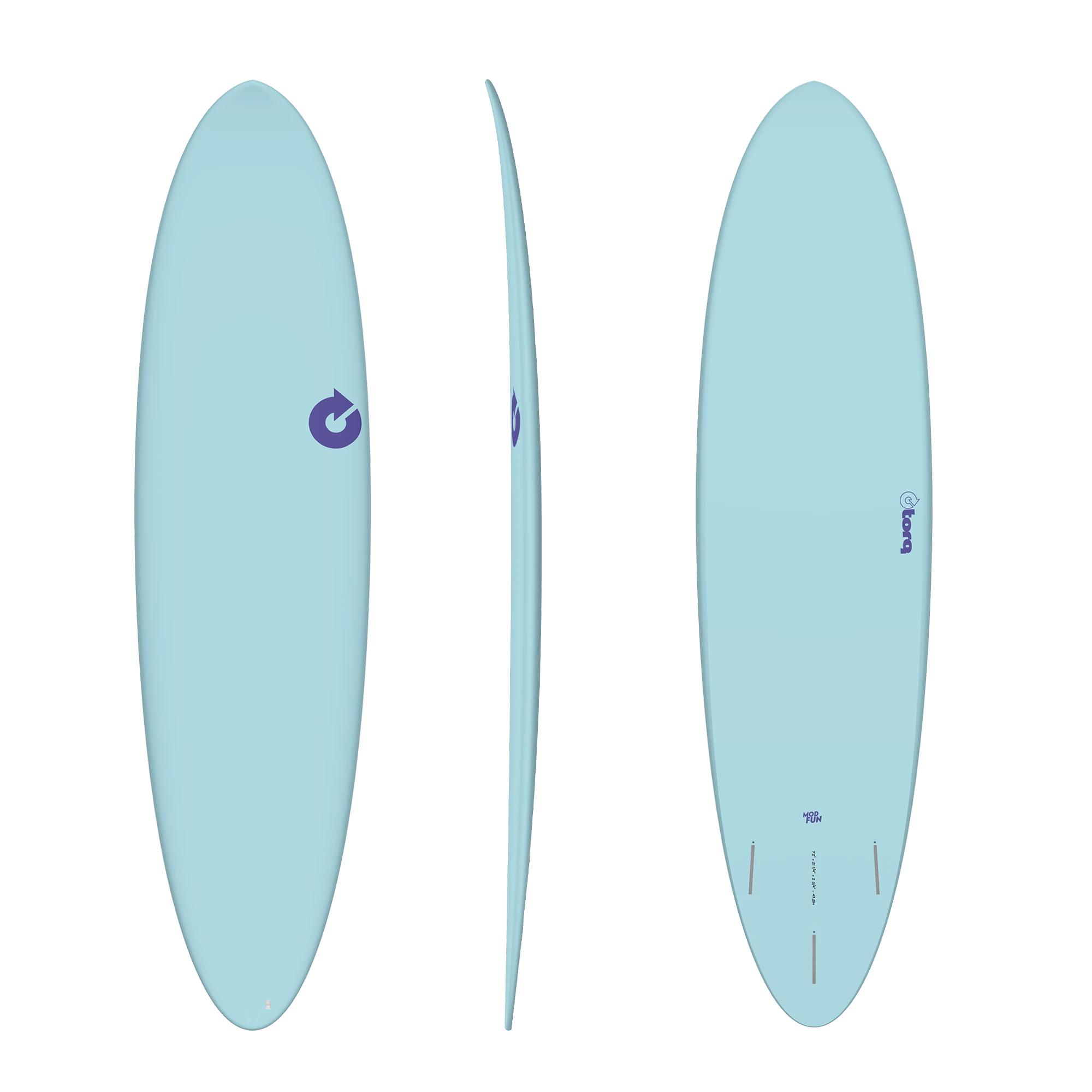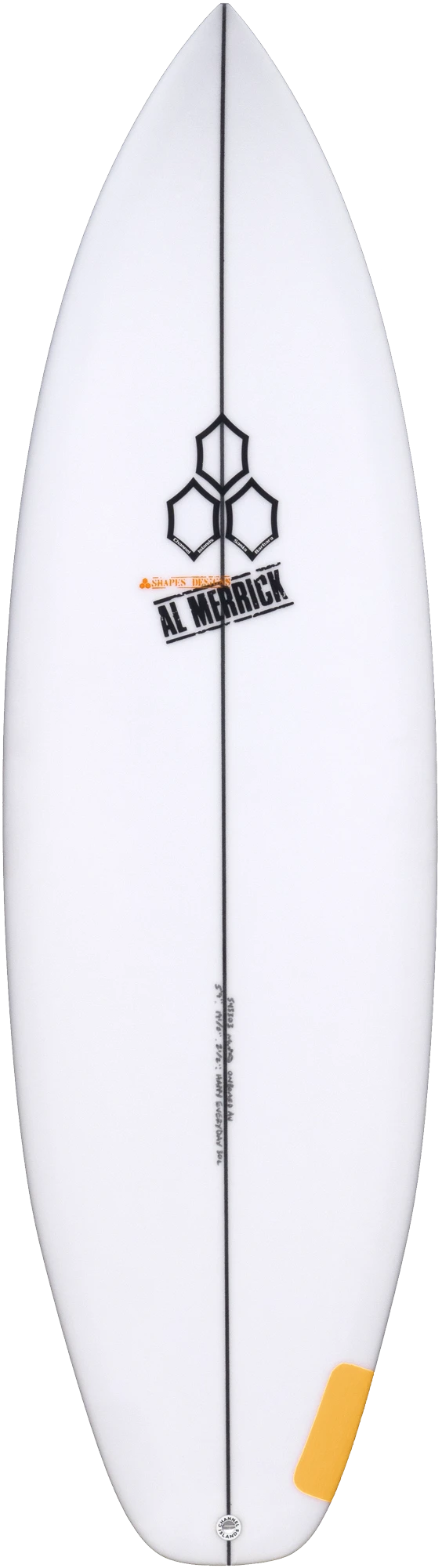
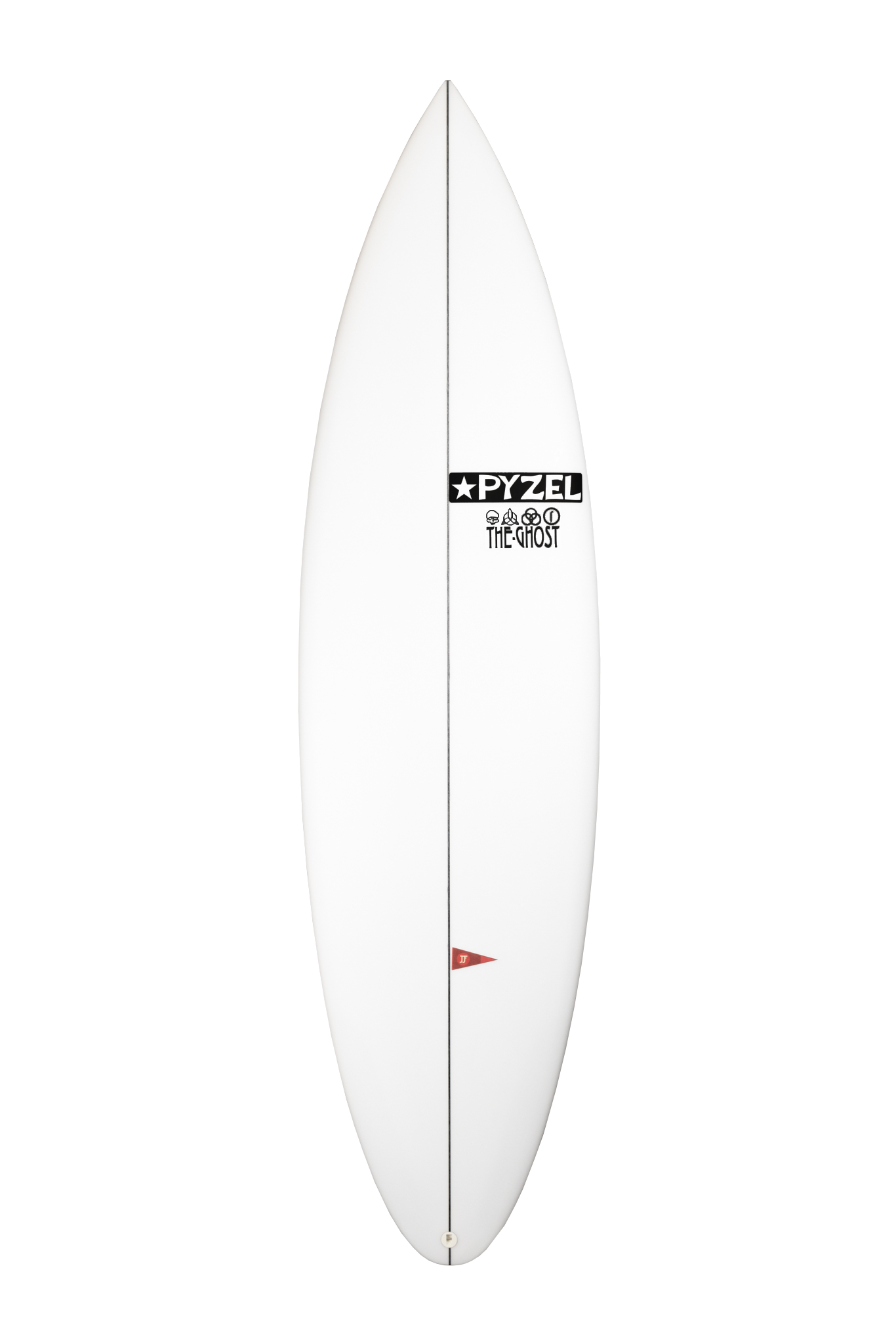
There is a board in your garage that you still like, but rarely take out. You remember what it cost new; a similar one has an ambitious online asking price. To find what yours might bring, start with its condition and the alternatives buyers can actually find.
Identify the board before comparing prices
Write down the maker, model, length, width, thickness, volume, construction, fin system and any custom changes. Photograph the dimensions written near the stringer or tail. If the model name is vague, compare its outline and markings with the maker's product page and Board Hogs' model catalog. The details matter: two boards with the same logo can be different sizes or constructions, and a buyer shopping for one will not treat them as interchangeable.
If a current version is still sold, check its current new price at the maker or a retailer. That gives a buyer's alternative to your board. An old receipt may include a different construction, tax, fins or a bag, and reflects the market when you bought it. There is no reliable universal depreciation percentage. For a discontinued model, use the closest current design as context, then lean more heavily on comparable used boards.
Describe condition as a buyer would see it
Strip enough wax to reveal the deck and rails, clean the board, and inspect it in good light. Record ordinary pressure dents separately from repaired dings, open damage, soft areas, fin-box movement or signs of water intrusion. A shop's condition scale is a useful reality check: Central Coast Surfboards treats foot dents as compatible with its better used grades, while multiple repairs and cracks around boxes move a board down its scale. Its grades are the shop's system, not a universal conversion to dollars.
Tell a buyer where and how each ding was repaired. A tidy sealed repair and an open crack create different amounts of uncertainty. Waterboyz's trade-in guide names open dings, water intrusion, delamination and buckles as major value concerns, and recommends cleaning a board so a shop can inspect it. If you are unsure whether a repair is sound or the foam is dry, ask a repair shop to assess it. A seller's guess from a photo should not become a promise of structural condition.
For damage that still needs work, get a local repair quote before setting your price. The quote gives you a concrete adjustment. Croyde Surf Shop says its offers allow for repairs and may exclude boards with snaps or delamination. Its policy shows why a board with an open problem belongs in a different comparison group from a clean, ready-to-surf one.
Find comparable sales, then inspect asking prices
Search for the same model and a similar size and construction first. If there are few matches, widen to boards built for the same job: a comparable small-wave fish, everyday shortboard or mid-length in your area. Note the date, condition, included fins, location and whether shipping is part of the deal. A clean six-foot performance board in another country is weak evidence for your repaired longboard sold by local pickup.
Look for completed sales where possible. eBay's pricing guide explains how to search completed listings, and its Product Research help page says the tool can show the actual accepted price for Best Offer sales. Even there, check that the results really describe comparable surfboards; a handful of shipped boards may tell you little about a local pickup market.
Then browse active listings in the Board Hogs marketplace, local shops and other nearby marketplaces. Those are asking prices. They show what buyers can choose today and whether your area is crowded with similar boards, but a listing that has sat unsold does not prove someone will pay its price. Keep sold and asking examples in separate notes. If you find no useful completed sales, say so and treat the active listings as a starting range to test, not a verified market value.
Make adjustments you can explain
Start near the middle of your closest comparable sales, if you have enough of them to see a pattern. Then work through the differences:
- Condition and repairs: Compare a clean board with clean boards. Account for open damage using a repair quote, and explain any professional repairs rather than hiding them under wax.
- Model and fit: An easy-to-use size of a popular everyday model may have more interested buyers than a very specialized custom. Stray Boards says the types it is seeking at the time, condition and unusual handshapes all affect what it will offer.
- Construction and age: Name the actual build, and compare it with the same build when possible. Age matters through wear, model changes and buyer interest; a calendar year alone cannot grade a board.
- Extras and total cost: State whether matching fins, a leash or a bag are included. Waterboyz notes that useful extras can help without erasing damage. For a nonlocal buyer, shipping and packing also change the total price they face; eBay's research tool reports shipping alongside sale prices.
- Location and timing: A local buyer avoids shipping a fragile, oversized item. A shop with several similar boards may offer less for another one; Croyde explicitly considers what is already moving through its stock. If you need a quick sale, set a price for that deadline rather than waiting indefinitely at the top of the active listings.
A trade-in offer is another useful data point, with a different job. A shop has to inspect, hold and resell the board, so Waterboyz explains why the convenience of a trade usually yields less than a direct sale. It can still be the right choice if avoiding weeks of messages matters to you.
Set a price and learn from the response
Choose an asking price you can justify with your comparable notes, and decide in advance what offer you would accept. Put the exact model and dimensions, clear photos of both sides and every repair, the fin setup and what is included in the listing. If buyers keep asking the same unanswered question, improve the listing. If it gets views but no serious inquiries, revisit the comparisons and price.
Some boards deserve a different approach. A documented collectible, an unusual handshape or a board with credible provenance may need a specialist shop or auction comparison. Ordinary used-board listings are poor substitutes for that appraisal. For most boards, honest condition notes and a few genuinely comparable sales will get you closer to a fair price than either nostalgia or the highest number on a search page.