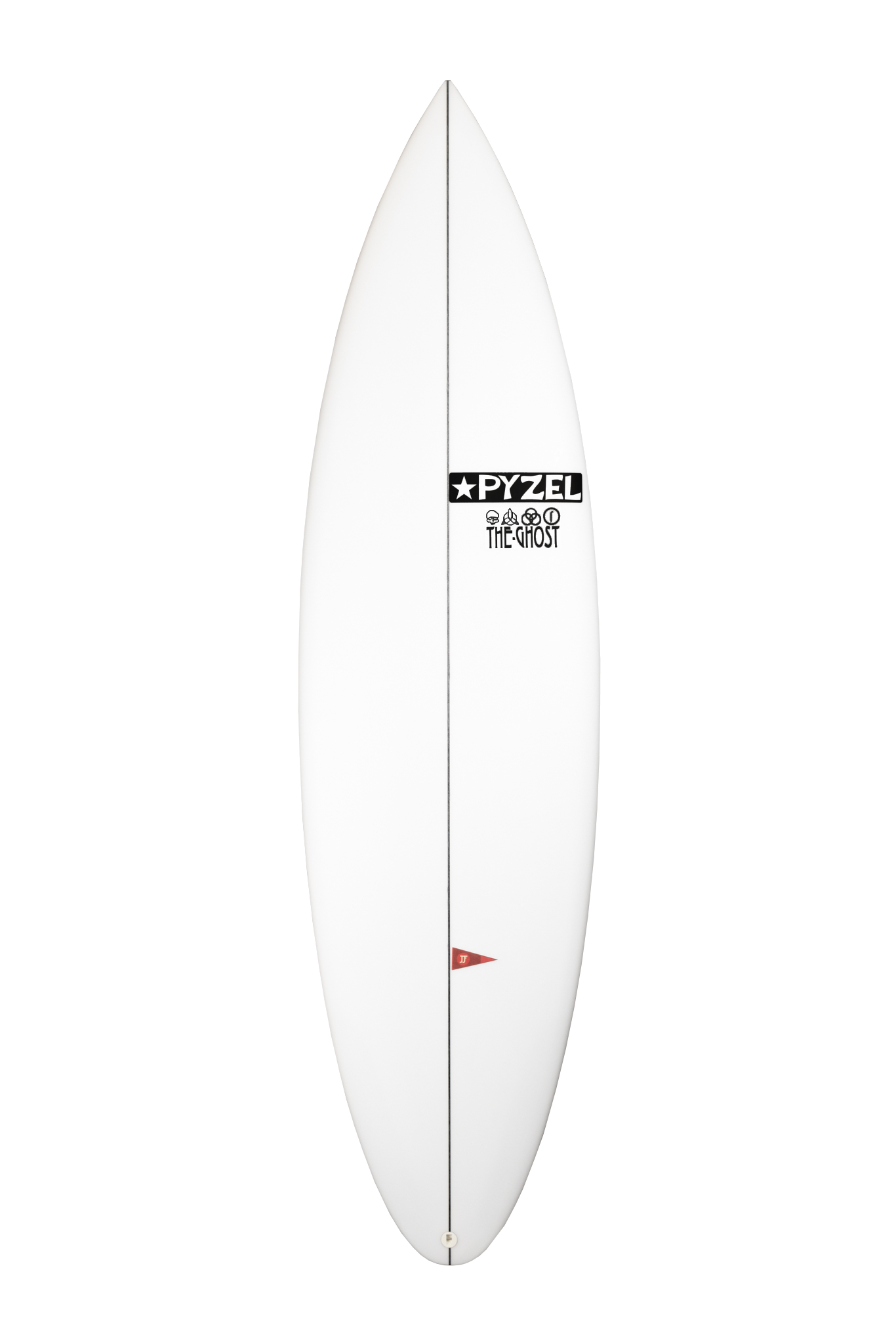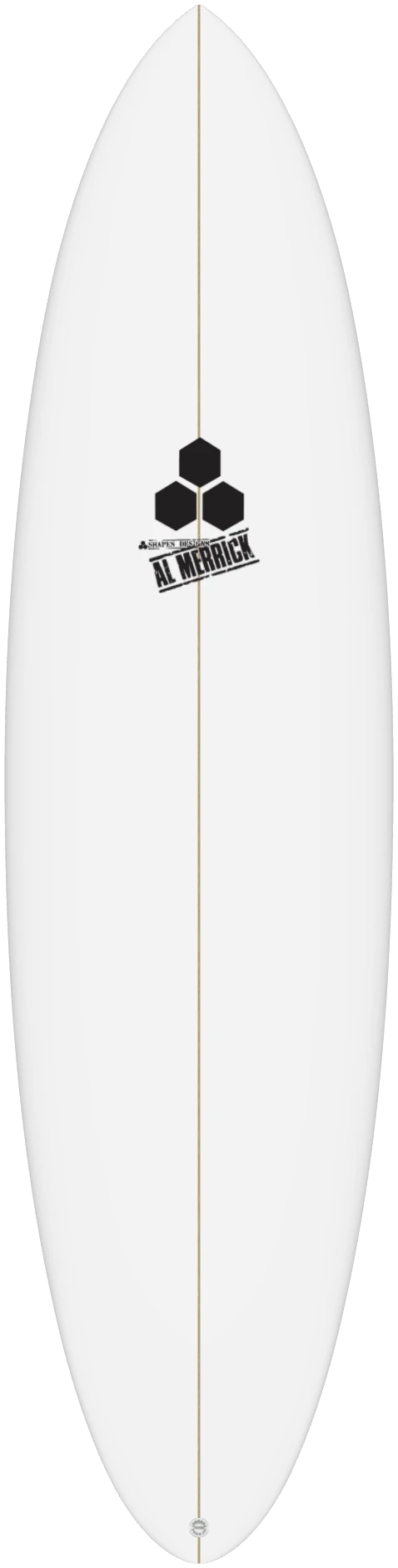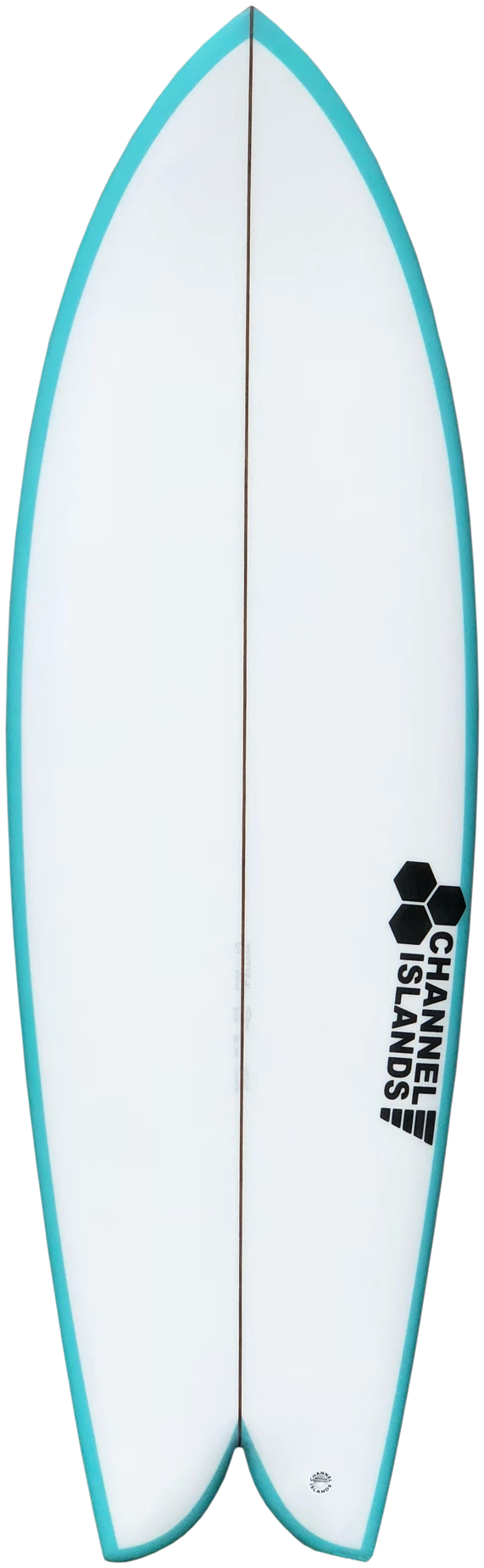
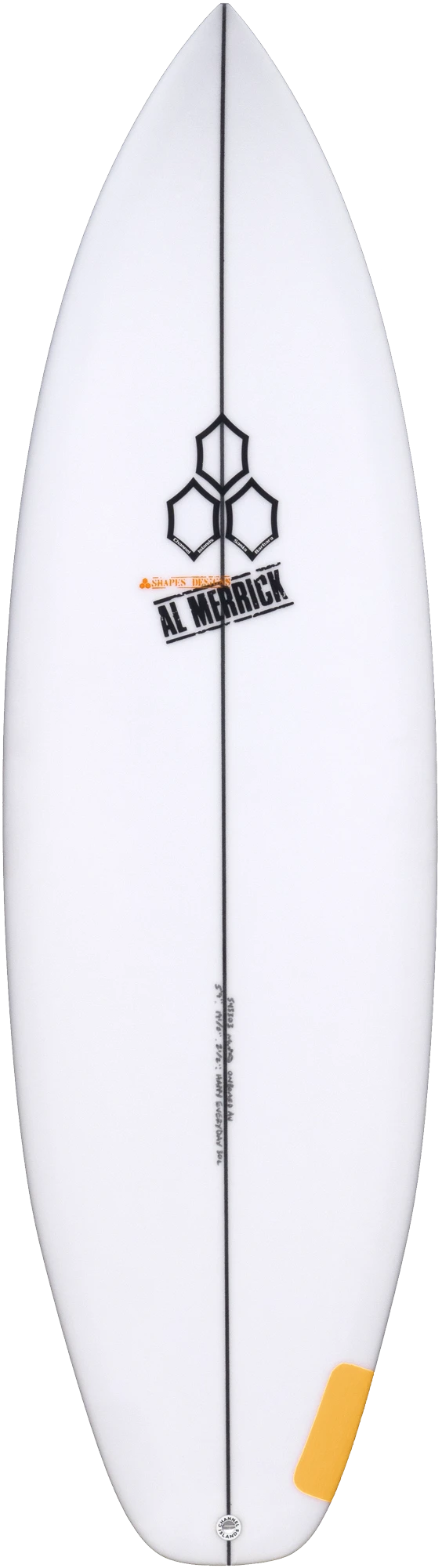
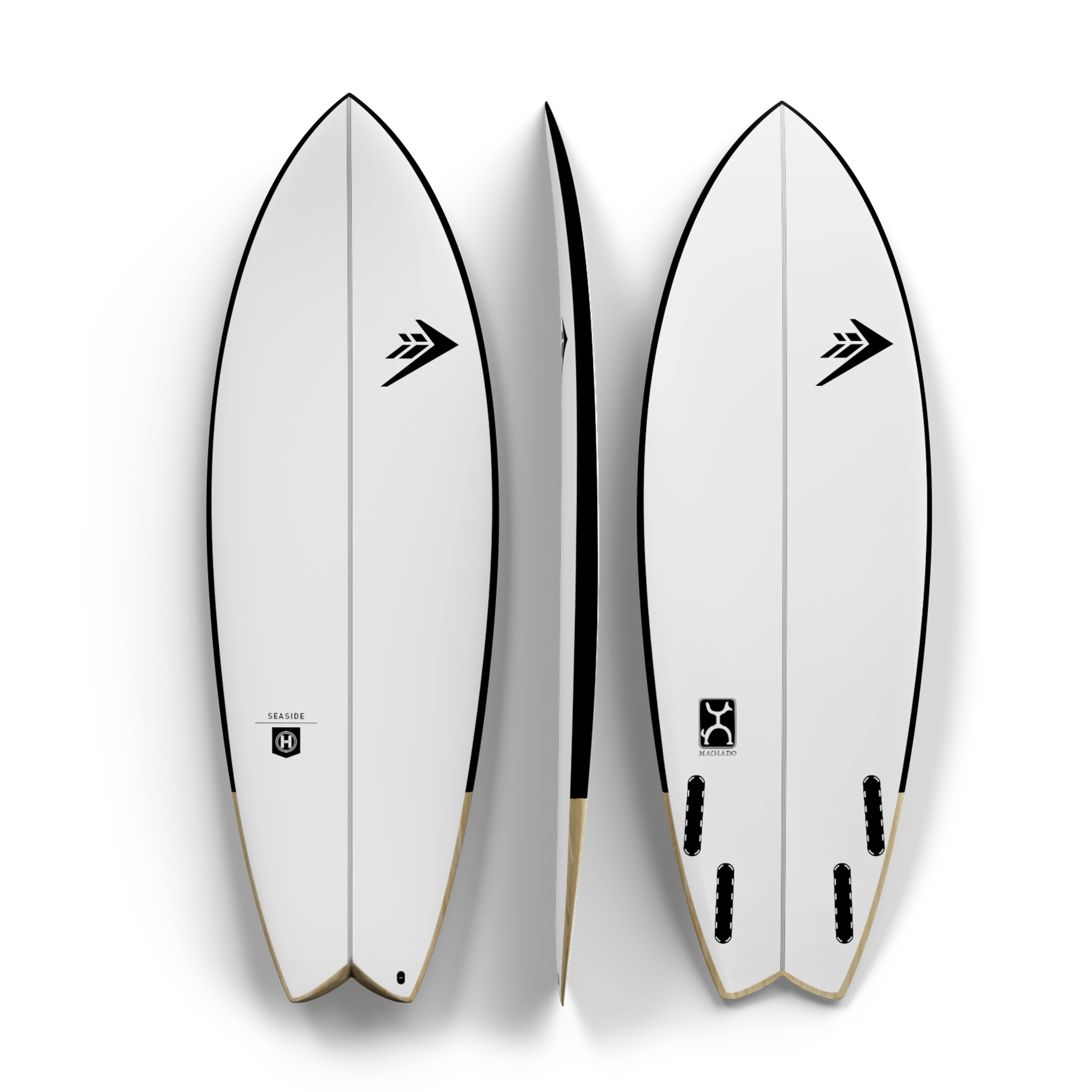
Three boards on the rack can look almost identical from above, yet have two, three or four fin boxes underneath. It is tempting to turn that into a simple rule: twins are loose, thrusters have control, quads are fast. Those are useful starting impressions, but they leave out the fin template, the board's tail and bottom shape, and the waves you actually surf.
The buying question is not “Which fin count wins?” It is “What kind of turns do I want this board to help me make?” Start with the board's design job, then look at the recommended setup.
| Setup | Start here if you want… | Think twice if… |
|---|---|---|
| Twin | Speed carried through a line, with room to draw a different kind of turn | You expect a new twin to feel exactly like your familiar thruster |
| Thruster | A predictable reference point for turning in varied surf | You are buying a dedicated small-wave board and want to explore a less conventional feel |
| Quad | Drive from a pair of fins on each rail, often with a lively small-wave brief | You assume every quad has the same hold or pivot |
Twin: a different line, not just one less fin
A twin has one fin near each rail and no center fin. Within that basic layout, there is a lot of variation. A long-based keel, an upright twin, and a twin-plus-trailer set are not interchangeable experiences. FCS's fin data shows how much base, depth, area and sweep vary even among its twin templates. Those details help explain why “a twin is loose” can be true of one board and misleading on another.
The Channel Islands FishBeard is a concrete example. CI recommends a twin-keel setup and describes redesigning the back half of a shortboard-derived shape around it. The company says a surfer can drive from farther forward, then step onto the tail to engage the fins and rails. That is a maker's design description, not a promise that every rider will have the same result.
Choose a twin if the attraction is the way it invites you to build speed and connect turns across the face. Avoid buying one solely because you heard twins are easier in weak surf: a board's outline, rocker and volume still decide whether you can catch that wave and keep moving. A very small twin that you struggle to paddle will not be rescued by its fins.
Thruster: a dependable place to start
The thruster puts two side fins ahead of a center fin. FCS calls it a versatile, predictable setup with control across many conditions. That description fits why so many everyday shortboards use one, but it is still a design choice, not a verdict on every other setup.
Look at the Channel Islands Happy Everyday. CI recommends a thruster, but it also explains the lower rocker and altered outline that distinguish this board from its more performance-focused Two Happy. If the Happy Everyday enters a softer wave differently, you cannot attribute all of that to the third fin. The shape changed too.
Choose a thruster if you like a familiar reference point for bottom turns and direction changes, especially when the board will see a mix of waves. Think twice before dismissing a twin or quad as less controlled without looking at its tail, rails and intended fin template. Equally, do not buy a narrow performance thruster for slow waves just because three fins feel reassuring. The rest of the board has to suit the surf.
Quad: four fins, many personalities
A quad places front and rear fins near both rails rather than adding a center fin. FCS describes quads as drivey and fast with a looser feel than its thruster sets. The rear fin's size, position and foil matter, though. FCS's Gerry Lopez tri-quad notes discuss different quad-rear placement for narrow tails and wider fish or hybrid tails. “Quad” is a layout, not a single template.
The Firewire Seaside makes that especially clear. Rob Machado says he designed its bottom contours with the quad setup in mind; Firewire sells it as quad only. His Seaside quad fin set starts from a keel-fin feel rather than simply copying a thruster's side fins. It is a reminder to judge a board and its intended fins together.
Choose a quad when the board's overall design suits your waves and you want to try its rail-to-rail drive. Avoid treating four fins as an automatic upgrade for small surf or as guaranteed hold in a steep wave. A dedicated quad fish and a narrow-tailed quad step-up solve different problems.
What about five fin boxes?
A five-box board gives you the option to run a thruster or a quad, provided you own compatible fin sets. Firewire's Mashup is an example of a board designed to span weaker and better waves; Firewire lists compatible fin options for it in its fin range. This flexibility is useful if you want to learn how one familiar board changes when you swap fins. It does not turn that board into two completely different outlines.
If you can demo one, keep the board, waves and size constant and change the fins. That is a more useful comparison than riding a twin fish one day and a thruster shortboard in different surf the next, then crediting every difference to fin count.
Check the boxes before you pay
“Five-fin” tells you how many boxes are on the board, not which fins will fit. The fin system and tabs matter. FCS II has its own plug system; Firewire's Seaside set, for example, comes in variants labeled for different systems, with its single-tab version compatible with Futures. Check the exact board and fin set rather than assuming your existing fins will transfer.
Also ask whether fins are included, particularly on a used listing. A cheap board without a usable set can become a less cheap purchase. If you are undecided, start with the shaper's recommended setup, surf it enough to learn the board, then change one thing at a time.
You can browse fish models, browse shortboards, or compare board models in the Board Hogs catalog. Use those pages to narrow shapes and specifications; use the maker's fin recommendation and the physical fin boxes to finish the decision.