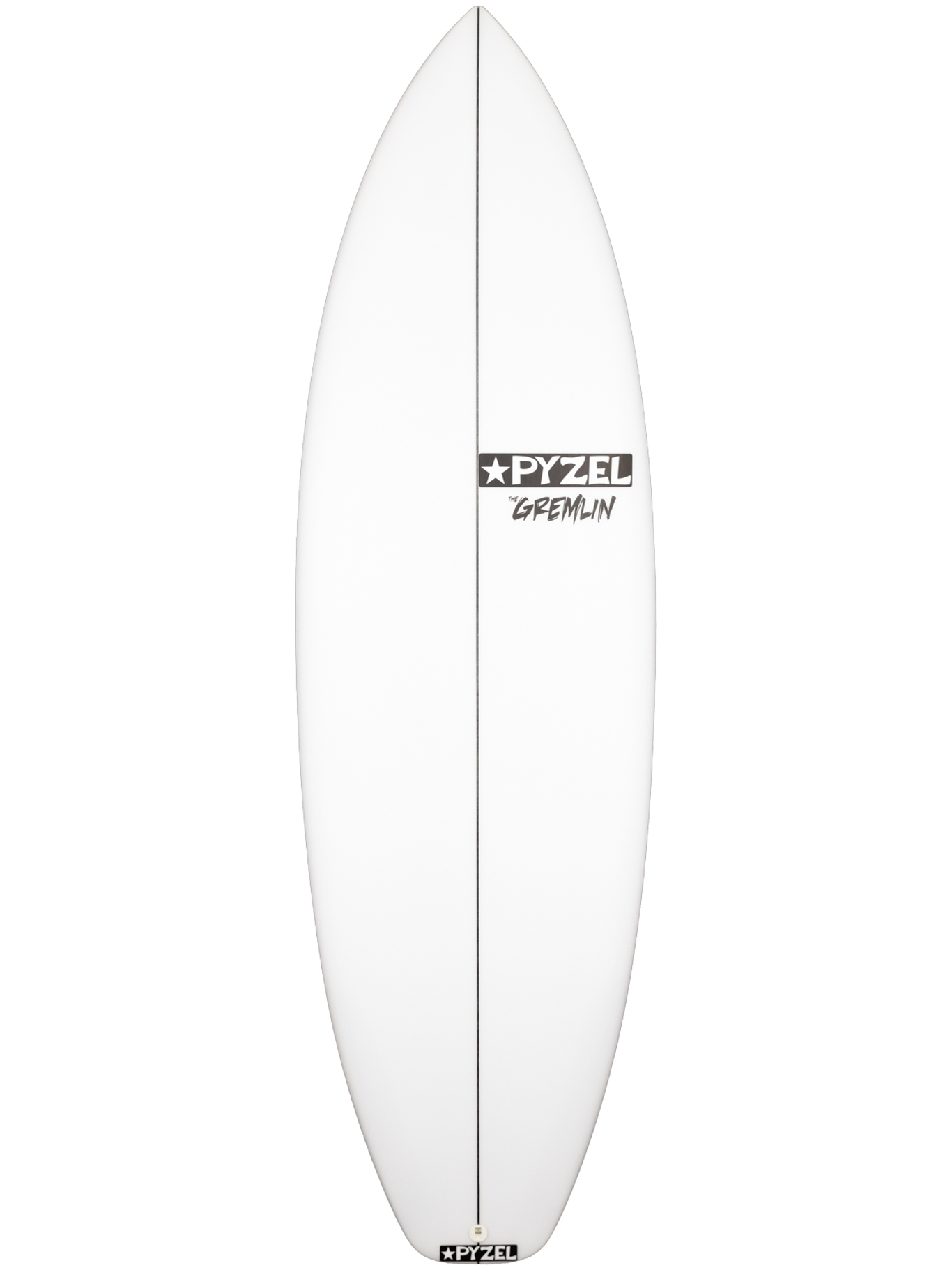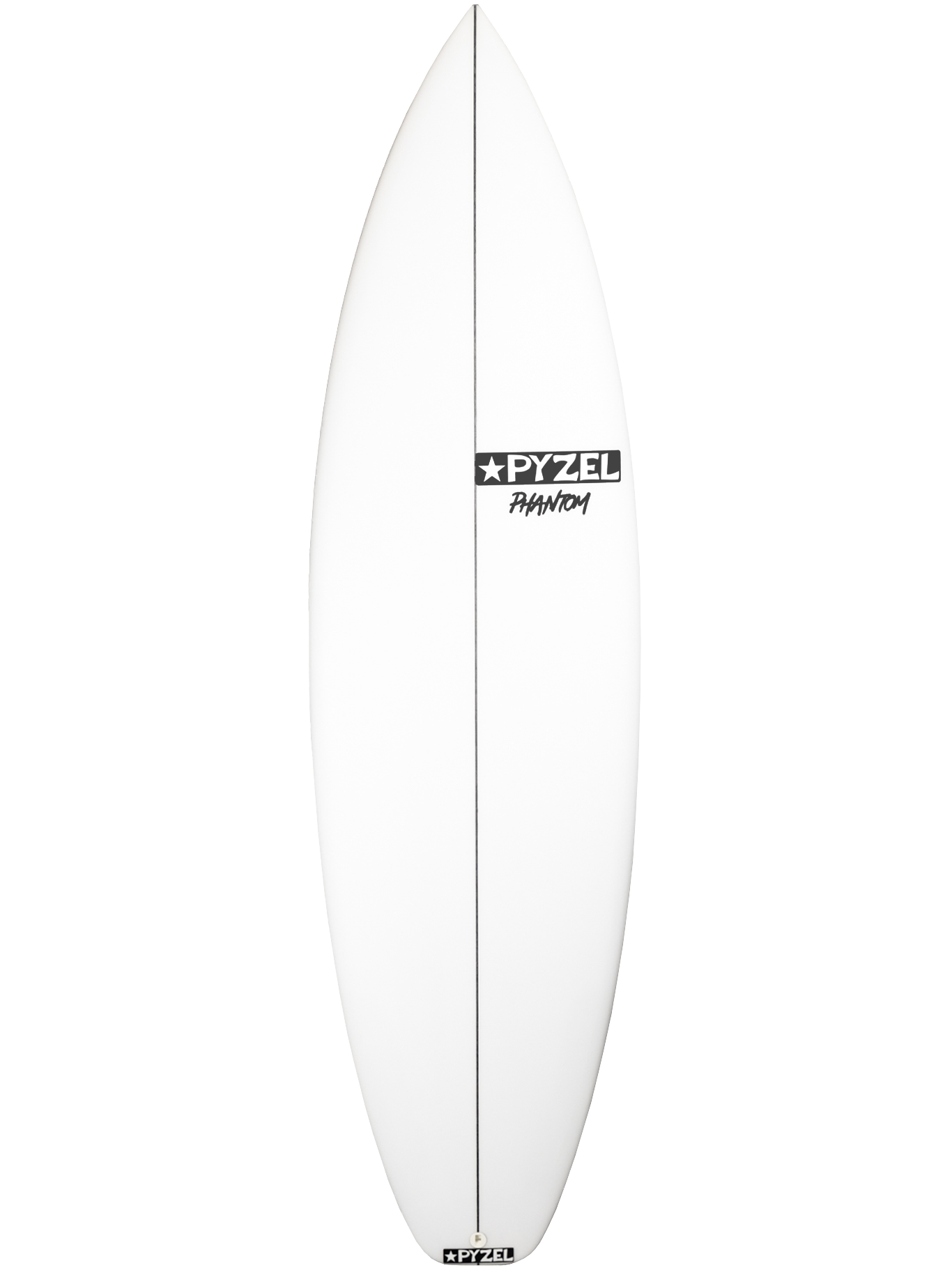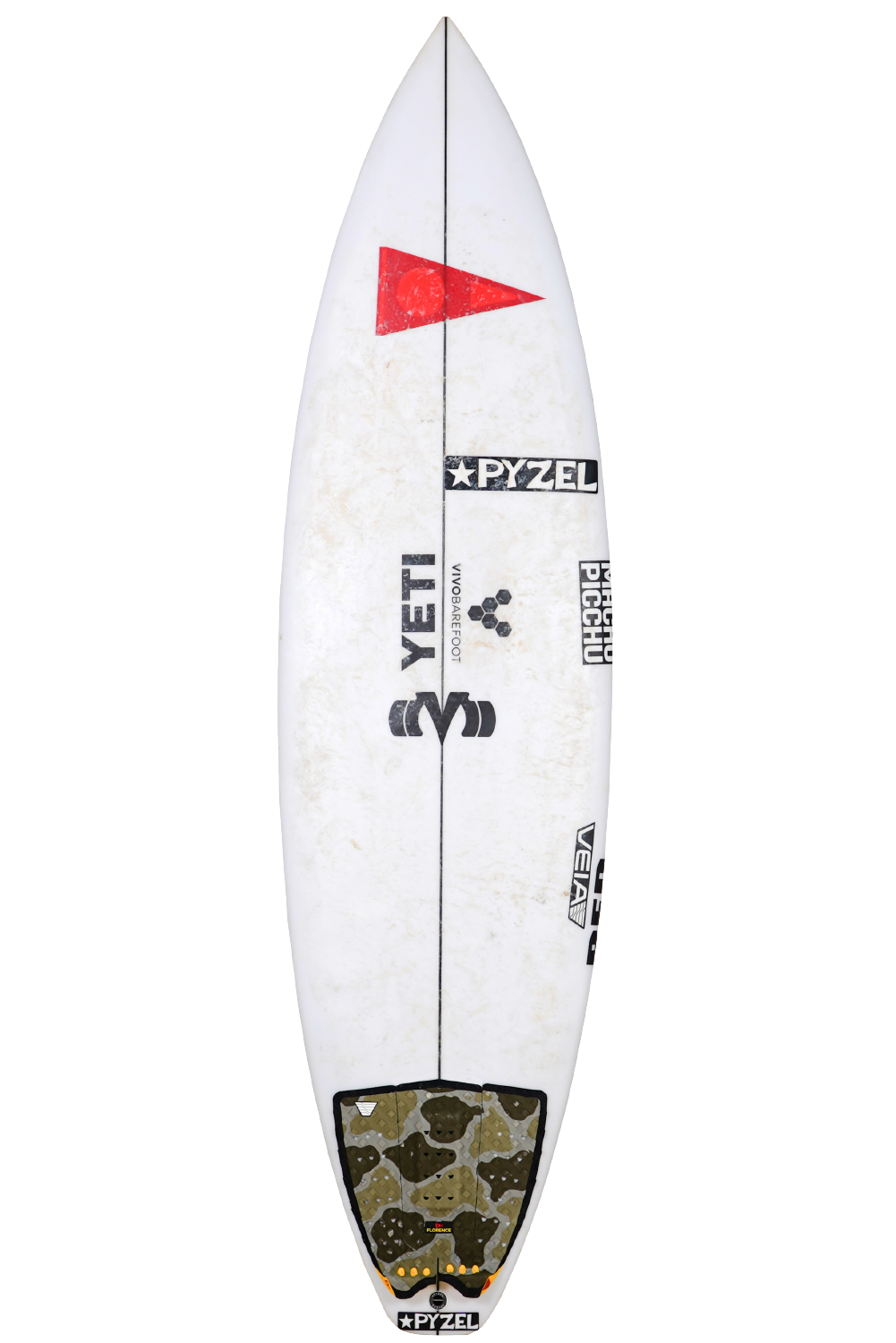
Turn a surfboard sideways at the shop. Even before you read the dimensions, you can see the bottom rising toward its nose and tail. That lengthwise curve is rocker. It helps decide whether a board runs easily through a soft patch, fits into a steep face, or turns in a tight space. It is worth looking at because two boards with similar liters can have very different curves.
Rocker is also easy to oversimplify. A flatter board is not automatically fast in every wave, and a curvier board is not automatically better. You are choosing a curve for the waves you surf and for the outline, rails, bottom and fins attached to it.
What does “entry” or “tail” rocker mean?
Entry rocker describes the curve toward the nose; tail rocker, often called exit rocker, describes the curve toward the tail. Shapers can change either end without changing the other. The middle can run fairly straight before a late lift, or the curve can flow more continuously through the board. US Blanks’ rocker guide shows how a blank maker measures the nose and tail rises from a bottom plane—and how an adjustment in the last 12 inches differs from a change spread along the whole board.
That distinction matters when shopping. “Four inches of nose rocker” is one number at the tip, not a complete map of the curve under your chest. A product page that calls its rocker low, medium or aggressive is giving you a useful clue, not a standardized measurement across every brand.
For weak waves, look for easy speed—but read the whole shape
When the face is flat and the wave offers little push, a straighter running surface can make it easier to carry speed without constant pumping. Firewire describes the Sweet Potato as a weak-wave groveler with low entry and exit rocker. Its wide outline, generous volume, deep double concave and pulled-in swallow tail are part of that same design brief. Calling it a “flat-rocker board” is true but incomplete: those other choices help explain why Firewire expects it to work in soft surf.
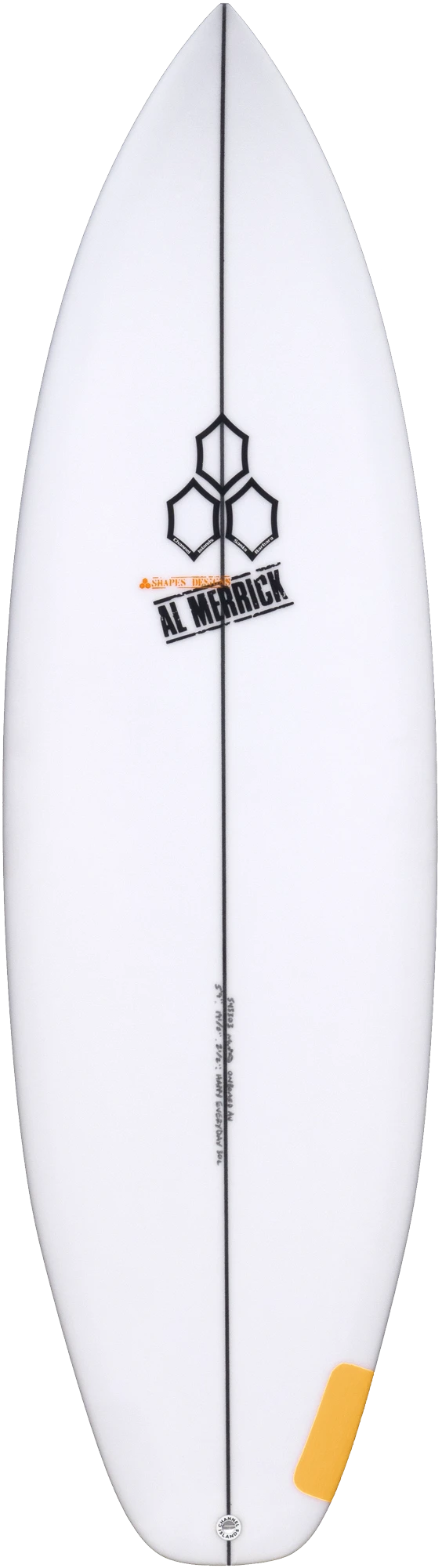
Channel Islands offers a subtler example. Britt Merrick developed the Happy Everyday from the Two Happy, lowering both entry and exit rocker to improve paddle and planing speed in ordinary conditions. He also shortened the rail line and changed the bottom contours. CI positions it between a dedicated groveler and its performance shortboard. If your local wave is usually shoulder-high but rarely perfect, that middle answer may be more useful than buying the flattest board on the rack. Compare the Happy Everyday’s catalog entry with other shortboards.
Choose a lower-rocker design if your current board repeatedly stalls across soft sections and you want a board for those days. Think twice if your normal wave stands up abruptly or your main complaint is that your board will not fit into a steep pocket. The extra planing speed you hope for may not address the turn or drop you actually want to make.
For steeper faces, curve can buy room to turn
A board with more curve can fit the wave face and let a surfer change direction closer to the pocket. At the nose, that can help on a steep entry or re-entry; at the tail, it can help draw a tighter arc. The trade-off is that the same curve often needs more wave energy or more active surfing to keep moving through a flat section. US Blanks sums up the design tension as speed versus turning radius, while Pyzel’s high-performance range generally pairs higher nose and tail rocker with thinner tails and less full rails for better-than-average surf.
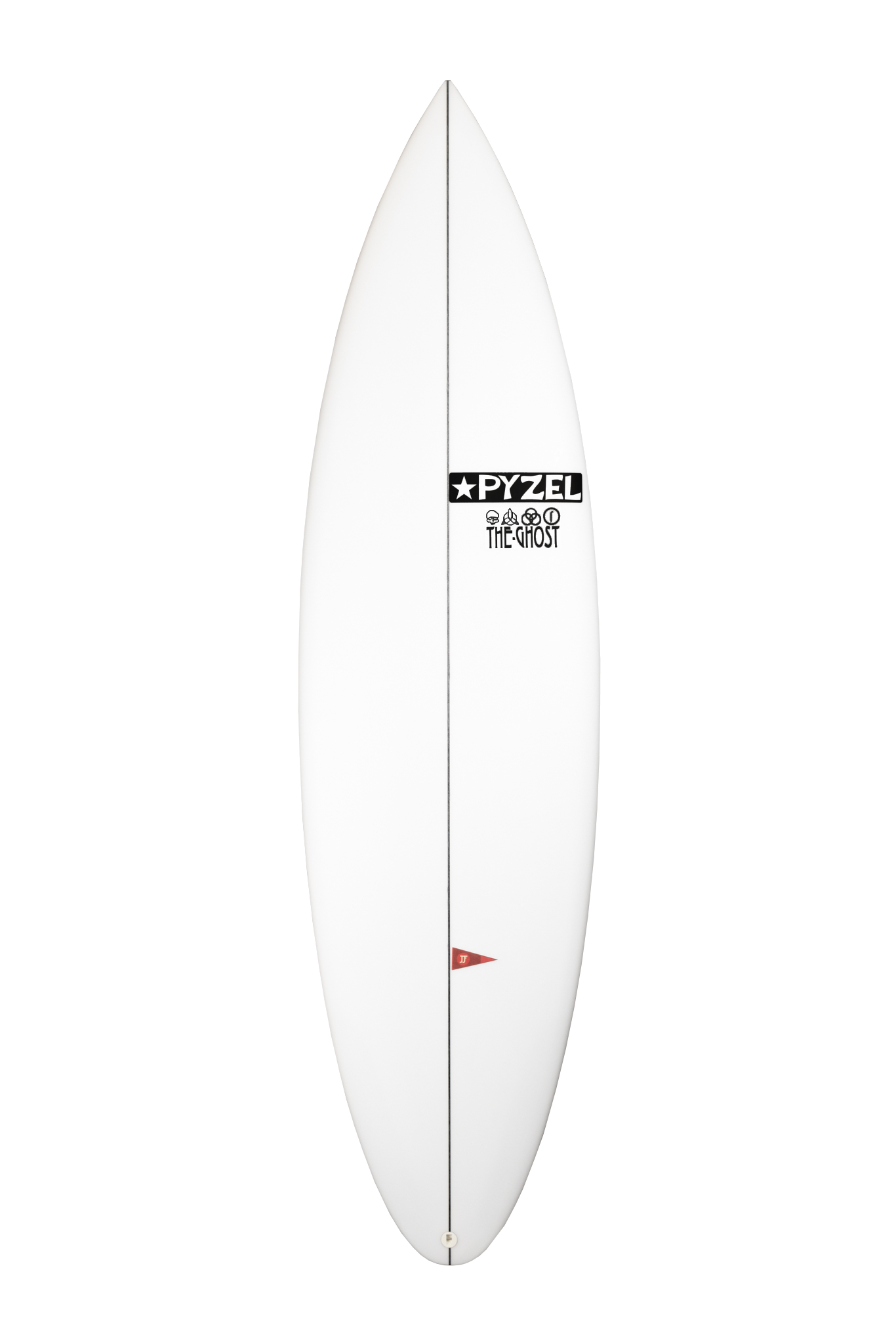
Do not assume good-wave boards have to be heavily curved from end to end. The Pyzel Ghost keeps a medium-to-low front rocker for paddling and early speed, then uses more curve through the rear for turning control. Pyzel also describes a pulled-in tail, thinner rails and forward foam. That mix is why a rocker label alone will not tell you whether a board suits the wave—or whether you can comfortably paddle it. You can inspect the Ghost alongside other Pyzel models, then check the exact board’s dimensions and fin boxes.
For an extreme example of the entry problem, big-wave surfer Peter Mel explains in Channel Islands’ Mavs Gun design discussion why he did not want to give up the nose curve needed for difficult drops. That is a specific gun for powerful waves, not advice to put more nose rocker on every daily driver.
Compare the curves, then ask about the rest
Start with the board you already know. If it catches waves easily but feels reluctant to turn in a steep section, compare its tail rocker and outline with a candidate designed for a tighter arc. If it turns beautifully once a wave has power but struggles through your usual soft mornings, examine a flatter everyday shape. Bring the dimensions of your current board to a shop or shaper; saying “it works until the wave goes flat” is more useful than requesting a particular rocker number.
Before buying, ask:
- What does my usual wave look like? A soft shoulder and a short, pitching beach break reward different compromises even at the same height.
- Where do I want help? Earlier wave entry, maintaining speed, or fitting a tighter turn are different jobs.
- Where is the curve? Check the entry, the middle, and the exit—not only the lift at the tips.
- What else changed? Width distribution, rail thickness, bottom contours, tail shape and fins alter how that curve works. CI changed several of these alongside rocker on the Happy Everyday.
- Am I looking at a stock or custom board? A used board or custom order may not share the product page’s intended dimensions and rocker. Inspect that actual board.
If you can demo two boards in familiar waves, do it. If you cannot, use the maker’s design notes and the Board Hogs catalog to narrow the field, then ask a local shop or shaper about the curves on the boards in front of you. Rocker should help you explain why a candidate might fit, not tempt you to buy from a single adjective.