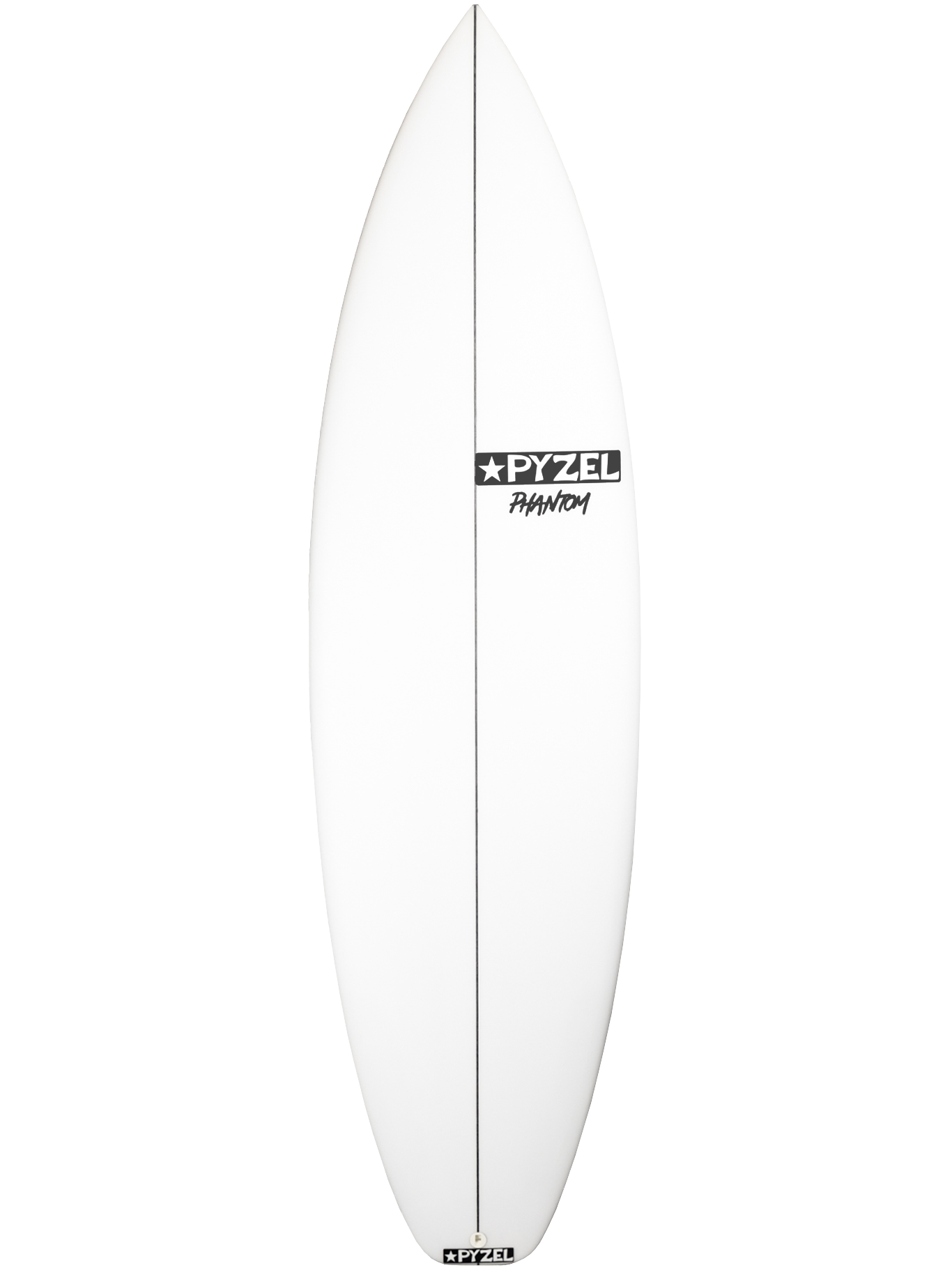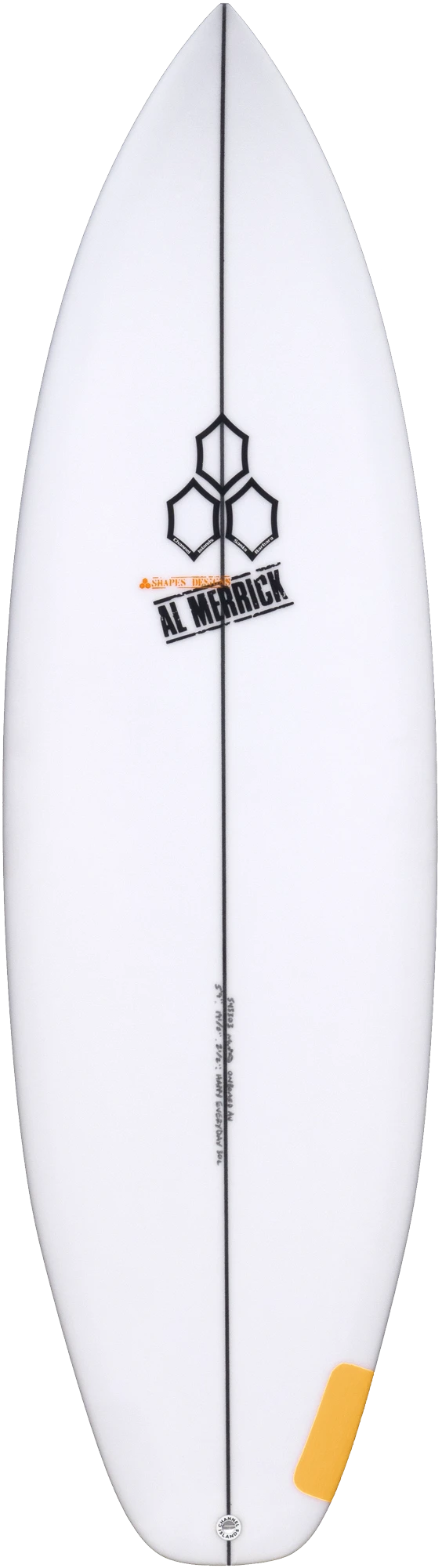
A tail is a useful clue, but a poor way to shop by itself. Two boards can have nearly identical dimensions, yet one ends in a broad squash and the other draws into a round pin. That last foot changes how much outline and rail you can put into a turn. It does not erase the rest of the board: rocker, fins, bottom contours and foam distribution still matter. Channel Islands makes this point in its tail-choice discussion.
The simplest shopping question is: what happens on the wave where my current board feels wrong? A tail can help you choose a direction once you know whether you need more planing speed in soft sections, more control when the face gets steep, or a different way of drawing a line.
Start with the outline, not the label
Look at the board from above. How wide is it a foot in front of the tail? Does the rail run fairly straight toward the fins, or curve inward early? Then look at the final few inches. A tail's name describes that ending, while the width carried into it determines how much surface is actually there. A narrow squash and a broad round are closer in purpose than the names might suggest.
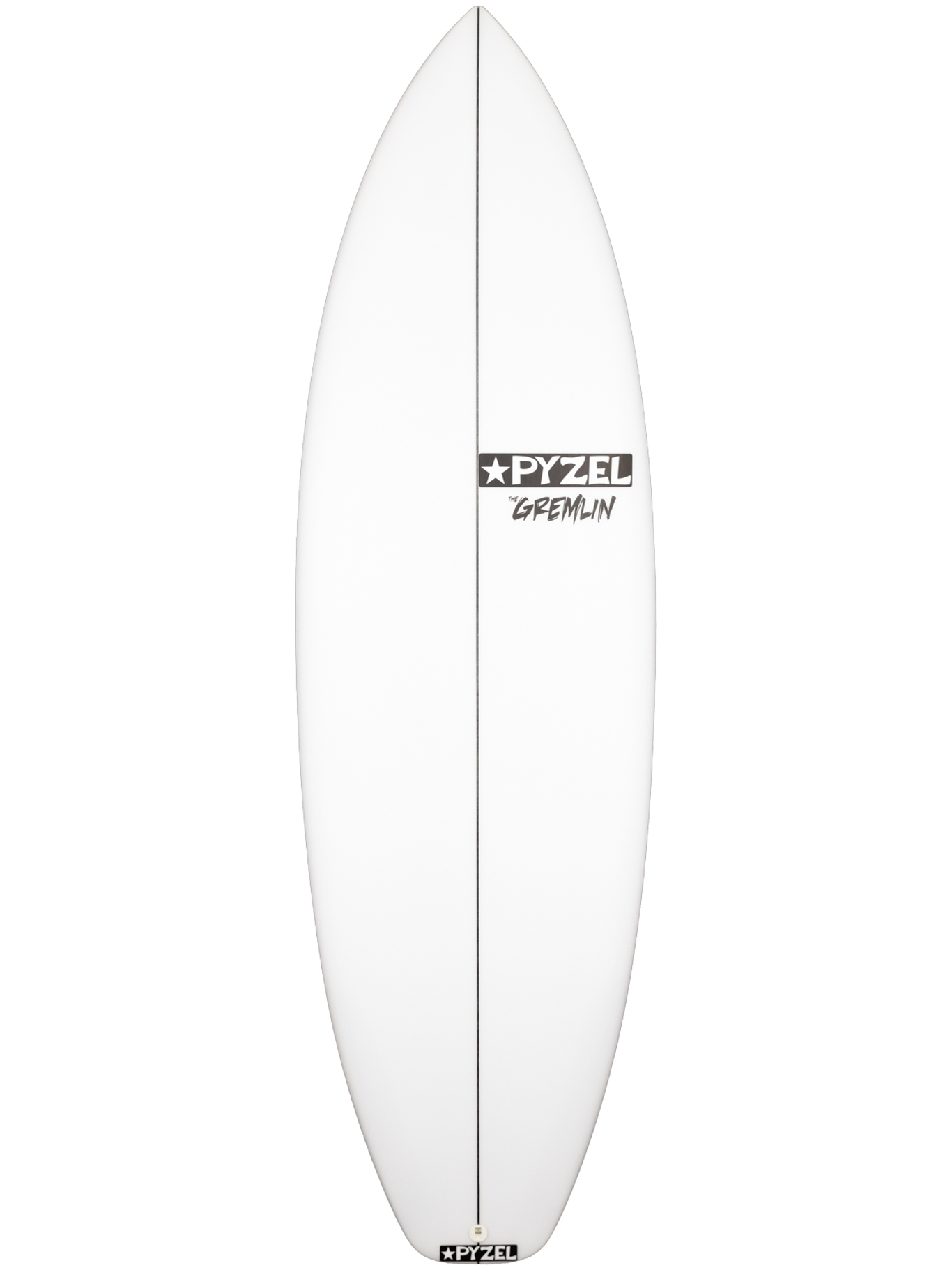
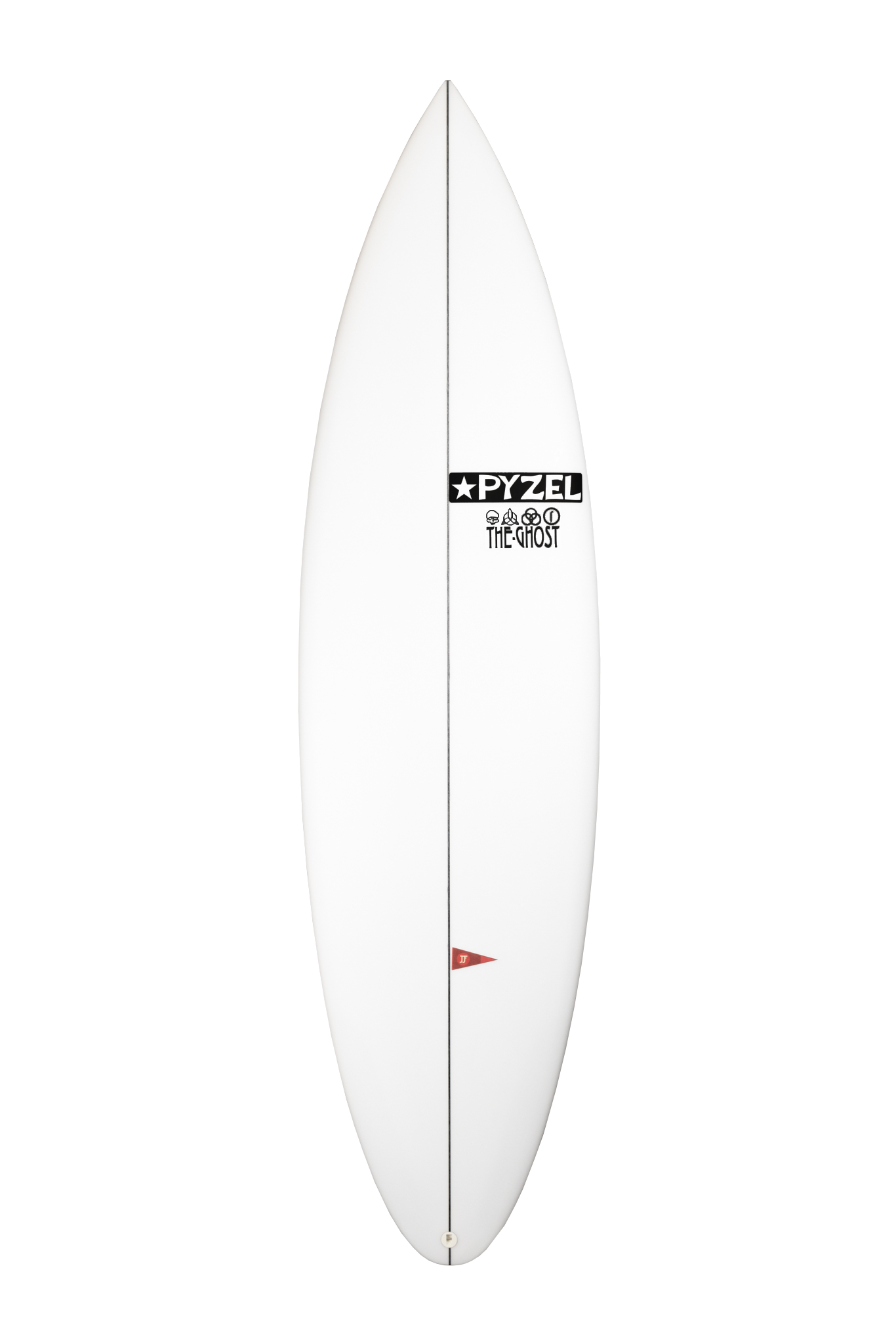
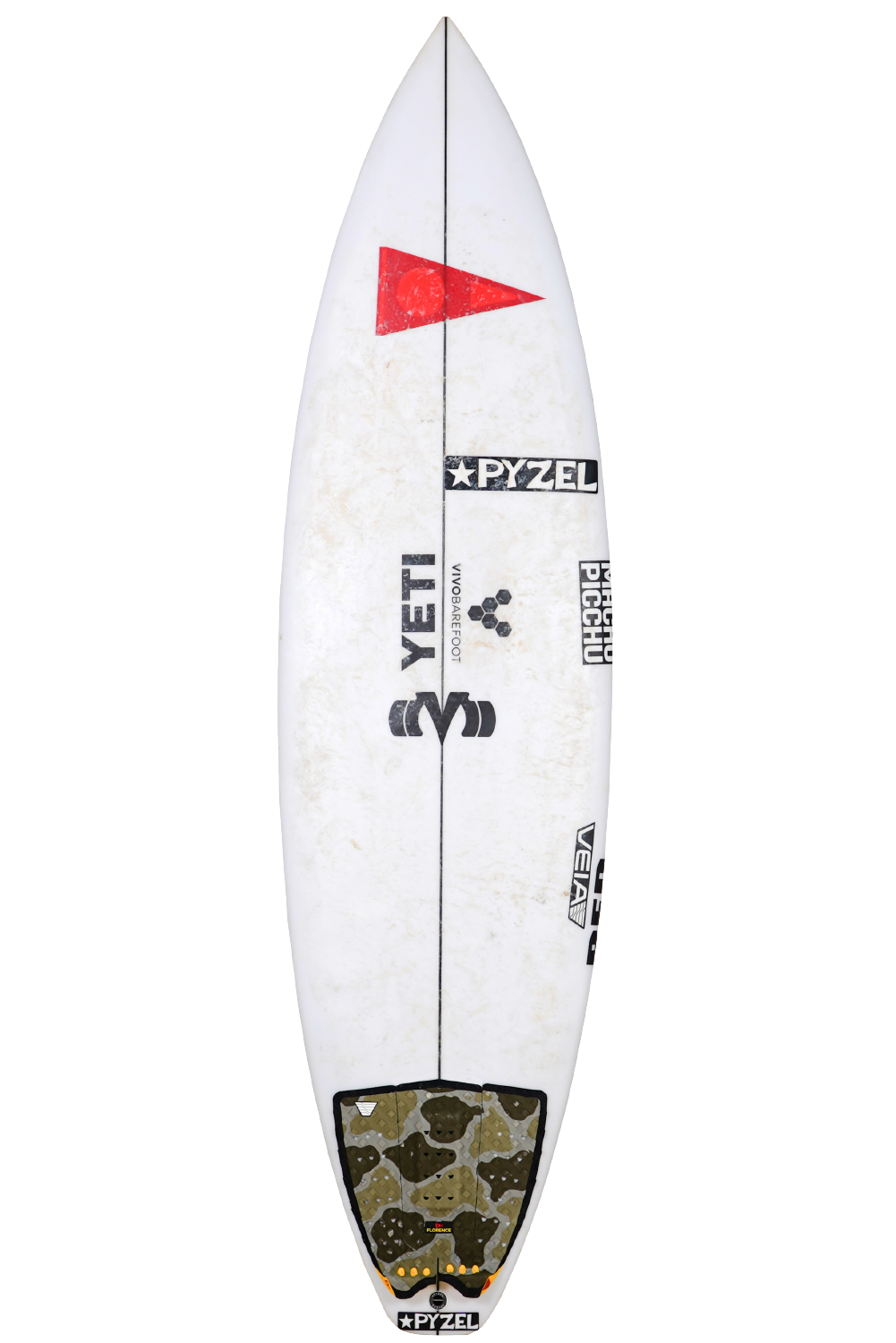
Pyzel offers a clear comparison in its Ghost Squash design notes: it reshaped the Ghost's round pin into a slightly pulled-in squash and straightened the last 12 inches of outline. Pyzel says that adds lift and a more immediate pivot for smaller, mellower surf. It also notes thickness refinements in the current file. This is a maker's description of a related pair, not proof that every squash beats every round pin in weak waves. Inspect the Ghost and Ghost Squash in the Board Hogs catalog.
Squash: keep some area under the back foot
A squash is a square-ish end with rounded corners. It leaves more planing area behind the fins than a tightly drawn-in pin on an otherwise similar outline, and its corners still give the rail an ending. That mix helps explain why it is such a common everyday shortboard choice. Surf Simply's design history traces the squash's rise alongside the thruster; the modern example is not a fixed recipe, though.
The Lost Rad Ripper makes the intention concrete: Matt Biolos replaced a round tail with a wide squash and changed the entry rocker to make the board more useful in small, soft surf. Notice the two changes. If your board loses speed each time the wall fades, a wider-tailed squash might be worth trying. If you already struggle to keep the tail settled on a fast, curved face, buying the widest squash you can find may move in the wrong direction.
Round: a continuous curve, with room for variation
“Round” covers a lot of ground, from a fairly full thumb-like tail to a narrow round pin. The common thread is a continuous curve instead of a straight edge ending in corners. A fuller round can still carry useful area; a pulled-in one gives more rail curve and less area at the very end. Ask which version the shaper means before assuming “round” equals “big-wave board.”
Lost's Ripper Round is a useful counterpoint to its original squash-tailed Ripper. Lost describes a little less area in the last inches, with more control and precision as the surf gains punch, while conceding a little small-wave lift. It also narrowed the nose slightly, foiled the tail, and altered the stock sizing. Those details matter: the tail participates in the result, but it did not act alone. A round can be a sensible everyday choice if your local wave has a real pocket and your existing wide-tailed board feels busy there.
Swallow: two tips, many different boards
The split makes a swallow easy to recognize, but its depth, tip width and surrounding outline vary wildly. A wide fish can retain area and glide while its two tips provide bite near the rails. Surf Simply's history of the fish explains why the original design could work in both punchy and weak surf; the swallow was part of a package with a short, wide outline, low rocker and twin keels.
Now compare that mental picture with Firewire's Seaside. Firewire says it narrowed the swallow tips and reduced tail area from its earlier Go Fish to create more curve for tighter turns. The Seaside is sold as a quad for small, weak waves. The point is not that a swallow automatically makes a board loose or fast: the shape around the swallow, and the fins beneath it, decide what sort of swallow you are buying. If you like trim and drawn-out speed, examine a more traditional fish. If you want to fit turns into a small beach-break pocket, look at a more refined swallow such as the Seaside. Browse fish models to see how varied that family is.
Pin and round pin: draw the end in
A pin draws the rails toward a narrow tip. A round pin eases that ending into a small curve; both generally give up planing area compared with a broad squash on a similar board. That can help a rail stay engaged when there is speed and water pushing back, but it cannot turn a board with the wrong rocker or dimensions into your step-up. Pyzel's standard Ghost uses a drawn-in tail in a design aimed at quality surf, while the Ghost Squash deliberately broadens the family toward smaller conditions. The difference is useful even if you never surf huge waves.
If your best days are genuinely steep and powerful, ask whether a more drawn-in tail belongs in your next board. If most sessions are slow and flat-faced, the same choice may cost you the lift you came shopping for. Browse shortboards and compare tail width, rocker and intended wave range together.
A better five-minute shop check
Put your current board next to the candidate, or line up their outline photos at the same scale. Look at the last foot of width, the rail curve into the tail, and the fin positions. Then ask the seller or shaper:
- Which wave was this exact model built to improve, and what does it give up there?
- Is the tail standard for this model, or a custom option? Check the actual board, especially when buying used.
- What else changed between the two versions—rocker, foil, rail, fins or stock dimensions?
For everyday soft surf, start by examining a squash or an area-carrying swallow. For more demanding faces, compare a fuller round with a pulled-in round pin. Then let the whole board and the waves you actually surf settle the decision.