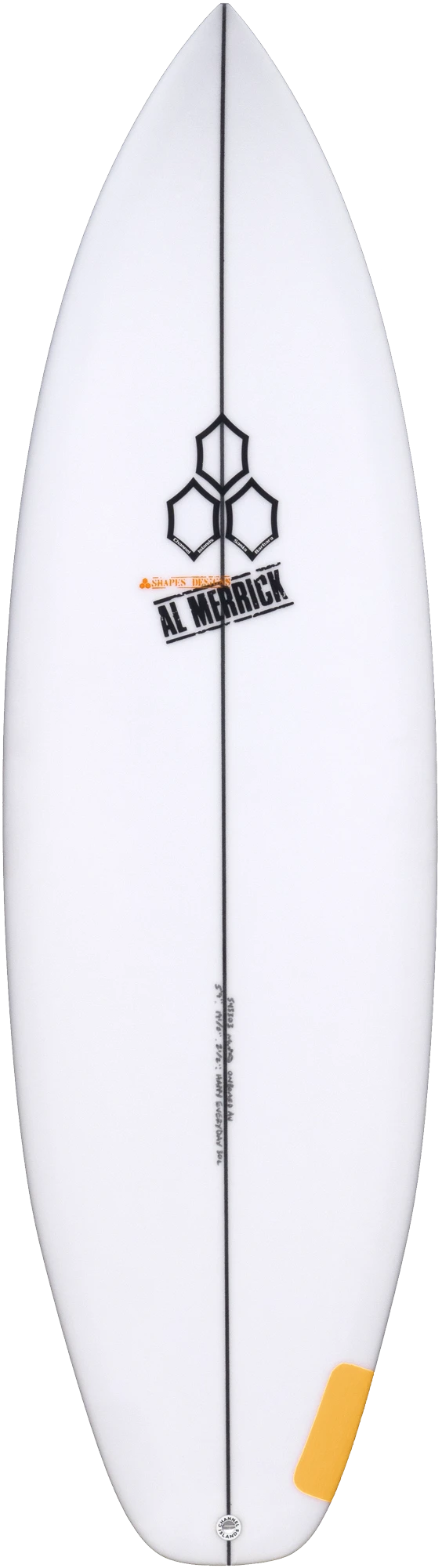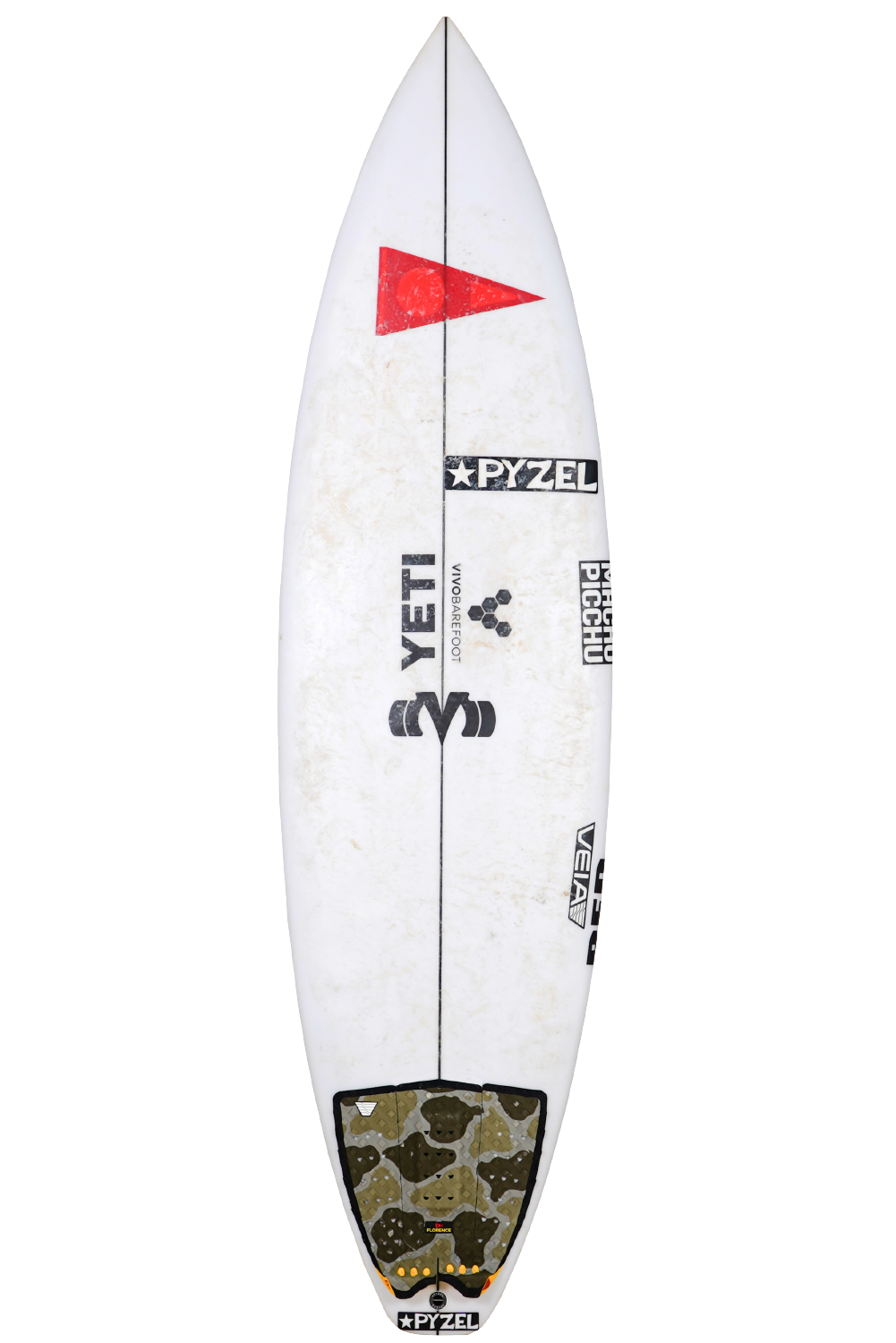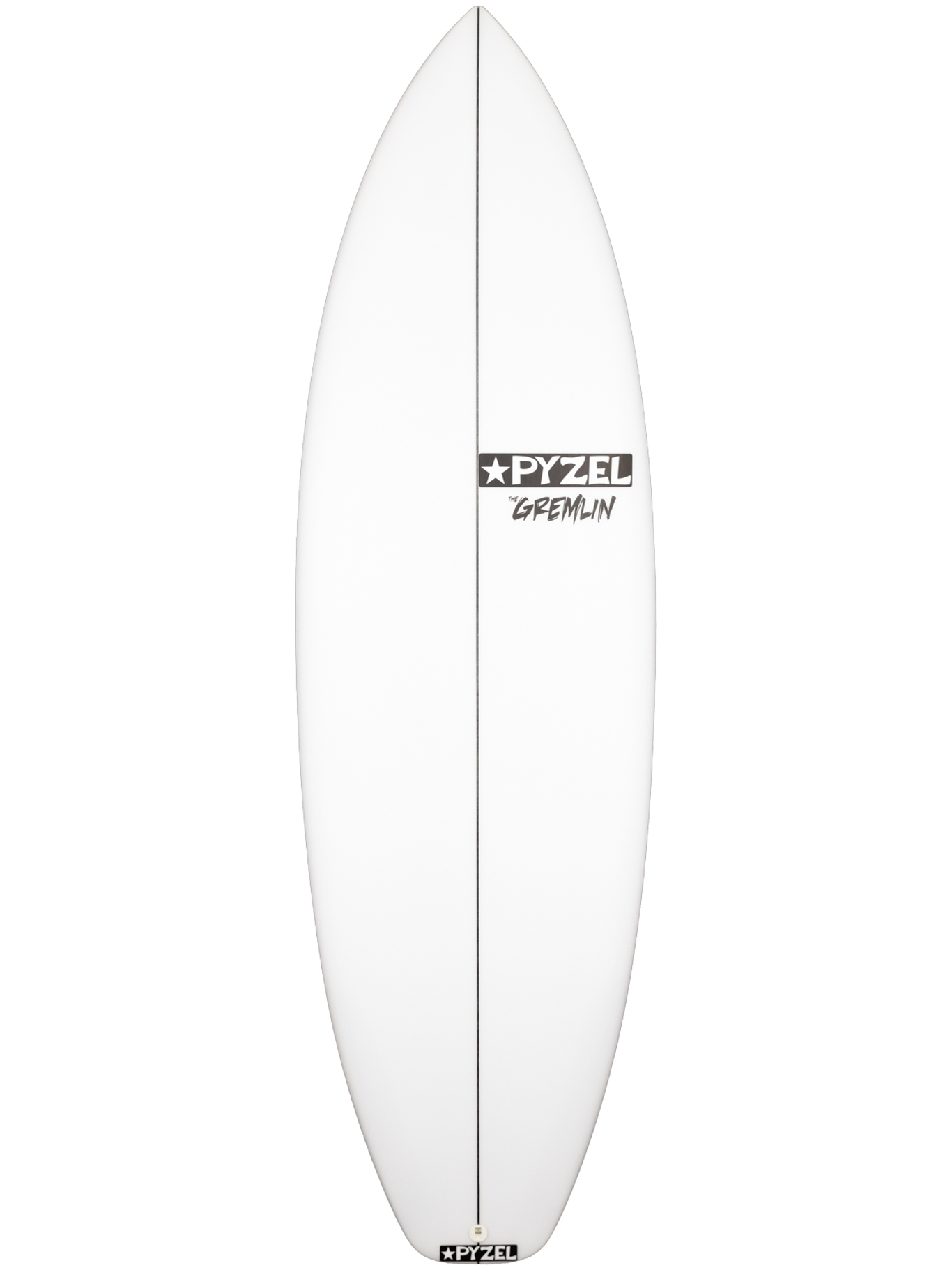
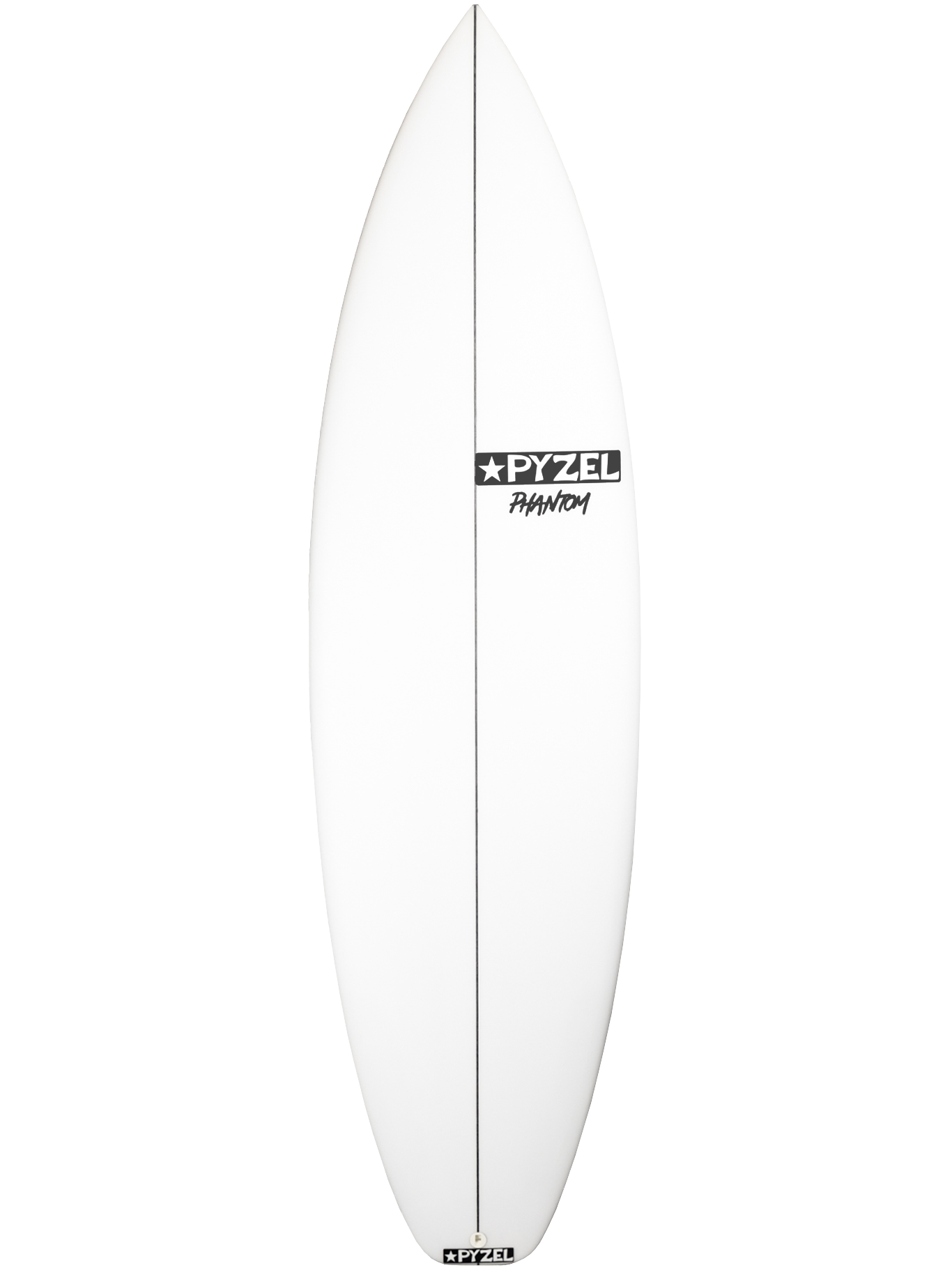
The numbers penciled beside a stringer can look like the answer to a buying decision: 5′10″ × 19½″ × 2½″, 30.1 L. They're useful, but they describe a board only about as well as height, shoulder width and weight describe a person. You still want to see its shape—and know what kind of waves it was made for.
Here is how to read a size chart without asking four numbers to do the work of an entire design.
Length: how much board is in front of and behind you?
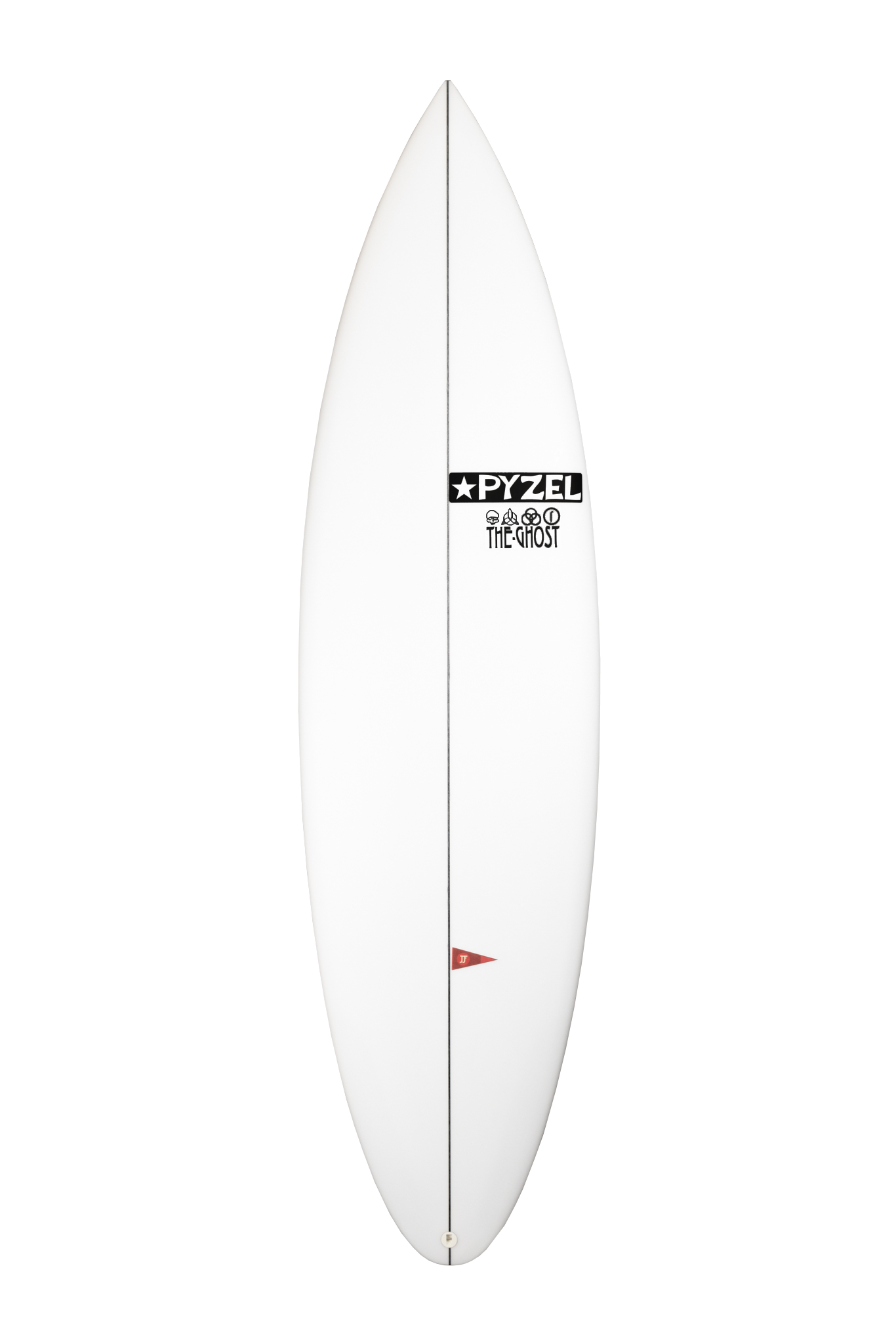
Length runs from nose to tail, as Shapers Australia explains in its dimensions guide. More length can give you more rail line and more board to paddle, but a long pointed board and a long round-nosed board do different jobs. Compare the outline and rocker before assuming that six extra inches automatically means easier waves. The Pyzel Ghost, for example, puts its wide point and some thickness forward while keeping the nose and tail more refined for powerful surf. It is longer than Pyzel's small-wave Gremlin at a similar volume, yet the maker assigns them different wave ranges.
Length also has a practical side: consider whether you can handle the board through the break, fit it in your car, and position it accurately on a wave. If you're moving from a foamie to your first hard board, a shorter number isn't a promotion. If it halves your wave count, it may slow the very learning you bought it for.
Width: one number, many outlines
The listed width is the board's widest rail-to-rail measurement. It does not tell you how much width the nose and tail carry, or where the wide point sits. Two boards can both read 20 inches across and have very different plan shapes. Surf Simply's volume and design discussion makes the same point: boards with identical traditional dimensions can differ markedly in shape and volume.
When you compare boards, look at the top-down photo. Is the nose full or pulled in? Does the tail stay broad through your back foot or narrow quickly? Pyzel says the Gremlin uses a wider outline and low entry rocker to carry speed through weak sections. The Phantom has added nose and tail width relative to its Ghost ancestor, aiming at everyday surf. Those descriptions tell you more about each board's intended job than the maximum-width figure on its own.
Thickness: where is that foam?
The thickness number is a deck-to-bottom measurement, usually taken where the board is thickest around the center, as Shapers Australia describes. It cannot show the foil: how the foam tapers toward the nose, tail and rails. A board can carry generous thickness under your chest yet have thinner rails that meet the water differently during a turn. Pyzel explicitly describes the Ghost's thickness as pushed forward with its tail and rails thinned out. That is a more useful buying clue than calling every board over 2½ inches “chunky.”
Pick up a board if you can. Look along it from the nose and tail, then feel the rail under your front and back foot. For a used board or an online order, ask for deck, bottom and side-profile photos. Thickness is part of a three-dimensional object, not a single uniform slab.
Volume: the sum, not the map
Volume is the space the whole board occupies, stated in liters. It gives a better sense of total flotation than length × width × thickness, because the board is full of curves. Surf Simply explains the measurement and why surfers use it to compare very different shapes. But volume is a total, not a map of where the foam went.
These three stock, standard-dimension boards all sit around 30 liters according to Pyzel's current charts:
| Model | Length | Width | Thickness | Volume | Maker's stated role |
|---|---|---|---|---|---|
| Gremlin | 5′6″ | 19¾″ | 2 7/16″ | 29.6 L | Shorter, fuller shape for smaller surf |
| Phantom | 5′10″ | 19½″ | 2½″ | 30.1 L | Everyday step-down from the Ghost |
| Ghost | 6′0″ | 19⅜″ | 2 9/16″ | 29.9 L | Refined shape originally made for hollower, more powerful waves |
The spread is only half a liter, while length changes by six inches. The Gremlin is the widest; the Ghost is the longest and thickest. Pyzel describes different outlines, rocker and intended conditions for each. That's a concrete reason not to choose the closest liter number and call the rest interchangeable. These are manufacturer design claims and a comparison of published charts, not a claim that we've ridden the three boards back to back.
A useful way to shop from the chart
Start with a board you know. Write down its four dimensions, but also what actually happens on your usual waves: do you miss the entry, bog through weak sections, struggle to set a rail, or run out of control when it gets steeper? Decide which problem you want the new board to solve.
Then compare models before sizes. Read the shaper's intended wave range, inspect the outline and side profile, and check fin setup. Only then use the size chart to find candidate dimensions. Pyzel's own volume guidance calls weight-and-ability numbers estimates and says the target changes for weak-wave boards and step-ups. Treat any online volume calculator as a starting point, not a fitting appointment.
Finally, check the particular board you intend to buy. Stock charts describe stock shapes; custom orders and secondhand boards can differ. If possible, demo a candidate in your regular surf, or take your current board's dimensions and your wave notes to a local shaper or shop.
You can compare the Gremlin, Phantom and Ghost in the Board Hogs catalog, then browse more board models. The numbers get you to a shortlist. The design and your actual waves decide whether it belongs in your quiver.