The listing says “epoxy.” The board beside it says “PU.” One has a brand name for its construction, and the seller swears the other has more “feel.” If you are trying to buy a surfboard rather than take a chemistry exam, this is an annoying way to shop.
Here is the useful distinction: PU and EPS describe the foam inside the board. Polyester and epoxy describe resins used with the fiberglass outside it. They are different parts of a build. Surf Simply points out why “epoxy versus polyurethane” is an awkward comparison: one is a skin material and the other is a core material. You need to know both before you can make sense of the label.
The four words on the rack
| Term | What it describes | What it does not tell you |
|---|---|---|
| PU (polyurethane) | A type of foam blank | Which resin, fiberglass weight, or shape was used |
| EPS (expanded polystyrene) | Another type of foam blank | Whether the board has a stringer, wood rails, or a reinforced skin |
| Polyester | A resin used to laminate fiberglass | The density or outline of the foam core |
| Epoxy | Another resin used to laminate fiberglass | Whether the core is PU or EPS |
US Blanks sells PU and two kinds of EPS blanks, with different densities available within each family. So even “PU board” does not identify one fixed weight or flex. Foam E-Z's builder FAQ explains the common pairings: PU can be laminated with polyester or epoxy; EPS needs epoxy because polyester resin damages that foam. When a used listing says only “epoxy,” ask what the core is.
The usual pairings, and the exception worth remembering
PU with polyester is the familiar traditional construction. It can be an excellent choice if you want a particular shape from a local shaper, and many repair shops know it well. But “traditional” is not a performance score: glassing weight, foam density, dimensions, and workmanship all matter.
EPS with epoxy is the other common pairing. EPS blanks can be lighter, but a finished board's weight depends on the complete build, including its glassing, stringer or rail materials, and any deck skin. Surf Simply's construction guide makes that distinction and cautions against reducing a board's feel to its resin alone.
PU with epoxy is real, too. It is useful to know because otherwise a seller's “epoxy” label may make you picture an EPS board that is not there. The same Foam E-Z FAQ confirms that PU blanks can take epoxy resin, and Channel Islands says its ECT construction is offered over both PU and EPS cores. Resin and core are choices a builder can combine, within the materials' compatibility limits.
Compare a shape before you compare a construction
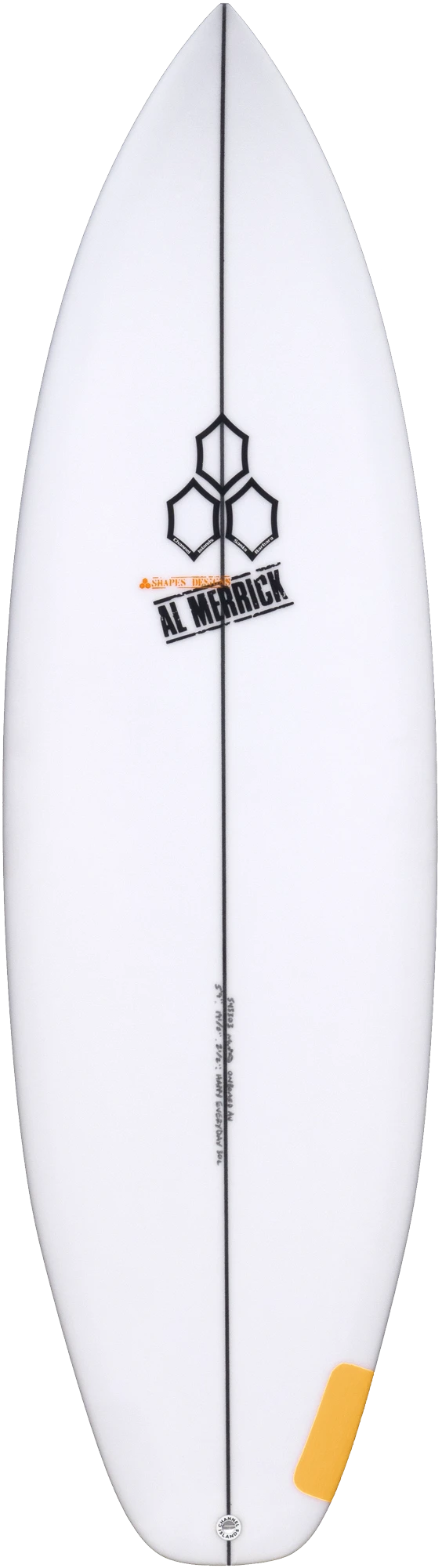
The Channel Islands Happy Everyday is a handy real-world example. The official Australian page lists a 5'10" × 19 3/4" × 2 1/2", 30.9 L stock board in PU and another at the same listed dimensions and volume in Spine-Tek EPS. The latter adds Channel Islands' engineered spine to an EPS build; its Spine-Tek explanation is a manufacturer's description of the flex it aims to create, not a guarantee you will prefer it. Here, the shape and stock size are held roughly constant, so construction is a more useful question than it would be across two unrelated models.
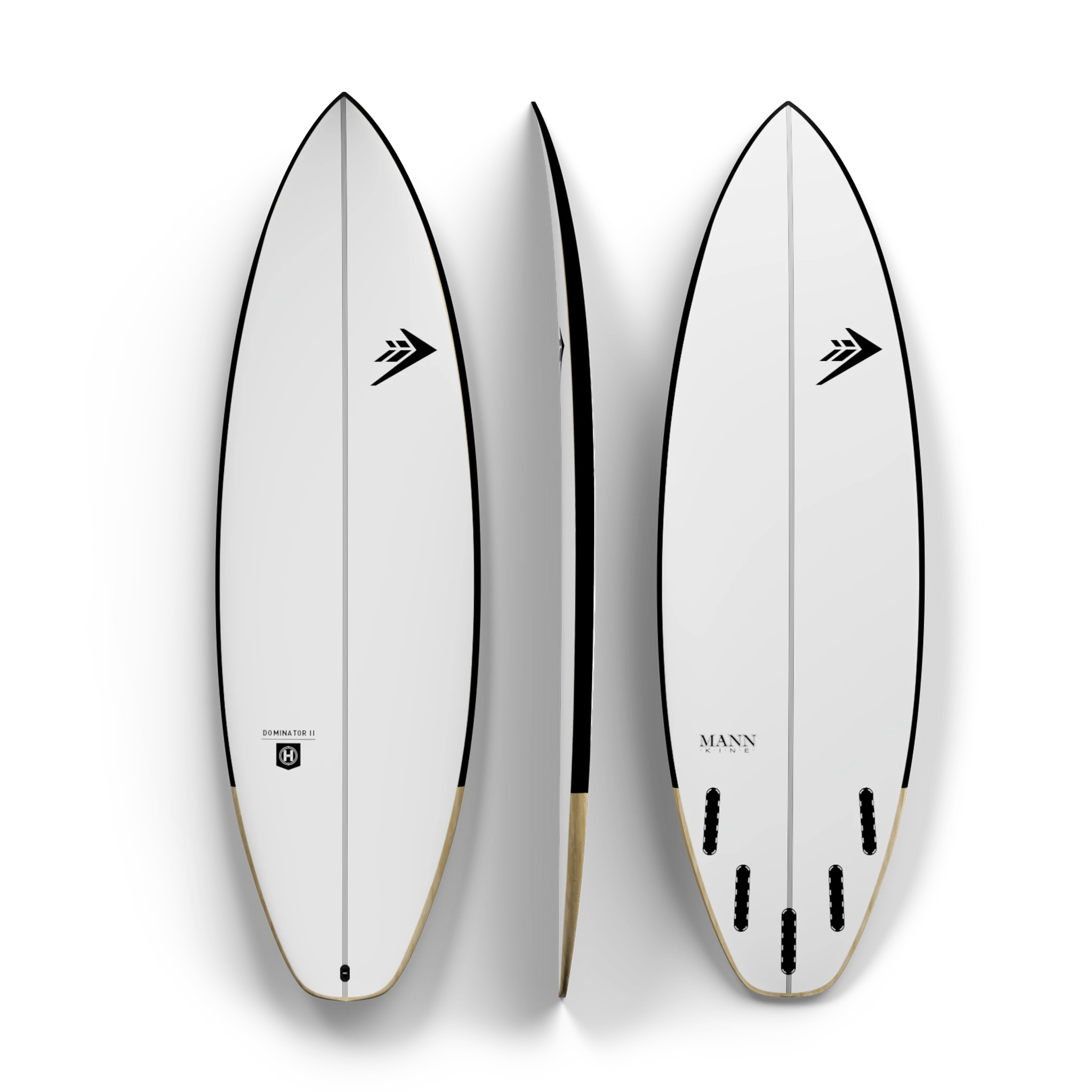
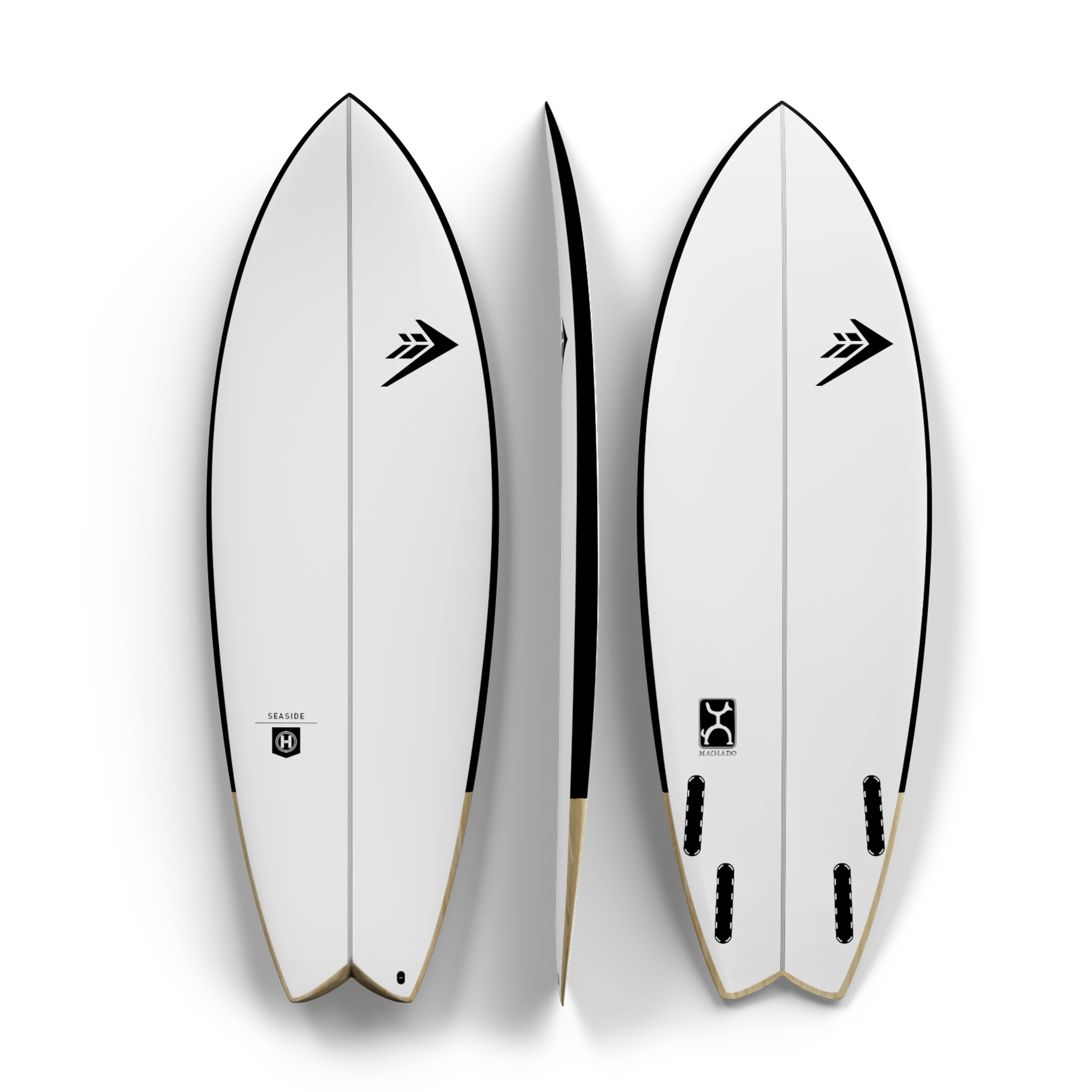
Firewire's Seaside in Helium illustrates the opposite trap: a named EPS build has far more going on than “epoxy.” Firewire describes a stringerless EPS core, wood along the rails, and a composite deck skin in its Helium technology notes. That recipe is specific to Helium. It should not become a claim that every EPS board is built or rides like a Seaside.
Start with the outline and size that suit your waves. Once you have a candidate shape, comparing its available constructions can tell you something useful. Comparing an EPS fish with a PU performance shortboard and attributing every difference to foam chemistry will not.
Weight, dents, repairs, and money
People often describe an EPS/epoxy board as lively or a PU/polyester board as settled. Those can be honest impressions of particular boards, but they are not rules that erase differences in shape, glassing, fins, or rider. If feel is the deciding factor, borrow or demo two comparable boards in familiar waves.
For durability, ask about the whole laminate rather than buying a slogan. A light glassing schedule can show pressure marks; a reinforced build may resist them better and weigh more. A construction designed to resist deck dents is not necessarily impossible to crack or break. Firewire describes Helium's deck skin as part of its durability strategy; Foam E-Z repairs PU, EPS/epoxy, carbon builds, and fin boxes, which is a useful reminder that all of them can need work.
For a used board, inspect the skin, rails, fin boxes, and any old repairs before you debate the label. Ask the seller what the core is, then tell the repair shop before anyone mixes resin. Do not assume a polyester repair product is safe on exposed EPS foam; Foam E-Z says it will damage the core. If a ding may have taken on water or a repair looks suspect, get a shop's assessment.
Price is local and changes with the maker and build. A construction name may come with a higher quote, but that does not make it the right shape for you. Compare the delivered price, included fins, expected repair options nearby, and how much use the board is likely to get.
So which should you choose?
- Choose the PU build if a proven shape, local shaping or repair access, and its particular weight and feel suit you. Avoid treating “PU” as proof that every board with that core will feel alike.
- Choose an EPS/epoxy build if its complete construction, available size, and tested feel solve a problem for your surfing. Avoid assuming that lighter always means stronger, easier to paddle, or better in every wave.
- Pause on any listing that says only “epoxy.” Ask for a photo of the construction marking or the maker's original specification. A vague label is not enough to plan a repair or a fair comparison.
You can compare board models in the Board Hogs catalog, including the Happy Everyday model page. Check the construction on the specific board you are considering; model pages and stock charts can include several builds.