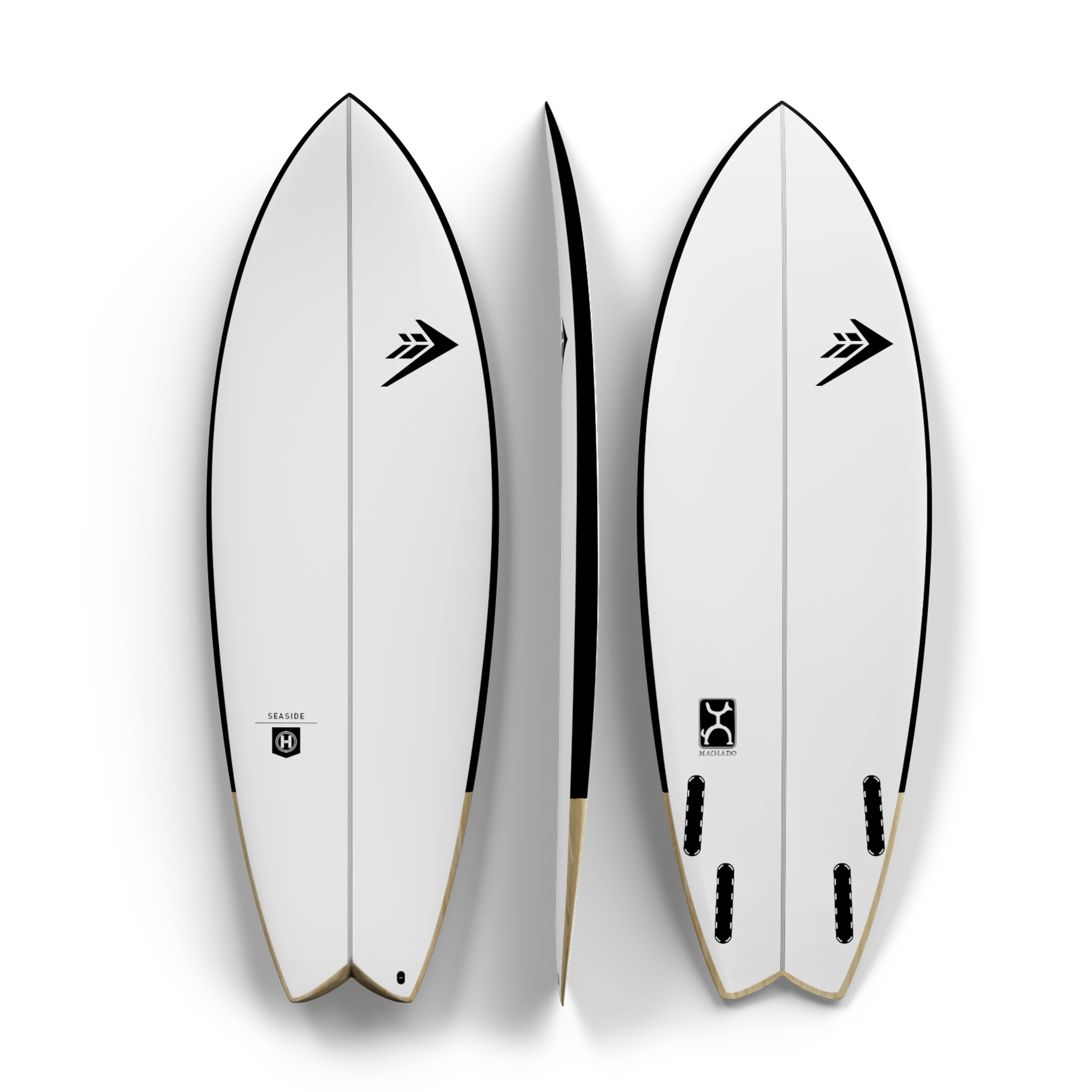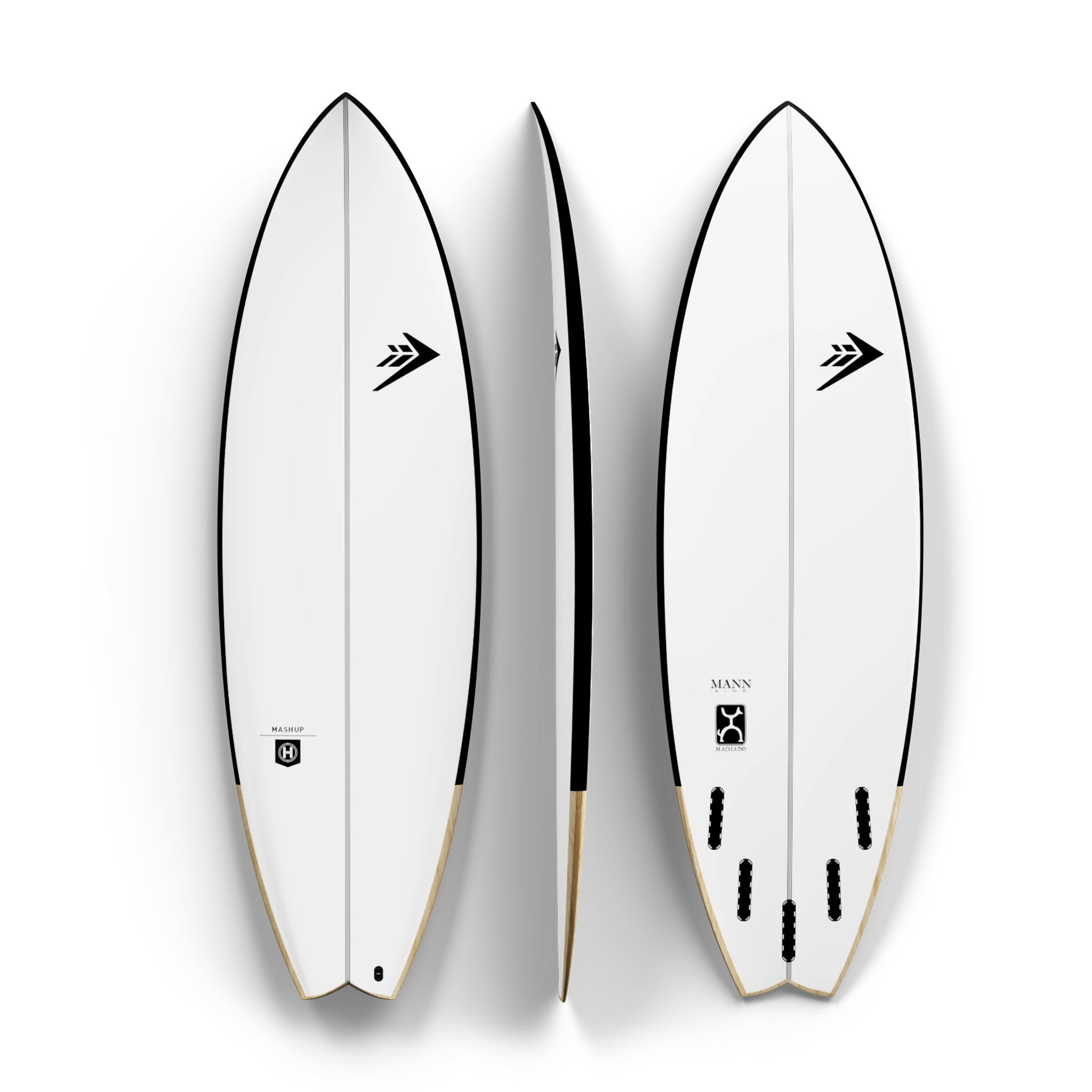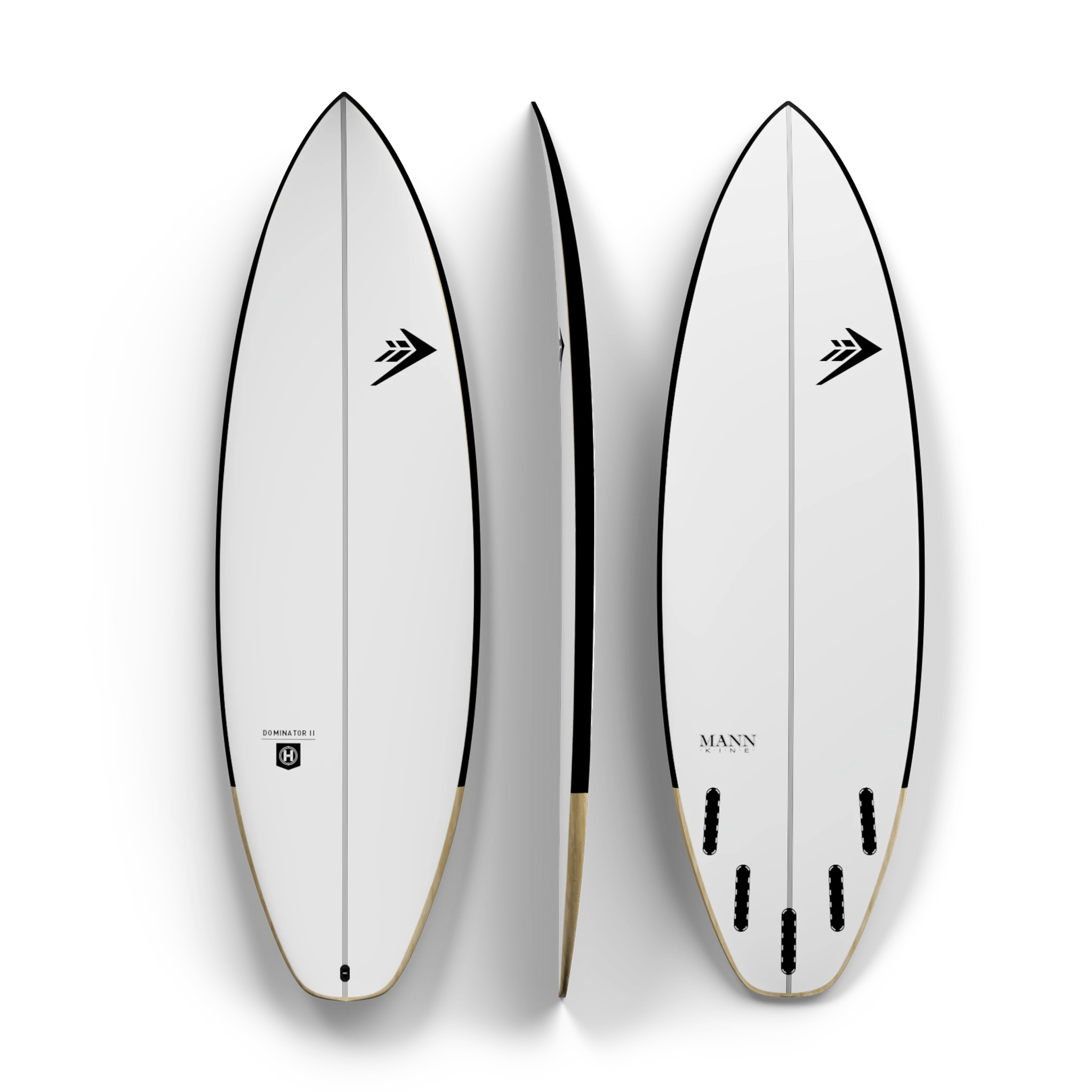
A used-board listing says Firewire Dominator. The photos look promising, the volume is in your range, and the seller remembers liking it. Before you arrange a pickup, ask one more question: which Dominator? Dan Mann's original and the Dominator 2.0 are related designs, but the second is more than a new logo on the deck.
Firewire's own Dominator 2.0 design notes are unusually helpful here. Mann describes the 2.0 as a clean update to a board that has been in the line since 2008. He names three deliberate changes: a squash instead of a round tail, slightly more refined rails, and a different contour through the very back of the board. That is enough to make a sensible buying comparison without pretending a product page can tell you exactly how either board will feel under your feet.
The short version
| Detail | Original Dominator | Dominator 2.0 |
|---|---|---|
| Tail | Round | Squash |
| Rails | Fuller, relative to the update | Slightly more refined and performance oriented |
| Bottom under the front foot | The reference point Mann kept | Same concave in this area |
| Bottom near the tail | Firewire does not give a full old-board contour chart on its current page | Subtle double-barrel concave and vee through the last five inches |
Those are Firewire's stated design differences, not a promise that every used original rides one way and every 2.0 another. An old board may also have different construction, fins, or custom dimensions from the stock board in today's shop. Firewire's current product description is the source for the comparison above.
What the changes are meant to do
The visible identifier is the tail. On the original, the rounded end takes width away gradually. On the 2.0, the squash cuts across the back. Mann says he normally chooses a round tail for smooth rail-to-rail transitions, but found that the squash retained that quality while giving a little more release in turns. He also calls the 2.0's rails slightly more performance oriented. Those are a shaper's design intentions; how much you notice them will depend on size, fins, wave, and your own turns. Read Mann's explanation on Firewire's model page.
The less obvious change is underneath. Firewire says the concave under the front foot stayed the same, while the 2.0 splits into a subtle double-barrel and vee at the last five inches. That matters because a buyer looking only at the outline might assume the updated tail is the whole story. It isn't. At the same time, do not infer a complete map of the original's bottom from that short description; Firewire does not publish one alongside the present 2.0 listing.
Mann's stated goal was more range of conditions and more performance, while keeping what made the original useful. That makes the 2.0 worth considering if you like the Dominator's everyday-board brief but want a little more response when you turn. It does not mean a well-matched original is obsolete, or that the 2.0 will rescue waves that are too weak for your ability and board size.
Don't compare versions by one number
Firewire currently lists the 5′9″ Dominator 2.0 at 20 1/8″ wide, 2 7/16″ thick and 31.5 L; its 6′0″ is 20 1/2″ × 2 1/2″ and 34.9 L. Those figures tell you which current stock size you are reading about. They do not verify the volume of a secondhand original, a custom order, or a board whose markings are hidden under wax.
If a seller says an original has “about the same liters” as the 2.0 you want, ask for the written dimensions and a clear photo of the board. Surf Simply's explanation of volume is useful context: volume describes total displacement, while length, outline and the way foam is distributed affect the board you actually paddle and turn. A near-match in liters is a starting comparison, not evidence that the two versions are interchangeable.
Construction is a separate question
The current 2.0 listing specifies Helium Core with Fiberglass Lamination. Firewire describes Helium as an EPS-based construction with wood rail components and deck skins. Its technology history also explains that Helium evolved from Firewire's earlier Future Shape Technology. A design name that began in 2008 has passed through different manufacturing eras. So when you shop used, ask which construction the individual board has; the Dominator name alone will not answer that.
This matters for repairs as well as feel. Firewire says its EPS-based boards should be repaired with epoxy, and warns against polyester resin. Its board-care advice also says to keep a damaged board out of the water until repaired, because water can enter the core. If a used board has a ding, soft spot or suspicious patch, have a competent repairer assess it before treating a lower asking price as a bargain.
A five-minute check before you buy
- Get photos of both faces and the tail. A round tail points to the original design; a squash points to the 2.0. Ask for a close-up if a traction pad hides the outline.
- Read the markings on this board. Record length, width, thickness, volume if present, construction marking, and any model/version text. Compare those with the current Firewire chart only if the board really is a stock 2.0.
- Check the fin boxes and what comes with the sale. Firewire has shown a stock 2.0 ridden as both a quad and a thruster, but a listing's fin system and included fins still need checking on the exact board. See Firewire's stock-board fin example.
- Inspect condition with the version question settled. Look at the rails, fin boxes, nose, tail and underside for open dings or repairs. Firewire's care guidance explains why watertightness deserves more attention than cosmetic marks.
If the photos and markings still leave the version unclear, ask the seller for the serial number and purchase details. Firewire requests a board's serial number and photographs for support cases; that makes them sensible details to gather, though it does not mean every serial can be decoded publicly.
Which one belongs in your quiver?
Choose a sound original if the shape, size, condition and price suit your everyday surf and you specifically like the rounded-tail brief. You do not need to pay for a newer version just because one exists. Choose the 2.0 if its stated refinements address something you want—more release through turns, a slightly more refined rail—or if buying a current stock size and construction removes uncertainty that an older listing cannot answer.
Start with Firewire models in the Board Hogs catalog, but treat the name in any catalog or classified listing as an introduction. The tail, markings, construction and condition of the actual board decide which Dominator you are buying.