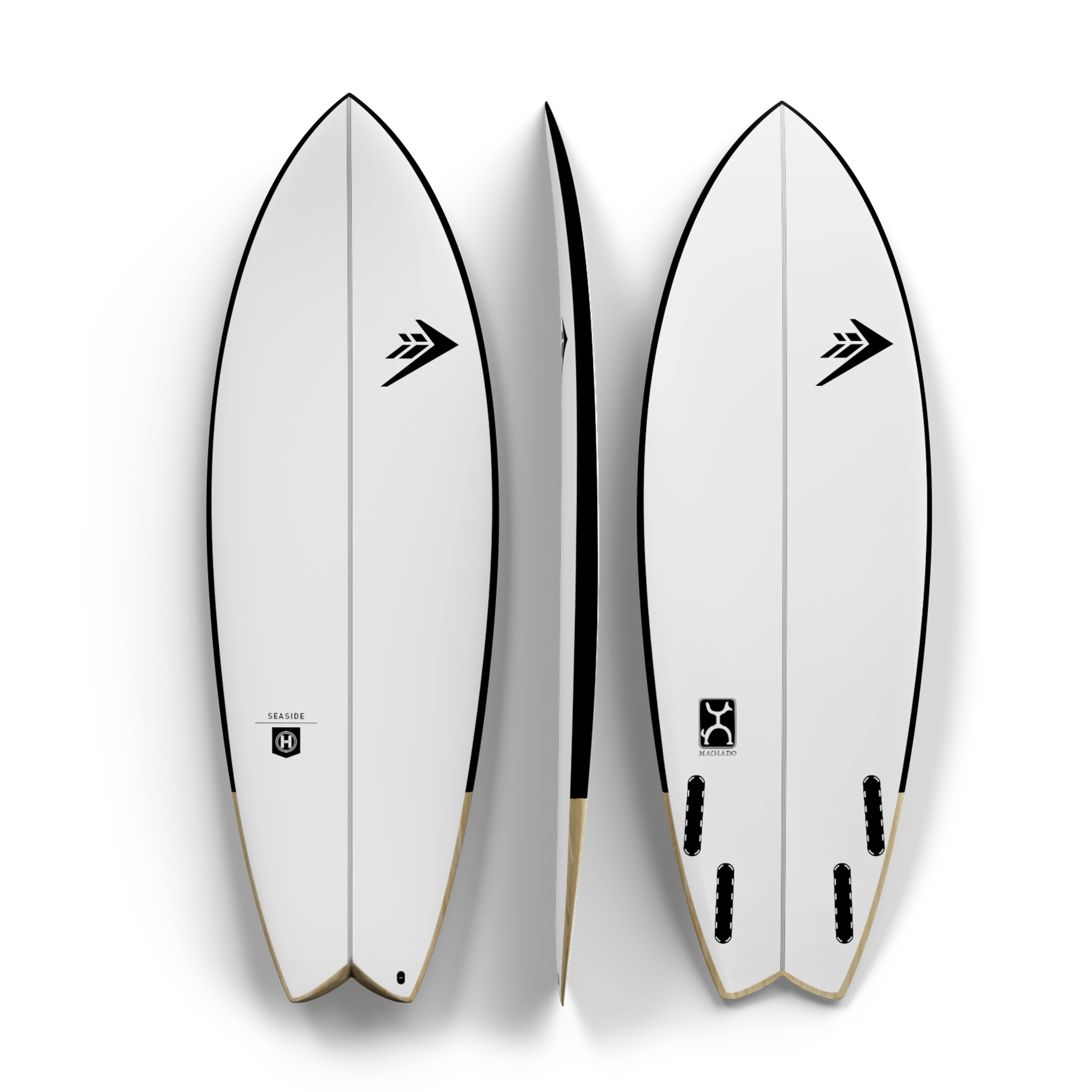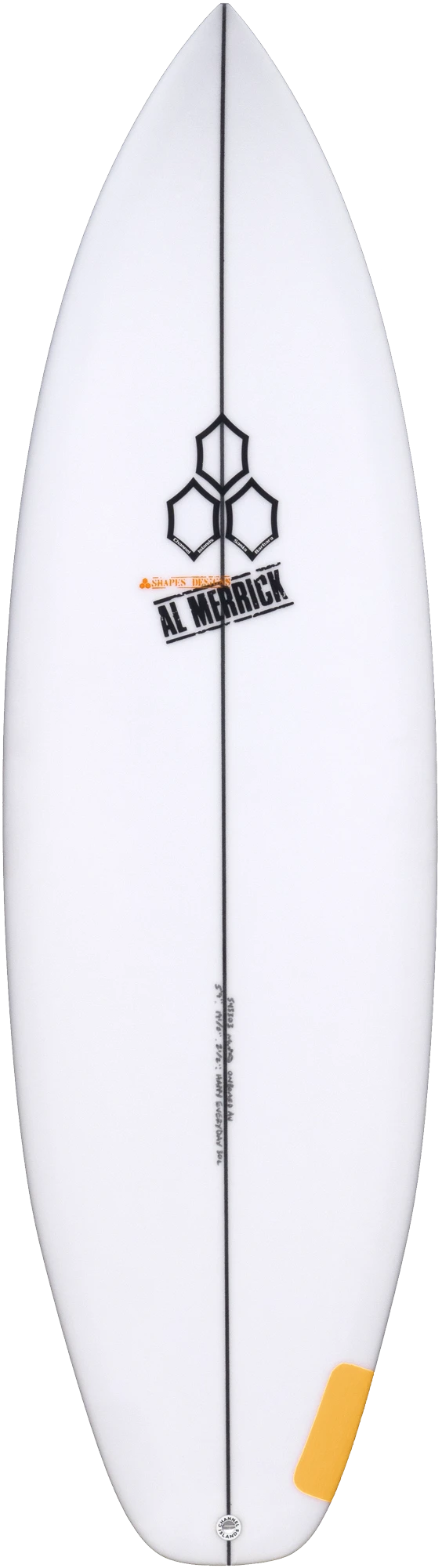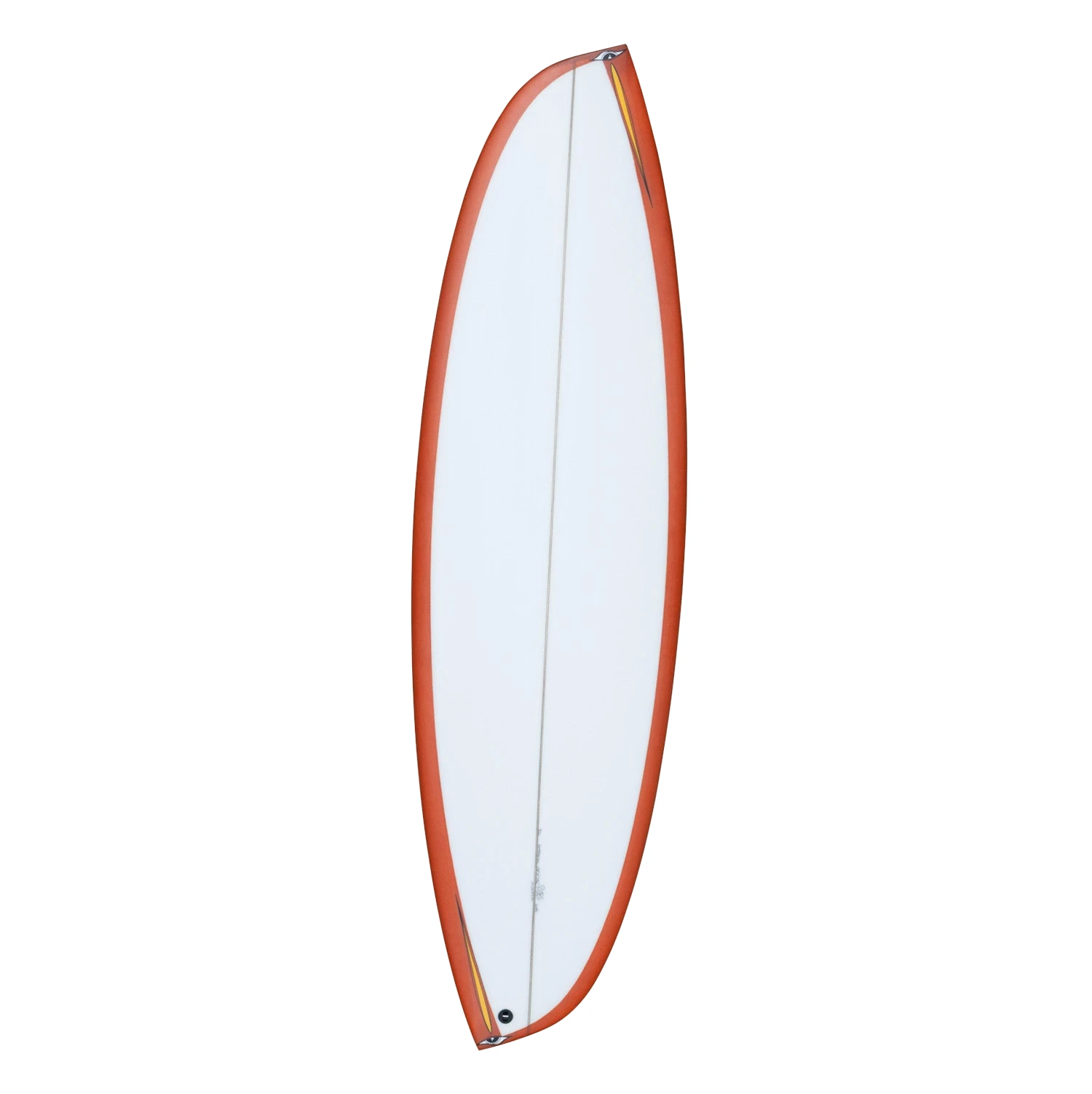
An asymmetrical surfboard can look like somebody cut the tail wrong. Then you notice the fin boxes are different too, and the two rail lines have been drawn for different turns. That is the point. But an interesting outline is a poor reason to buy one if you cannot say what you want your next board to do.
The useful question is: Do your frontside and backside turns ask for different things from the board you already ride? If yes, an asym gives a shaper more ways to answer. If your present problem is simply that you miss waves, start with wave-catching and sizing before chasing an unusual tail.
It is built for your feet, not for one wave direction
Your toes and heels do not apply pressure in the same way. An asym design can give the toe-side rail a longer, straighter line for drive, and the heel-side rail a rounder curve for a tighter turn. Jeremy Lovelace describes exactly that arrangement on the Love Machine SateLite. He also addresses the common worry: it is not a board that works only on lefts or only on rights. Your toe and heel sides remain your toe and heel sides when you switch from frontside to backside.
That makes regular or goofy stance part of the specification, not a color choice. Confirm which side of the board has which rail and fin arrangement before buying, particularly in a secondhand listing where the seller may just write “asym.” If you share boards with someone who rides the opposite stance, think through that constraint too. The stance-specific Album Fascination fin set is a good illustration: the maker offers separate regular and goofy options because the toe-side twin and heel-side quad fins are different pieces.
“Asym” does not describe one kind of board
Consider three quite different design briefs:
- An everyday performance alternative: Album's Bom Dia uses an asymmetrical tail and fin placement, with a heel-side trailer closer to the board's center and toe-side boxes closer to the rail. Album pairs that with a relatively relaxed entry rocker and a more curved exit. Its stock chart lists a 5′9″ at 29.8 L. Those details tell you more about its intended mix of paddle, speed and turning than the asym label alone.
- A small-wave asym: Ryan Burch calls the Pug an asym groveler. Its brief includes low rocker, a full-volume outline and a twin-toe/quad-heel setup. If your regular shortboard stalls when the wave goes flat, this is a different question from wanting more hold in steep surf.
- A more committed shortboard: Burch's Parallelogram B2 has an angled nose and tail, continuous rocker, and twin fins on the toe side with a quad on the heel side. Burch describes it for steeper beach-break sections as well as open-face carving. It is a far more conspicuous asym than a board that changes only the fin cluster.
There is variation within a model, too. Love Machine offers the SateLite in an Original version with a more performance-oriented rocker and foil, and an LO option with a flatter, less aggressive brief for everyday waves. Those are the maker's descriptions, not evidence that either version will suit your home break. The point is to compare the whole board and its intended wave, just as you would with any symmetric shape.
You can inspect the Bom Dia in the Board Hogs catalog and Burch's Parallelogram B2. The catalog helps you narrow models; the shaper's current page and the markings on the actual board should settle the version and fin layout.
Make the fin setup part of the price
Do not assume that your usual twin, thruster or quad set will move over. Some asym boards change the number of fins from one side to the other; others keep a familiar count but move boxes or use different templates. Album's Fascination set specifies a toe-side twin and heel-side quad. Burch lists FCS II or Futures options for several models, while Love Machine recommends different fins for different asym setups.
Before agreeing to buy, ask for a clear bottom photo. Count and identify every box, check the fin system, and ask whether the matching fins are included. For a used board, ask for a photo with the fins fitted. A set that is missing, damaged or made for a different box is a real addition to the purchase, not a detail to sort out after you get home.
How to size and order your first one
Start with a board you know well. Write down its length, width, thickness, volume, fin setup and the waves where it works. Then describe the change you want: a faster line on your toe side, more pivot under your heel, or a groveler that stays responsive when your regular shortboard feels stuck. Bring that account to a shaper or shop. A stock liter number cannot tell you where the width, foam and rocker sit on an asym.
If possible, borrow or demo one in your ordinary surf. If you order custom, ask the maker how it recommends sizing this model, which stance and fin layout will be built, which fins are supplied, and what the lead time and return terms are. Love Machine's board builder shows how length, width, thickness, glassing and fins can each be specified; that flexibility makes a clear conversation more valuable than an impulse order.
If you are buying used, the same checklist matters twice as much. A stance-specific shape and unusual fin cluster can make a vague listing harder to verify and, as a practical inference, narrow the pool of future buyers. Photograph the underside and all markings now so you can identify or resell it accurately later.
The buying verdict
Choose an asym to solve a particular problem you can describe. Compare an everyday asym with your current daily driver, or a small-wave asym with the groveler slot you actually need. Wait if the asymmetry is the only thing that interests you. A board with the right length, paddle and wave range will improve more sessions than a fascinating tail on the wrong shape. Browse more board models alongside the asym candidates so you can see what you are giving up and gaining.