
The trip is booked, the bag fits one board, and every forecast tab tells a different story. It is tempting to pack for the best wave in the guidebook. Choose a board for most days you are likely to get—and have a plan for the exceptional day.
Build the trip around three kinds of day
Ask a local shop, surf school or host which breaks you can actually surf. Picture three days: small or wind-affected, typical, and bigger or cleaner. Ask how often each happens during your dates. A destination is rarely one wave. Surf Simply's Galicia guide, for example, describes beach breaks and swell-dependent options rather than one board prescription.
Put your surfing into that picture. A board for powerful reefs is little use if you will choose the softer beach break. Your weak-wave favorite may feel out of place if most accessible waves have more speed and shape. Pack for the sessions you expect to surf, not the wave you hope to photograph.
If your three days demand radically different equipment, one board cannot make that conflict disappear. Move the problem to the rental plan: pack for the most common day and find out whether a suitable board will be available for the outlier.
Three different one-board candidates
These are examples of design jobs, not a ranking. Compare their briefs with your current board and your destination; a manufacturer's wave range is a starting point, not a guarantee.
| If most of the trip looks like... | A shape to investigate | What you give up |
|---|---|---|
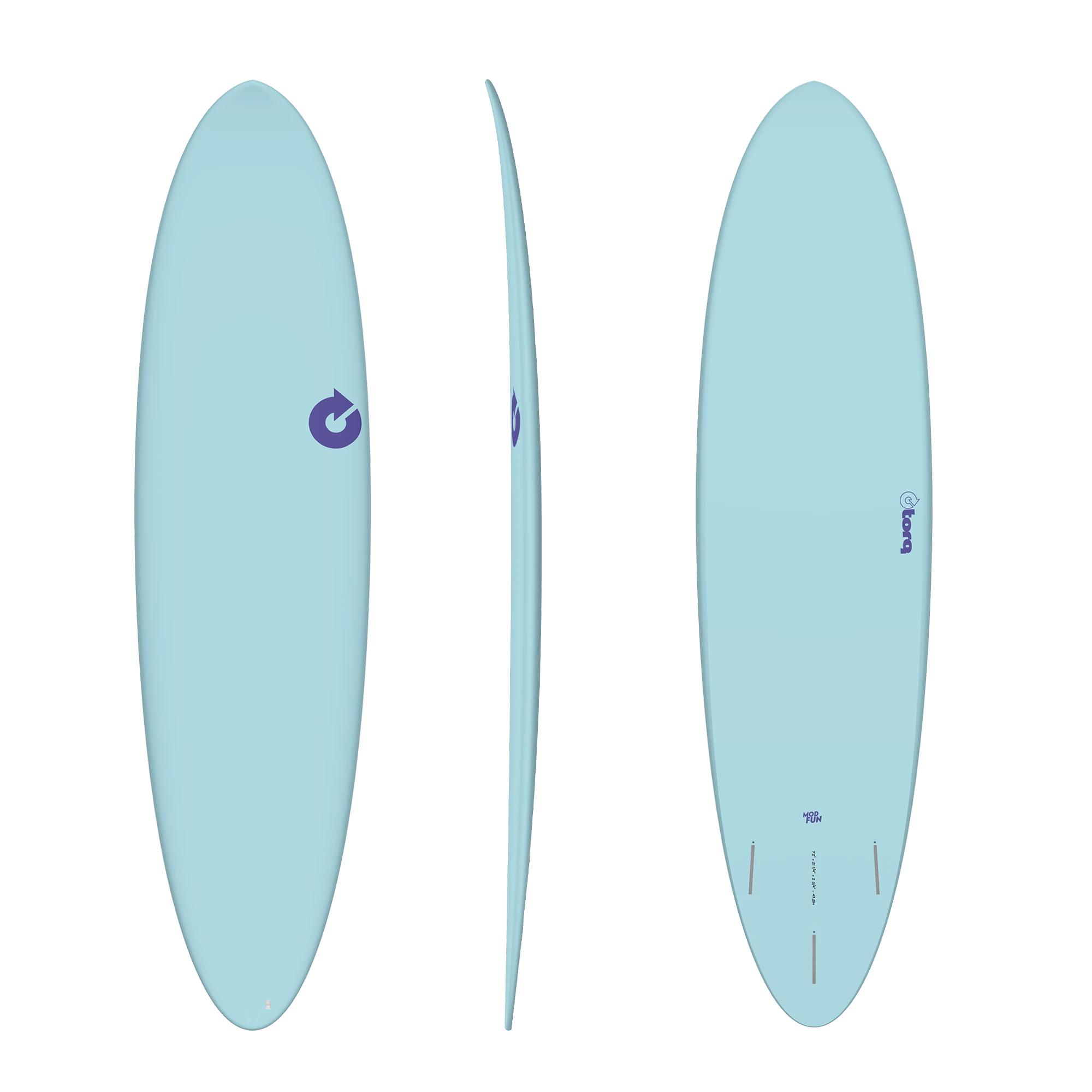
| Mellow or mixed surf, and you value early entry | A forgiving mid-length such as the Torq Mod Fun | More length to transport and less of a shortboard feel |
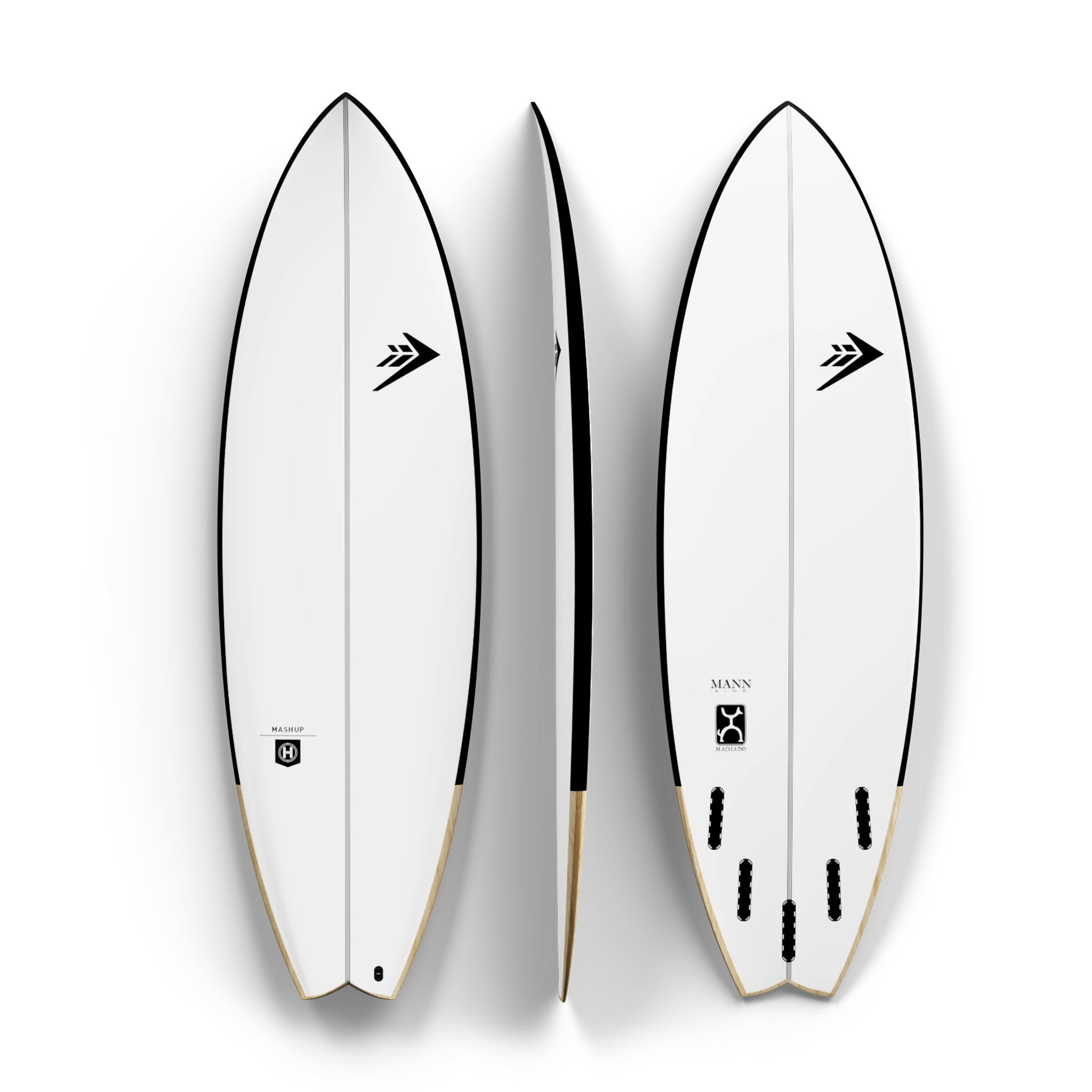
| Mostly average waves with occasional better sections, and you already surf shortboards | An everyday hybrid such as Firewire's Mashup | Less specialization at either end of the wave range |
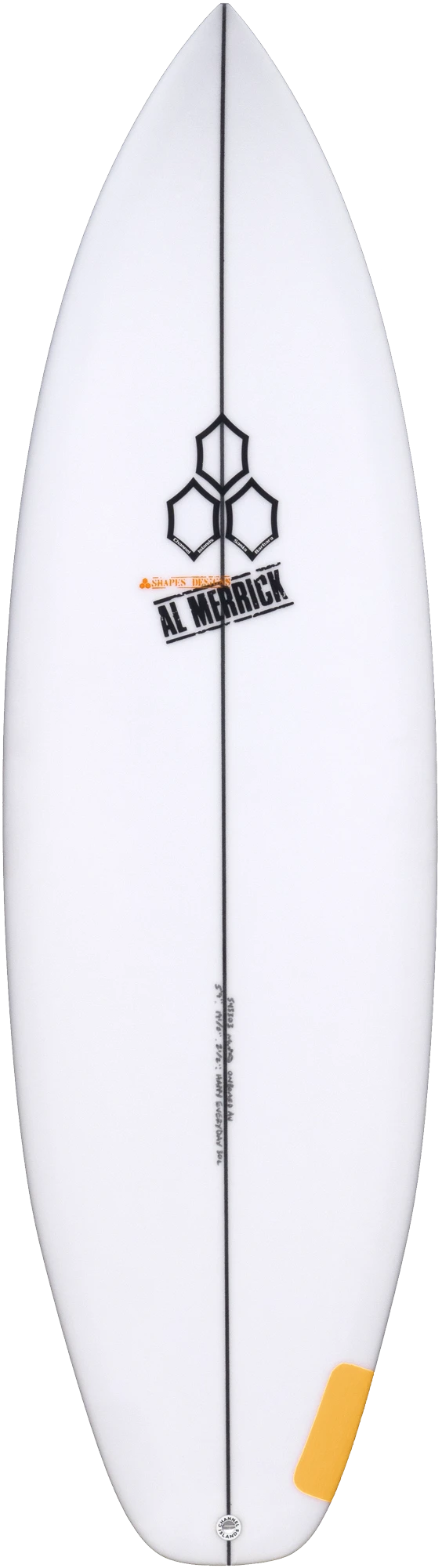
| Quality, powerful surf you already know how to ride | A good-wave board such as the CI Happy Traveler | A harder time making the most of truly weak days |
Torq gives the Mod Fun width under the chest, a low-to-medium nose rocker and a pulled-in tail. Its 7′2″ is listed at 47.2 L. Torq positions it across a broad range of conditions, but its paddling length is the point: it makes sense when wave count and trim matter more than fitting a shortboard into a tight pocket. A seven-foot board also changes your airline and ground-transport calculation. Compare the Mod Fun in the Board Hogs catalog.
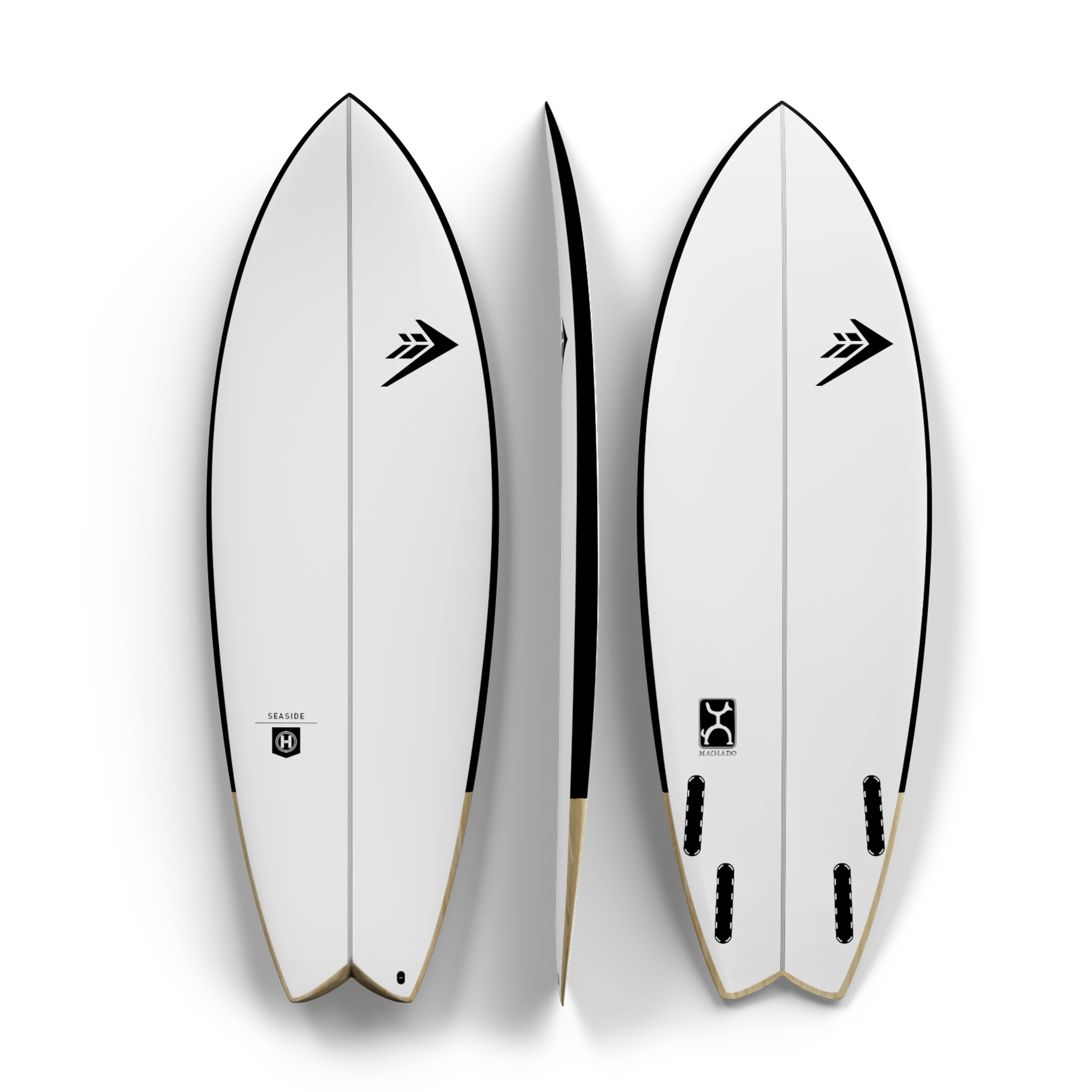
Firewire describes the Mashup as a blend of the Seaside's weak-wave speed and the Spitfire's ability to drive more vertically in better waves. The 5′7″ stock size is 31.4 L. That design intent makes it an interesting travel shortlist for a surfer who is comfortable on shorter boards and expects a mix of average and good days. It does not turn a soft, rolling beginner wave into a shortboard wave, nor is it a dedicated step-up for a serious swell. See Mashup's catalog entry.
Channel Islands' Happy Traveler addresses a different trip. It has a more pulled-in back third, a round pin, and design changes aimed at hold and control in quality surf; the brand also carries foam forward for paddling. The 6′4″ stock size is 34.3 L, and Channel Islands says the board can be set up as a thruster or quad. That is a useful good-wave option if those are waves you can surf. Do not read the word “traveler” as a reason to buy a step-up for a week of weak beach breaks. Browse the Happy Traveler on Board Hogs.
Size from a board you know, not a trip fantasy
Bring the dimensions of the board you surf most: length, width, thickness and volume if known. Note where it works and fails in comparable waves. If it catches waves but feels nervous on steeper faces, consider outline and tail rather than only more liters. If you miss waves on it at home, an even more demanding travel board is unlikely to help.
Check the actual stock chart for any candidate, and talk through the size with a knowledgeable shop or shaper. Two boards with similar liters can put their foam, rail and rocker in very different places. Fin choice is part of the setup too: confirm the boxes on the physical board and whether your current fins fit, especially for a used or custom example.
Let the packed bag influence the shortlist
Measure the outside of the packed bag, not just the board. Check the rules for every operating airline and every leg, including a regional connection, before you commit. Delta's current sports-equipment policy gives surfboards their own acceptance conditions and warns that Delta Connection rules can differ. American Airlines' policy treats water-sports boards as special items and says fins must be removed or protected. Air New Zealand publishes different dimensions for jet and regional services. Rules, routes and charges can change; read the policy attached to your ticket again close to departure.
Use a padded travel bag that fits the board without squeezing the nose or tail. Firewire's care guidance recommends a properly padded travel bag and keeping fins separate so they cannot damage the board in transit. Pack the matching fins and screws where you can find them, then check that the board has no open ding before leaving. The last-minute “versatile” purchase is less valuable than arriving with a sound board and the parts to surf it.
Keep a rental escape hatch
If the trip's biggest day requires a board you do not own—or the airline will not accept the length you want—ask a local shop about rentals before you leave. Verify model, size, fin setup, dates and pickup plan rather than assuming a useful board will be sitting on the rack. Firewire Fleets is one example of a location-dependent rental program; its own page advises checking the participating shop in advance.
Then make the final call: choose the board you trust on the typical day, confirm the bag can travel on every leg, and have a real option for the day outside its range. Compare candidate designs in the Board Hogs model catalog and bring your current board into the comparison tool. The best one-board trip quiver is the one that gets wet most often.
Sources and further reading
- Torq: Mod Fun design and stock dimensions
- Firewire: Mashup design and stock dimensions
- Channel Islands: Happy Traveler design and stock dimensions
- Delta: Flying with sports equipment, American Airlines: Special items, and Air New Zealand: Oversized items
- Firewire: Surfboard care and Firewire Fleets rentals