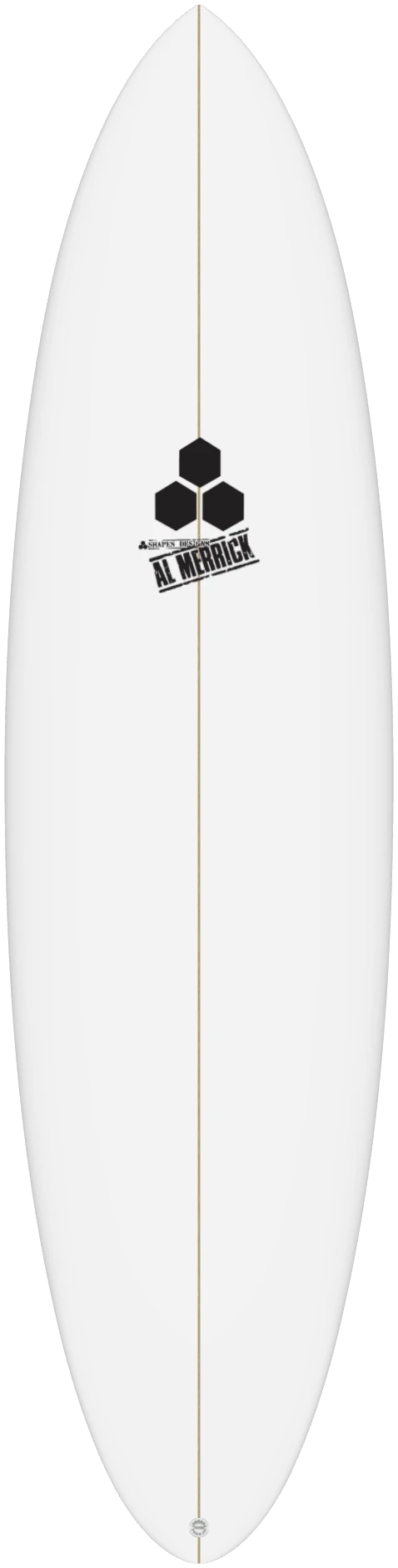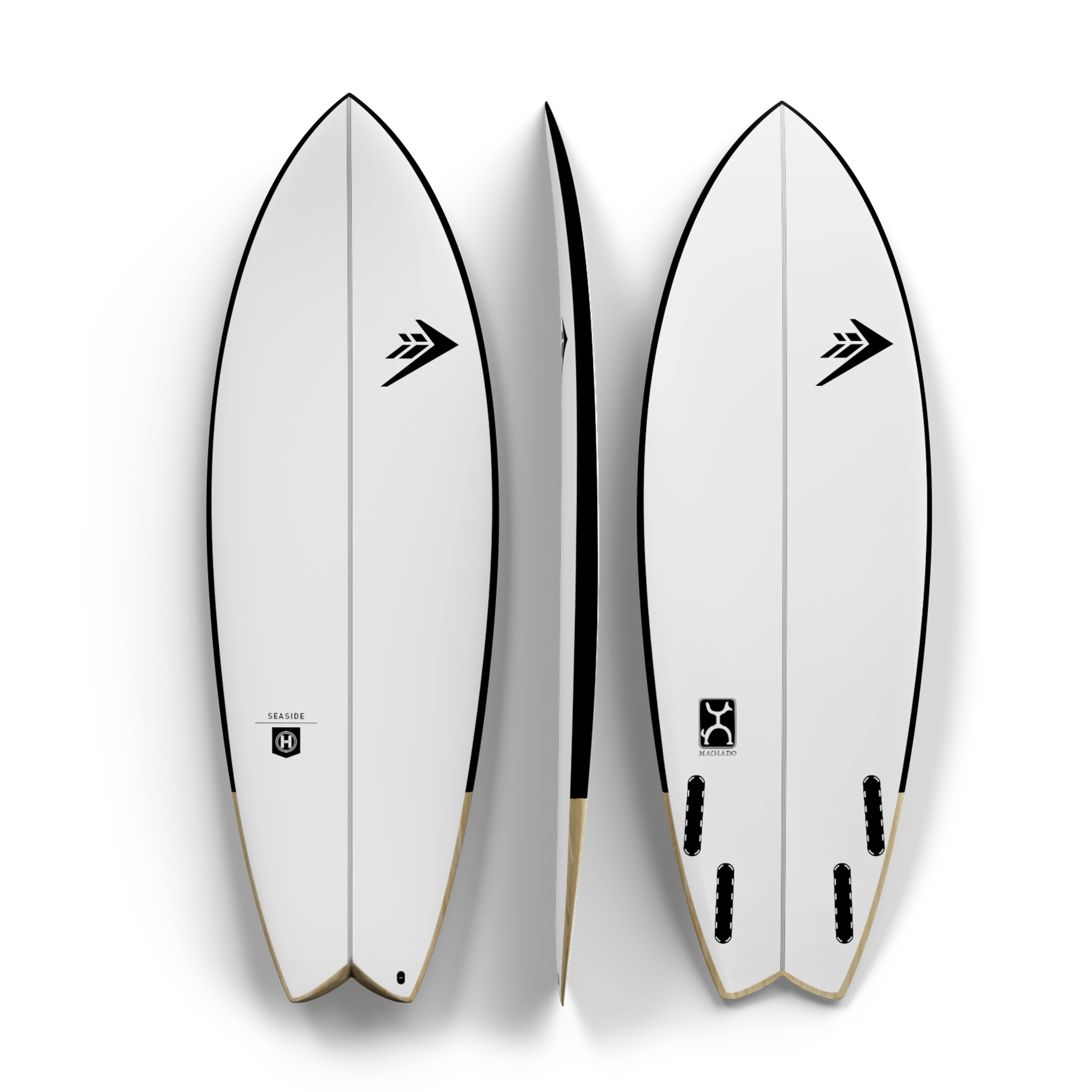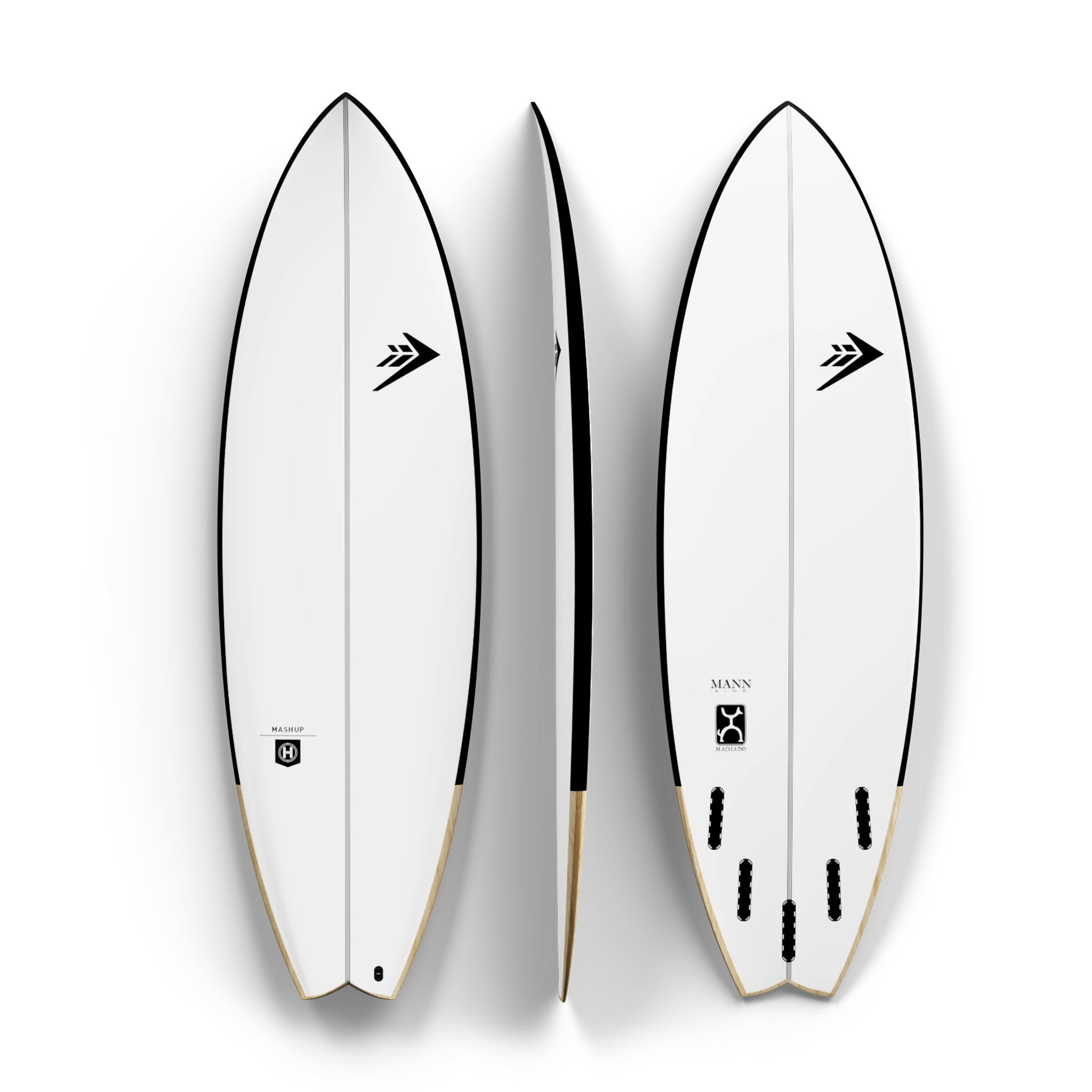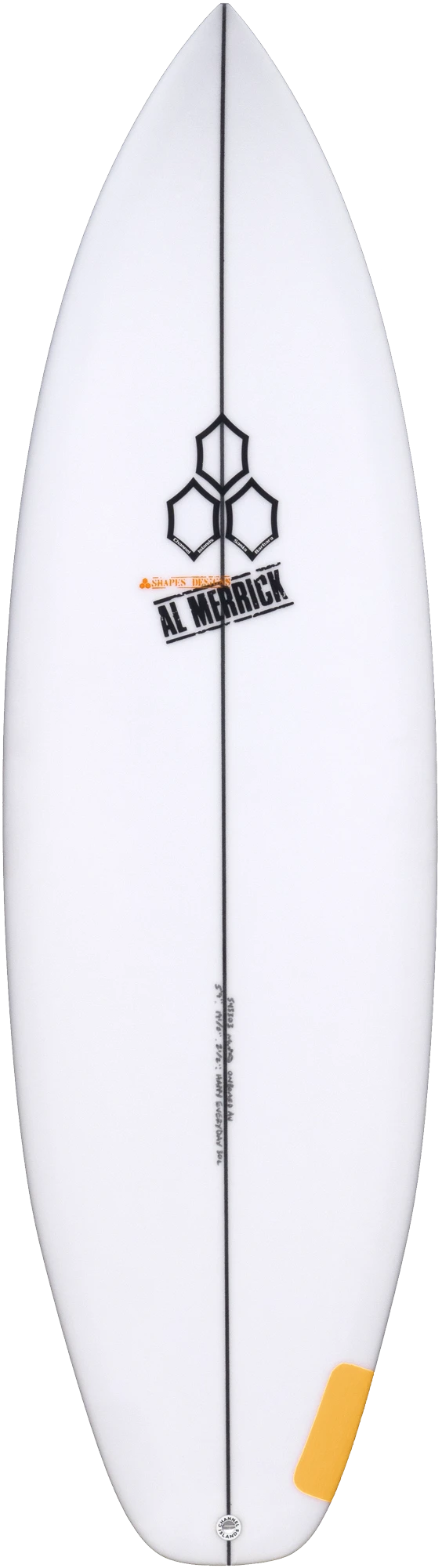
A longboard can make a soft, peeling wave feel generous. It can also feel like a lot of board when the wave stands up and asks for a quick change of direction. If you are choosing between a noserider and a performance longboard, picture the part of a normal wave that makes you want to paddle back out: the walk and trim toward the nose, or the turn that sets up the next section.
The short answer: Start with a noserider if you want to learn deliberate footwork and spend more time in trim on running, softer waves. Start with a performance longboard if you already move comfortably on a longboard and want to drive turns in more varied or steeper surf. Both can catch waves, turn, and reach the nose. The names describe priorities, not two sealed categories.
What are you actually trying to do?
On a nose ride, getting forward is only the visible part. You first need a line that keeps the board in the wave's useful section, then enough control to walk up and back without abandoning that line. Surfing England's longboard judging guide describes cross-stepping, trim, rail surfing and control as connected parts of a ride. A noserider can help with the board side of that equation; it cannot supply the positioning or footwork for you.
Performance longboarding puts more emphasis on turning from the back of the board and connecting maneuvers, while still using the whole length. It does not mean shortboard surfing on a board that happens to be nine feet long. Nor is nose riding reserved for beginners. Surfing England's introduction to longboards calls out cross-steps, turns and hang fives and tens as skills that can take years to develop.
That distinction matters when you shop. If your first goal is simply to catch unbroken waves consistently, choose a stable board that fits your current ability before worrying about a specialized label. If you already catch and trim reliably, the next board can be chosen around the kind of longboarding you want to practice.
How the shapes favor different moments
A dedicated noserider often keeps width toward the nose and gives the rider a stable platform to walk toward. Nose concave, rail shape, rocker through the front and tail, and the fin all contribute. Harbour Surfboards' board-selection notes make an important point: a wide nose alone does not create a good nose ride. Its own Noserider model uses an unusually deep nose concave but is also designed to catch waves and turn. Buying one does not mean giving up every turn.
A performance longboard generally puts more emphasis on sensitivity and control from the tail. Harbour describes its performance longboards as thinner than its cruiser boards, with nose channels and side bites on most models. That is one maker's design approach, not a specification every performance longboard shares. A narrower nose or more tail rocker might help a particular shape redirect, but every change also interacts with the outline, rails, bottom and fins. Compare complete boards rather than judging a silhouette from one photograph.
Wave shape decides how useful those priorities are. On a slow wall with room to set a high line and walk, a purpose-built noserider gives you a job to practice. On a quicker beach break, you may spend much more of the ride on the tail, adjusting your line before the section closes. Neither board can manufacture a clean nose-riding section when the wave does not offer one.
Two Firewires make the difference concrete
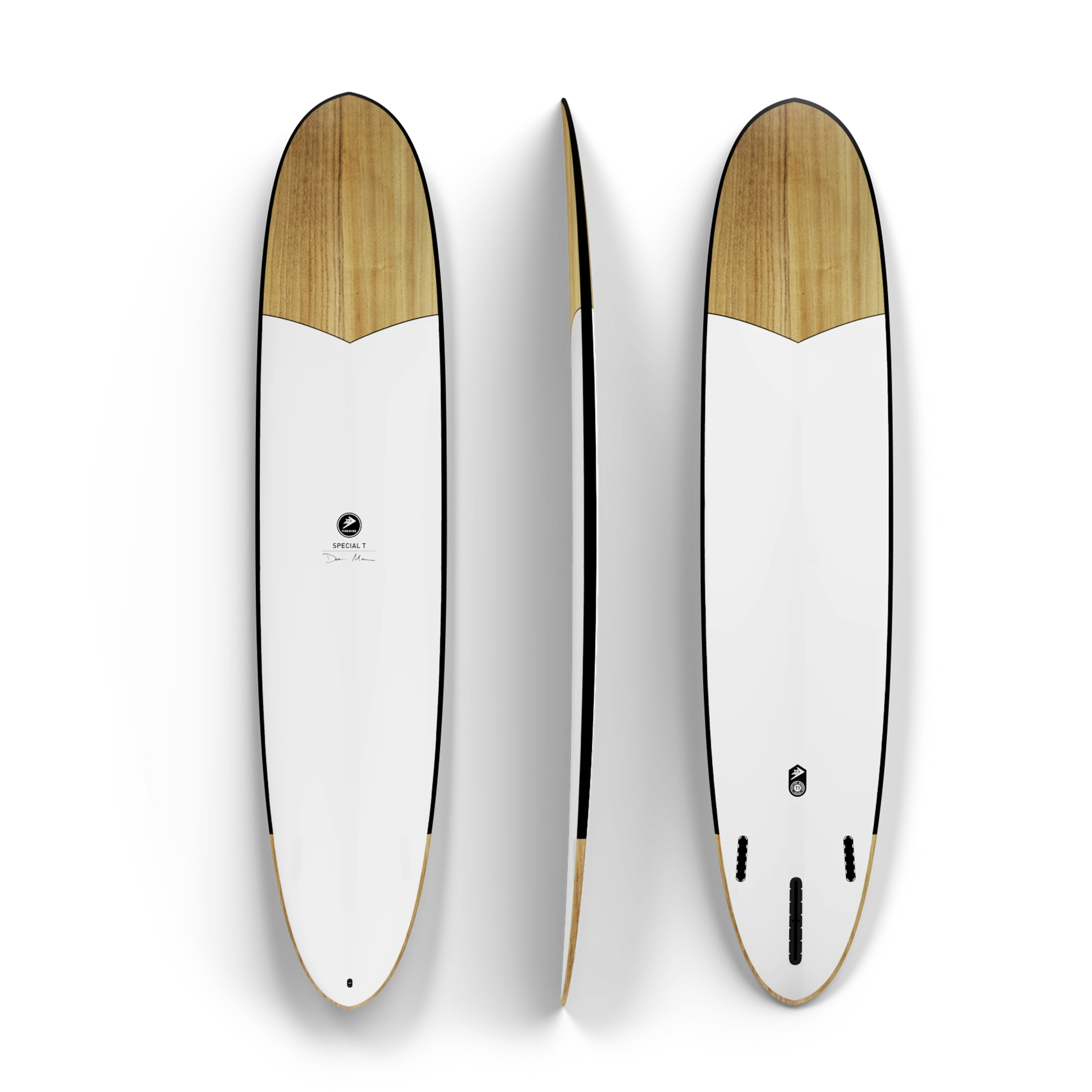
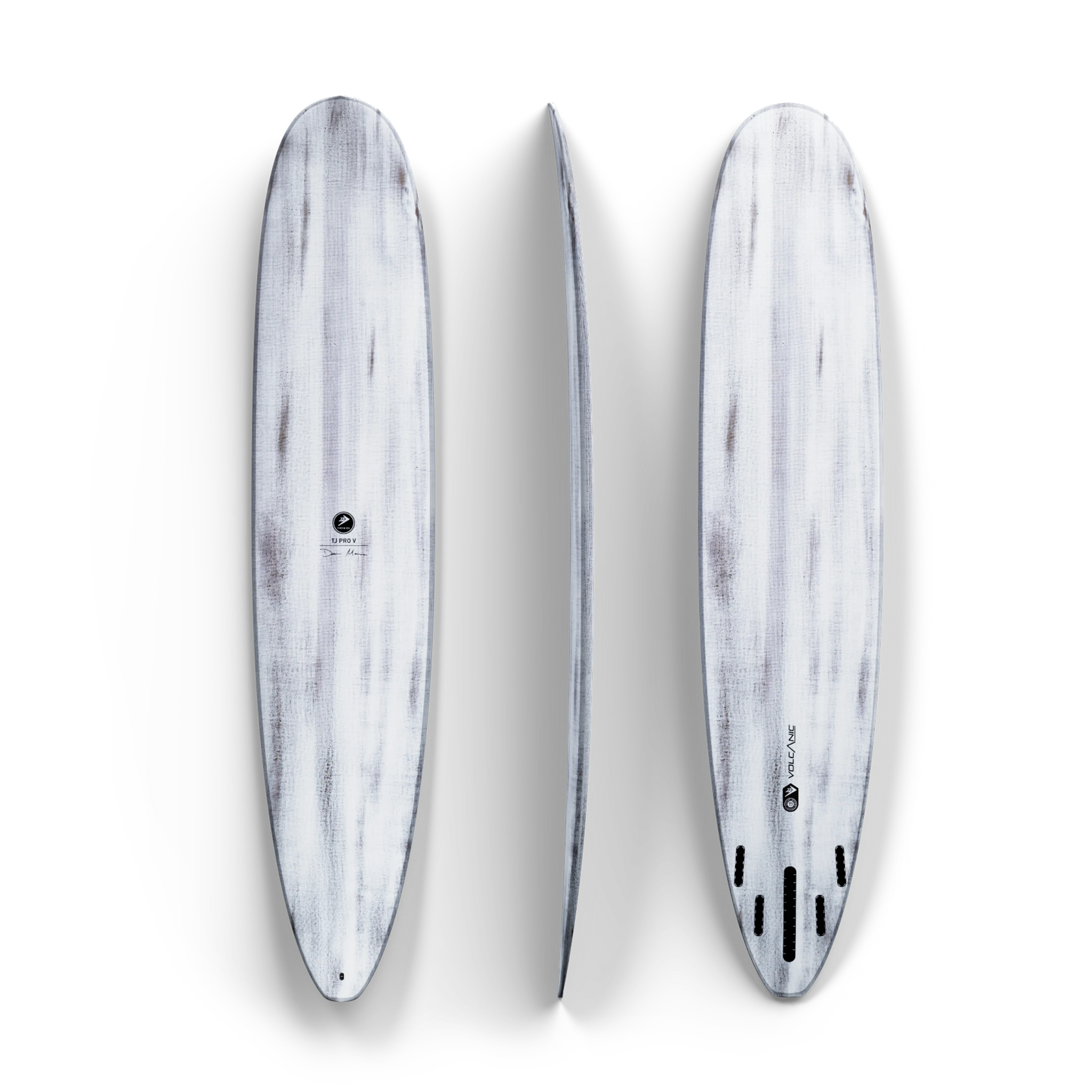
Firewire's Special T and Taylor Jensen Pro show why “both are 9'0"” is not a buying comparison by itself.
| Current stock 9'0" | Special T | Taylor Jensen Pro |
|---|---|---|
| Width × thickness | 22 3/4" × 3" | 22 1/8" × 2 5/8" |
| Listed volume | 71.3 L | 61.0 L |
| Maker's stated focus | Traditional trim and nose riding in softer waves | Driving turns and performance in good waves, with nose riding still possible |
Firewire gives the Special T soft 50/50 rails, a scooped nose concave, relaxed nose entry rocker and extra tail flip. The company still lists it with a 2+1 setup: a traditional brief does not automatically mean a single-fin box. The Taylor Jensen Pro has a lighter nose concave, a double concave through the tail, slight vee and more performance-oriented rails. Firewire explicitly describes it as a board for turning and walking toward the nose. Those are Firewire's design claims, not a report that we rode either shape.
The ten-liter difference at the same length is striking, but do not turn it into a universal volume target. The boards also differ in outline, foil and construction. For a used board or a custom order, confirm its actual dimensions and fin boxes rather than assuming the current stock chart applies.
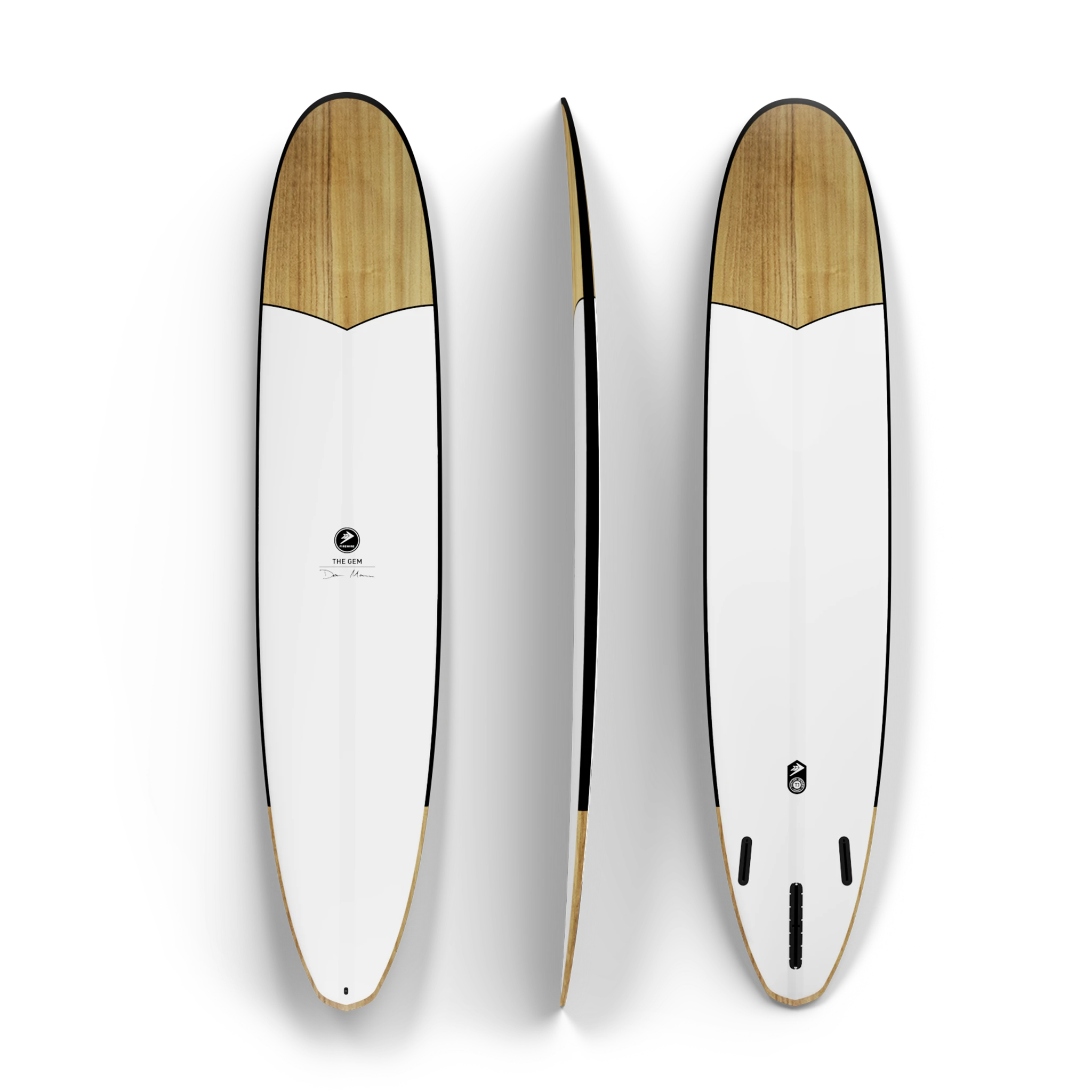
There is room between the endpoints. Firewire places The Gem between traditional trim and more forceful turns, with a diamond tail and a fin setup the maker says can be used for different styles. Harbour also lists boards designed to blend tip work with contemporary turning. If you want one longboard for both, compare those middle-ground designs instead of expecting the most specialized noserider or performance shape to do everything equally well.
Choose for your normal wave
Lean toward a noserider if your usual break offers a softer, running face, you already trim along it, and your next goal is to set a line, cross-step and spend controlled time toward the tip. Pause if the appeal is only that a wide nose looks easier: footwork and wave position remain the real project.
Lean toward a performance longboard if you regularly surf waves that stand up, you like driving through turns, and your current longboard feels slow to redirect once you are on the tail. Pause if you are already short of wave count: a thinner, more demanding board may solve the wrong problem.
If both sound good, borrow or demo two different longboards in waves you surf often. Notice how many waves you catch, how easily you establish trim, and whether the board responds when you step back. Bring those observations to a shaper or shop. You can browse longboard models on Board Hogs, including the catalog entries for the Special T, Taylor Jensen Pro and Gem. The specs can narrow the choice; your wave and the way you want to use it should finish it.