You love the way your shortboard turns when the wave has some push. Then a stretch of ordinary surf arrives, and you start eyeing the same model in a bigger size. A few more liters sound like a tidy fix for missed waves. Sometimes they are. Sometimes the problem is the job the board was designed to do, and the bigger size simply gives you more of that same board.
Before ordering, ask what is failing in your actual sessions. Do you struggle to catch the wave? Catch it, then stall across the flat section? Get in easily but find the board cumbersome in a tight pocket? Those answers lead to different purchases.
What changes when you size up
A stock size chart usually scales more than volume. Length adds rail line; width and thickness may change; the foam can be carried farther into the nose, rails or tail. The design's rocker and outline still express its original purpose. Channel Islands shaper Al Merrick has pointed out that a flatter rocker can improve paddling and speed generation without simply adding volume. A larger version of a curvier performance shape may float you higher while still asking the wave to supply the speed that your local surf lacks.
That does not make a larger shortboard a mistake. Surf Simply's coaching discussion cautions against treating a small board as a badge of ability. Too little board can cost waves and encourage frantic surfing. The question is whether the particular extra length and foam help you perform the maneuver you want on the wave you usually get.
A real near-equal-volume comparison
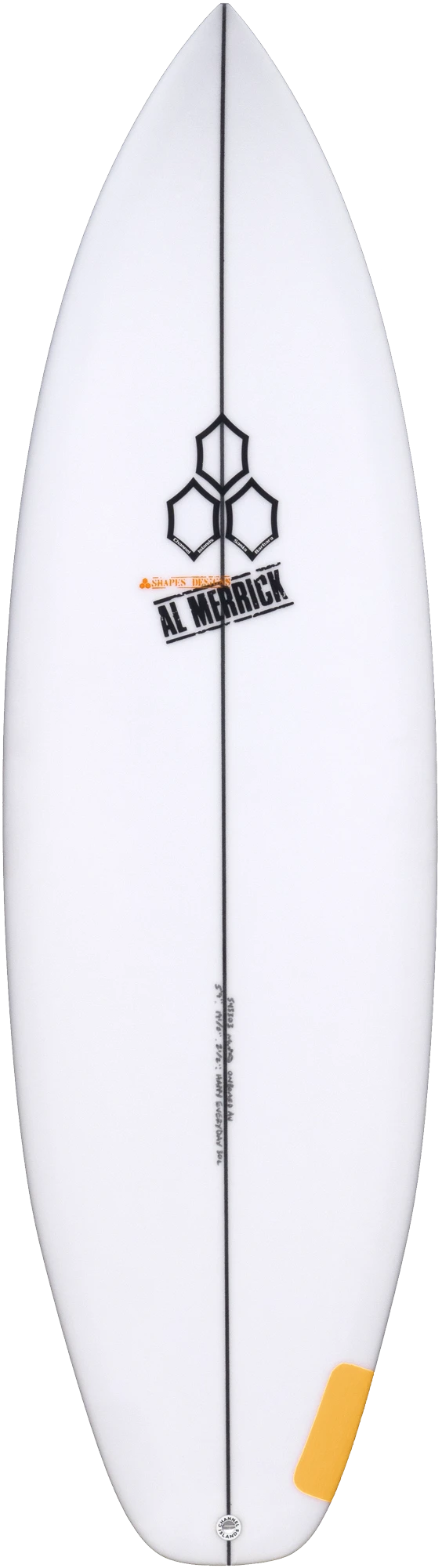
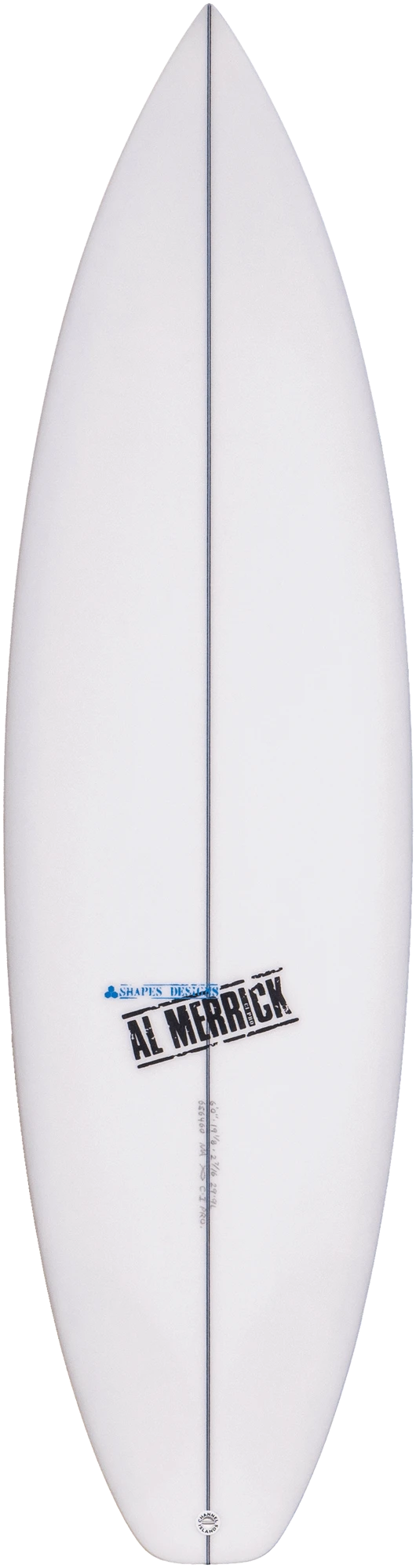
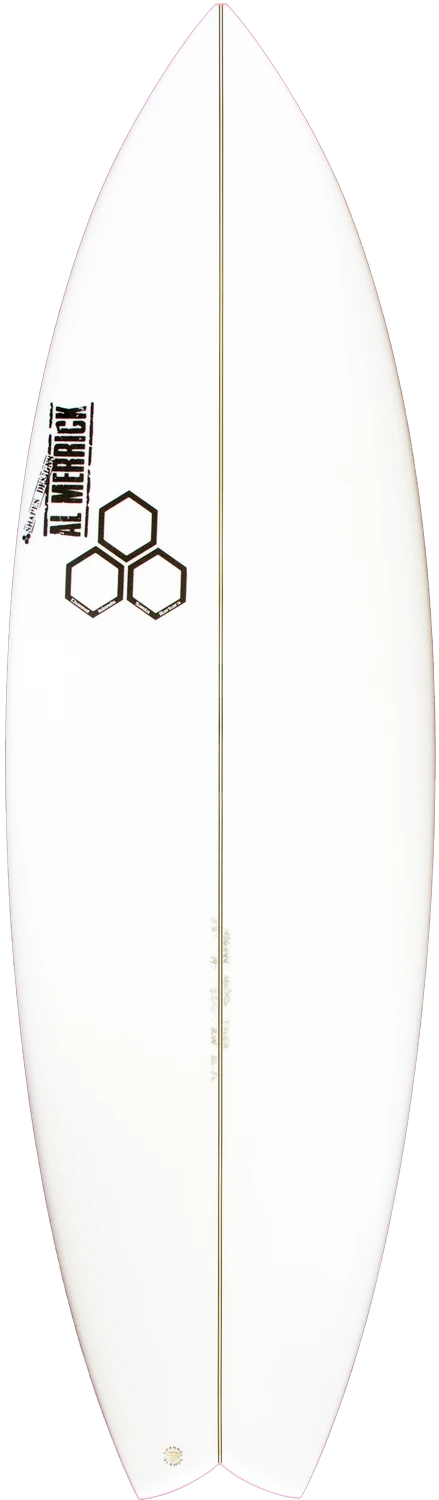
Channel Islands makes the design choice easy to see. Its stock 6'1" CI Pro is 31.2 L; its 5'9" Rocket Wide is 31.9 L. Those volumes are close, but the boards differ by four inches of length and have very different briefs. CI calls the CI Pro the most rockered board in its current line, aimed at high-performance surfing. The Rocket Wide uses a wider, shorter outline to carry speed through ordinary waves; CI describes it as a groveler that has proved useful beyond its original weak-wave brief.
If you want approximately 31 L for mostly average surf, those charts give you two designs to investigate. The longer CI Pro may suit a surfer who needs that rail line and wants its performance brief when the waves have shape. The shorter Rocket Wide asks whether a shape developed to create speed solves your problem more directly. The stock numbers cannot predict your ride; they expose the trade-off that a volume filter hides. You can inspect the CI Pro and Rocket Wide catalog entries alongside the official size charts.
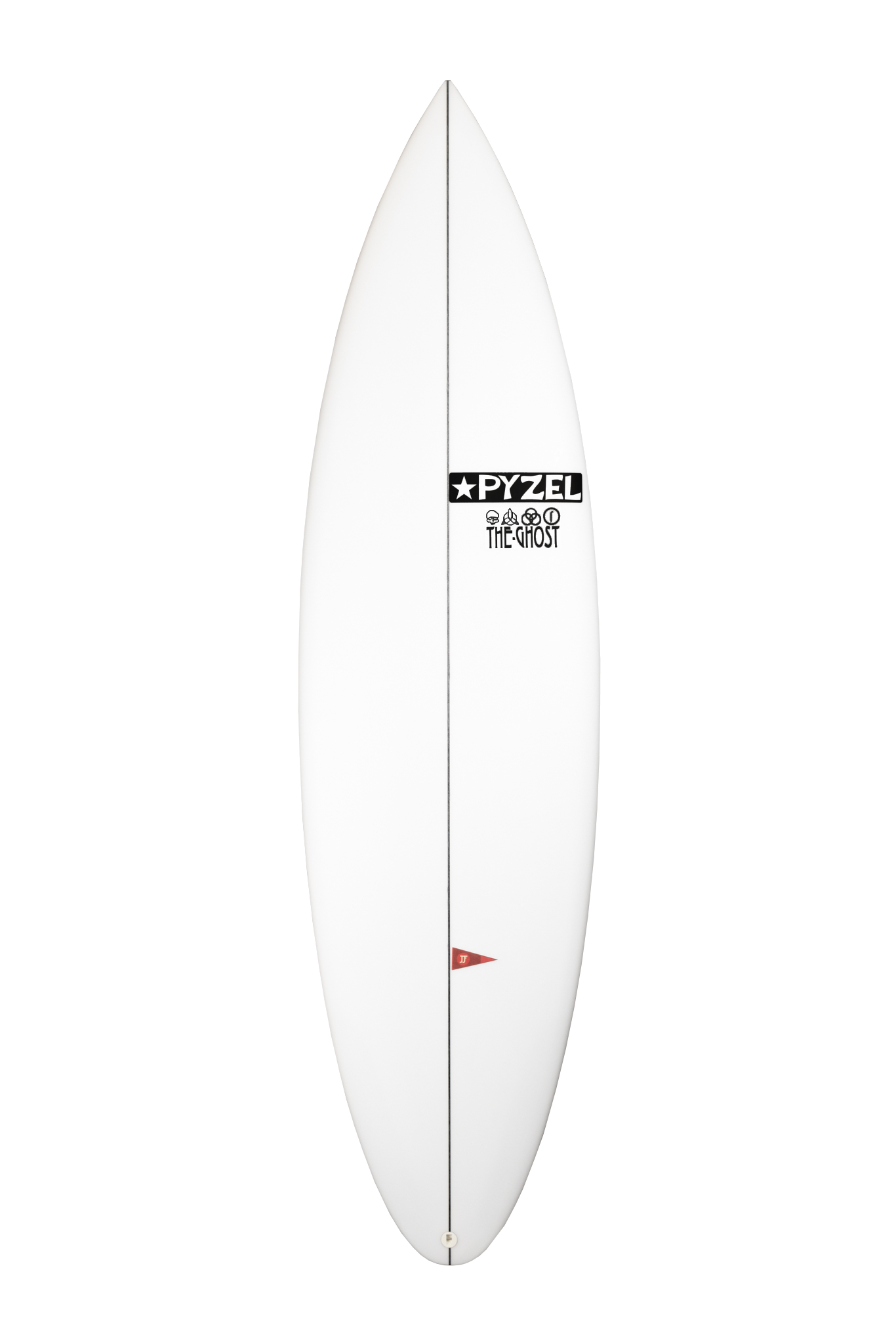
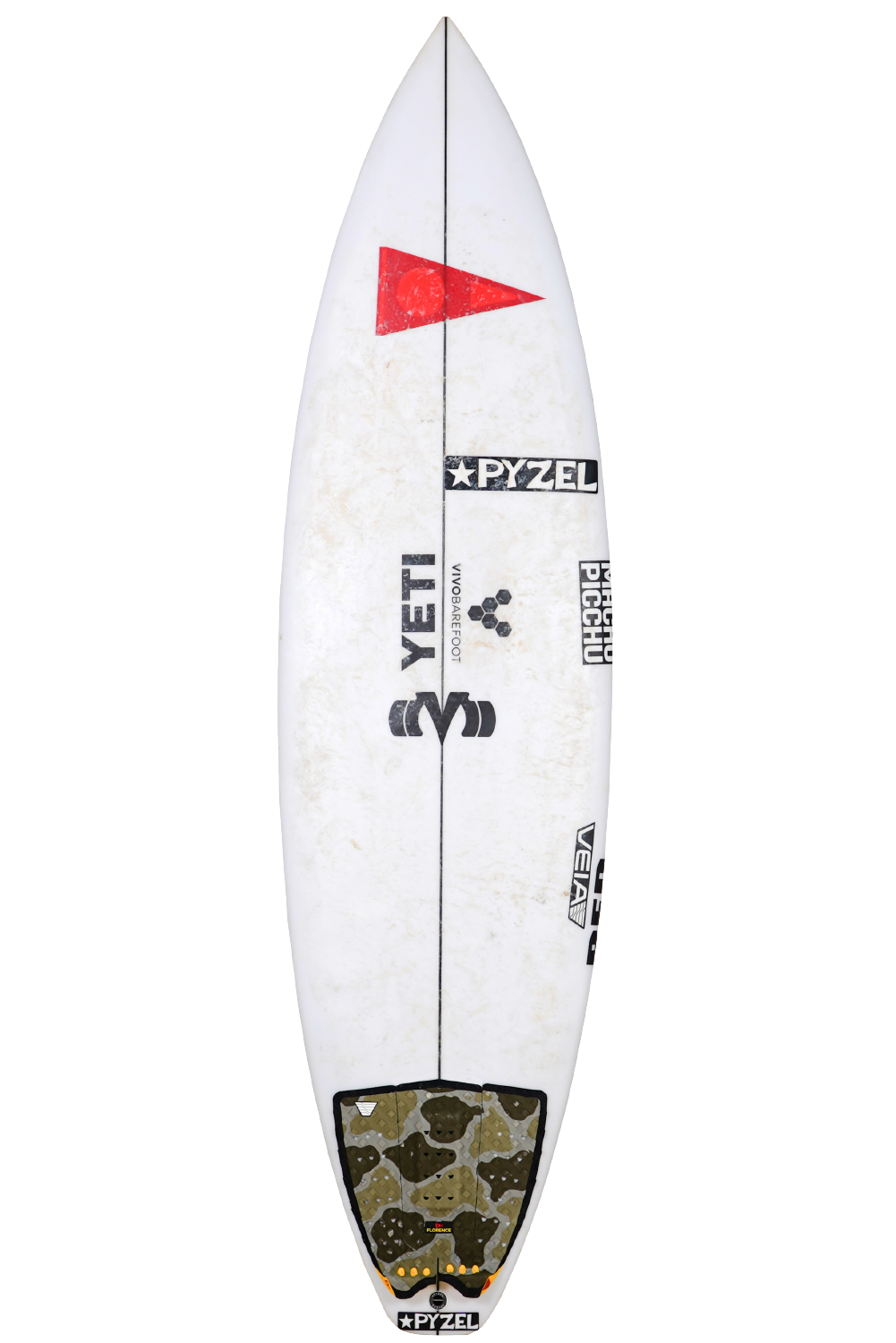
Pyzel describes a similar separation within its range. The Ghost was originally designed around hollower, more powerful waves, with a refined outline and thinned tail and rails. The Phantom takes ideas from the Ghost into a fuller outline intended for more ordinary days. Pyzel explicitly describes it as a step-down for head-high-and-under surf. That is a useful question to put to any shaper: are you buying a larger size for the same kind of wave, or a different design for the conditions you actually meet?
Clues that the size is fighting you
There is no universal length or liter cutoff. Look for patterns across several sessions on a board you know:
- You catch enough waves, but struggle to put the rail where you want it. Extra length or fuller rails may be part of the issue, especially if the board asks for a tighter turn than you can comfortably draw. Technique, fins and wave shape matter too; one awkward session is not a diagnosis.
- You catch waves, then bog whenever the face goes soft. More foam alone may not fix a rocker and outline chosen for a stronger wave. Compare an everyday shortboard or a small-wave design before ordering the same performance model bigger.
- You miss waves and arrive late even when the surf is good. The board may actually be too small for you, or you may need a little more paddle length. Do not shrink it to solve a turning problem you only encounter after a rare successful takeoff.
REAL Watersports' buying guide recommends choosing design first, then volume and dimensions. That order is especially useful here: a liter target cannot tell you whether the wave supplies enough power for the design you picked.
When sizing up a performance shape makes sense
Length can be purposeful. For a bigger or faster wave, extra rail line and paddling help may be exactly what you want. Pyzel says the Ghost can be ordered from around a surfer's height to several inches longer depending on its intended waves; it is a model-specific recommendation for a board with a pulled-in tail and performance control, not a rule for every shortboard. Taller surfers, a wider stance, or a need for more wave entry can also make a larger stock size sensible. Ask the shaper how the rails, foil and rocker scale in the size you are considering.
If your weak-wave sessions are the reason you are sizing up, try a different shape before committing. An everyday shortboard can keep familiar turns while gaining speed in average surf; a groveler makes a more deliberate trade toward very weak waves. If you are still working on independent takeoffs and basic turns, more paddle-friendly length may matter more than preserving a performance-shortboard silhouette.
Make the choice with two boards, not one number
Take the dimensions of your current board and write down what happens on your usual wave: takeoff, first section, turn. Compare a bigger size of that model with a different model at roughly the same volume. Look at rocker, outline, rail and tail, not only the chart's last column. Ask a shop or shaper what each design gives up. If you can demo, use a normal session rather than waiting for the year's best swell.
Size up the performance model when it already works in the waves you buy it for and you need a little more entry, stance room or rail line. Change the design when your regular waves do not give that model the speed it needs. The aim is to buy more useful waves and better turns, rather than a reassuring number printed beside the size.
Sources and further reading
- Channel Islands: CI Pro design and stock dimensions and Rocket Wide design and stock dimensions
- Channel Islands: Rocket Wide's original small-wave brief
- Channel Islands: Ask Al about volume in different models
- Pyzel: Ghost and Phantom
- Surf Simply: Volume to Weight Ratios
- REAL Watersports: Surfboard Buying Guide