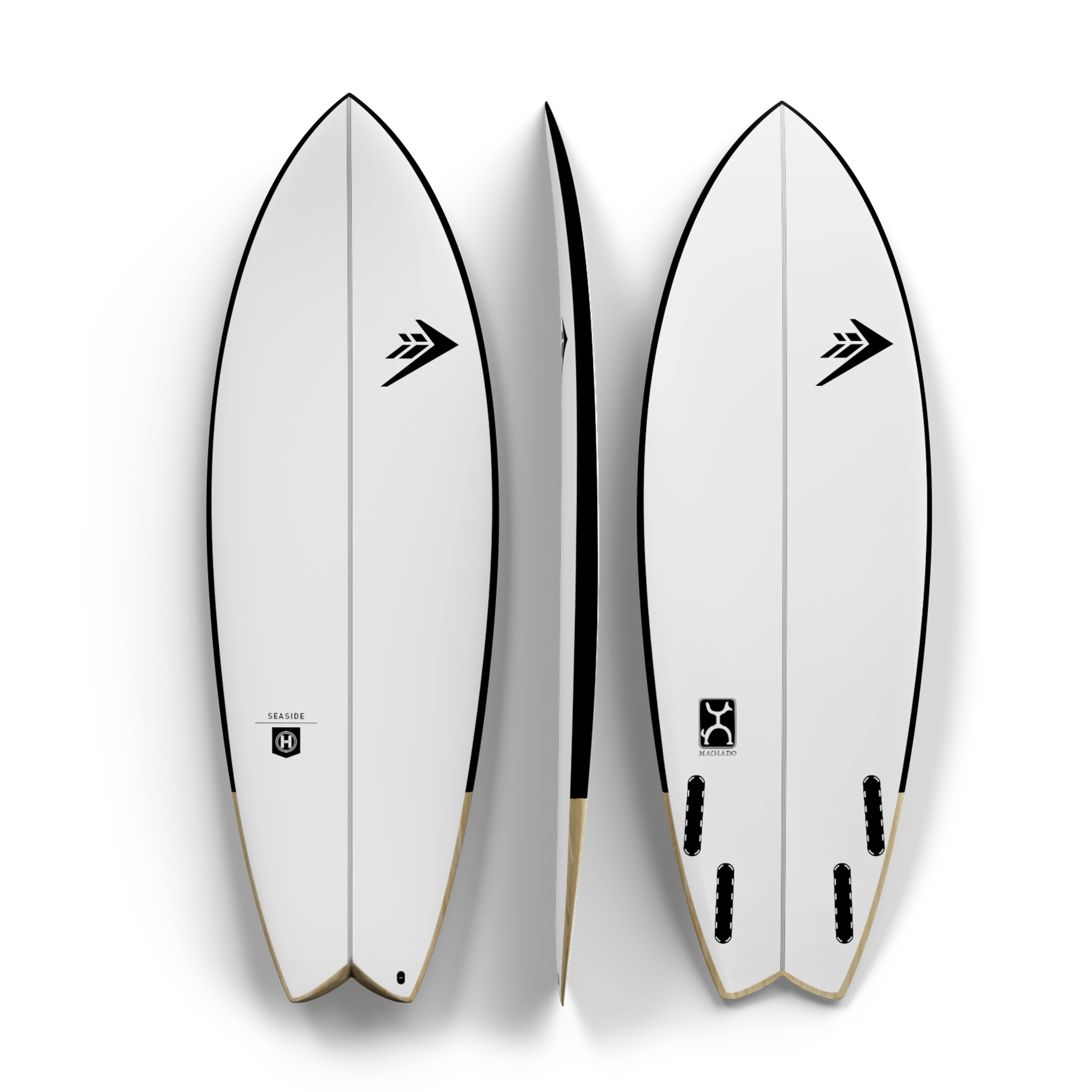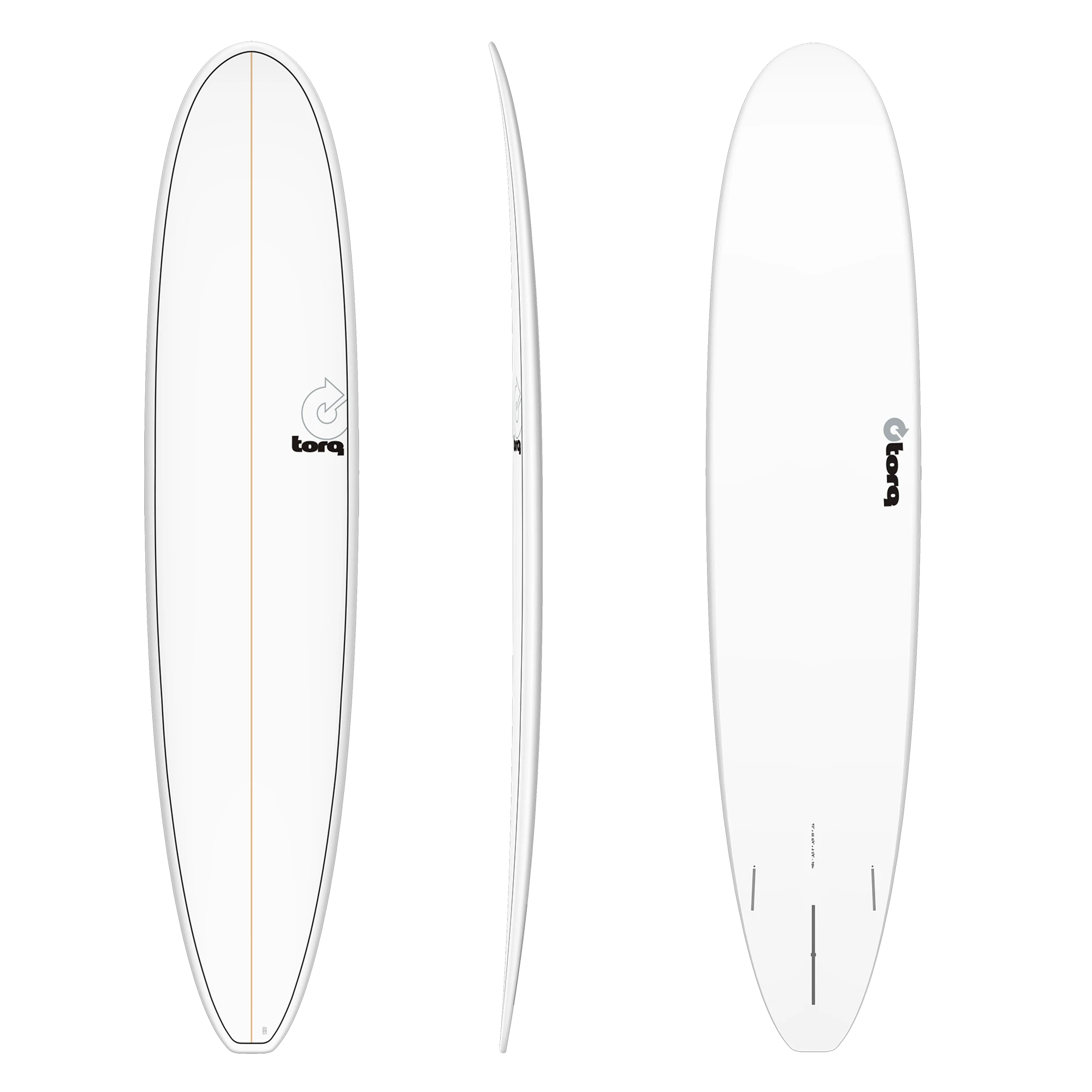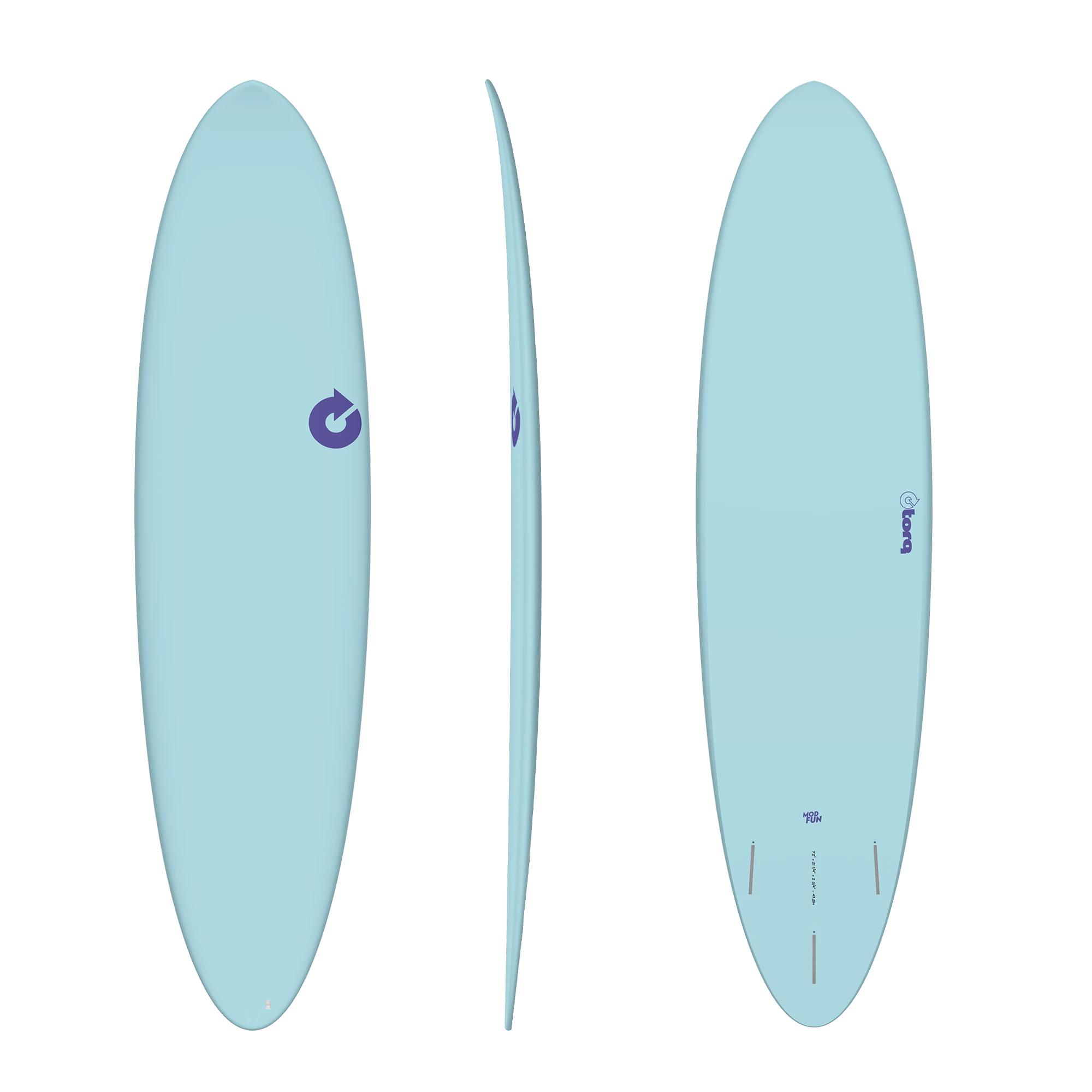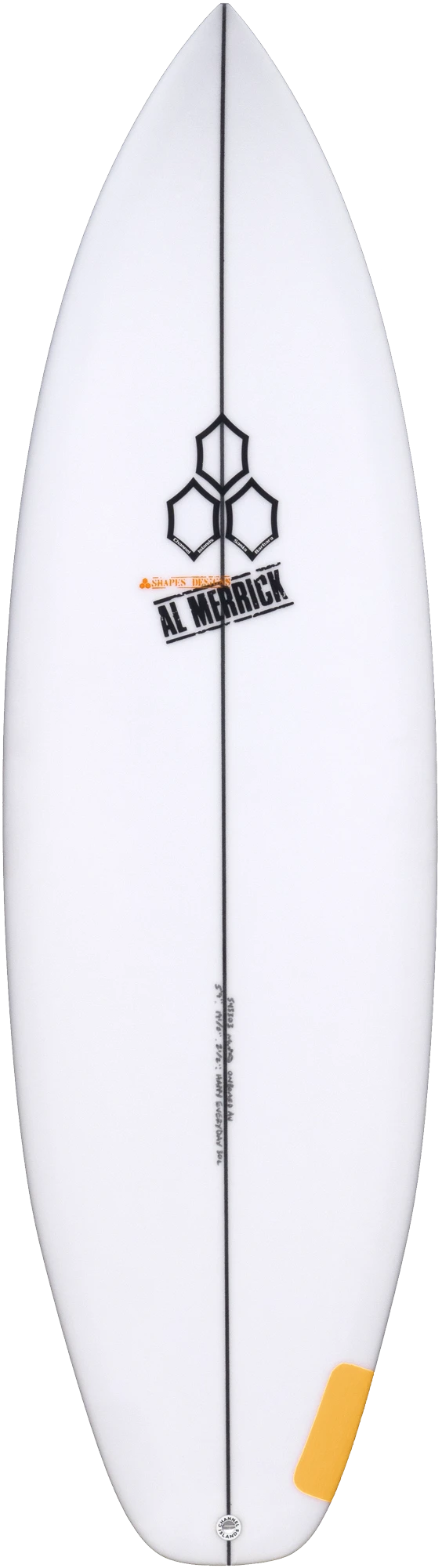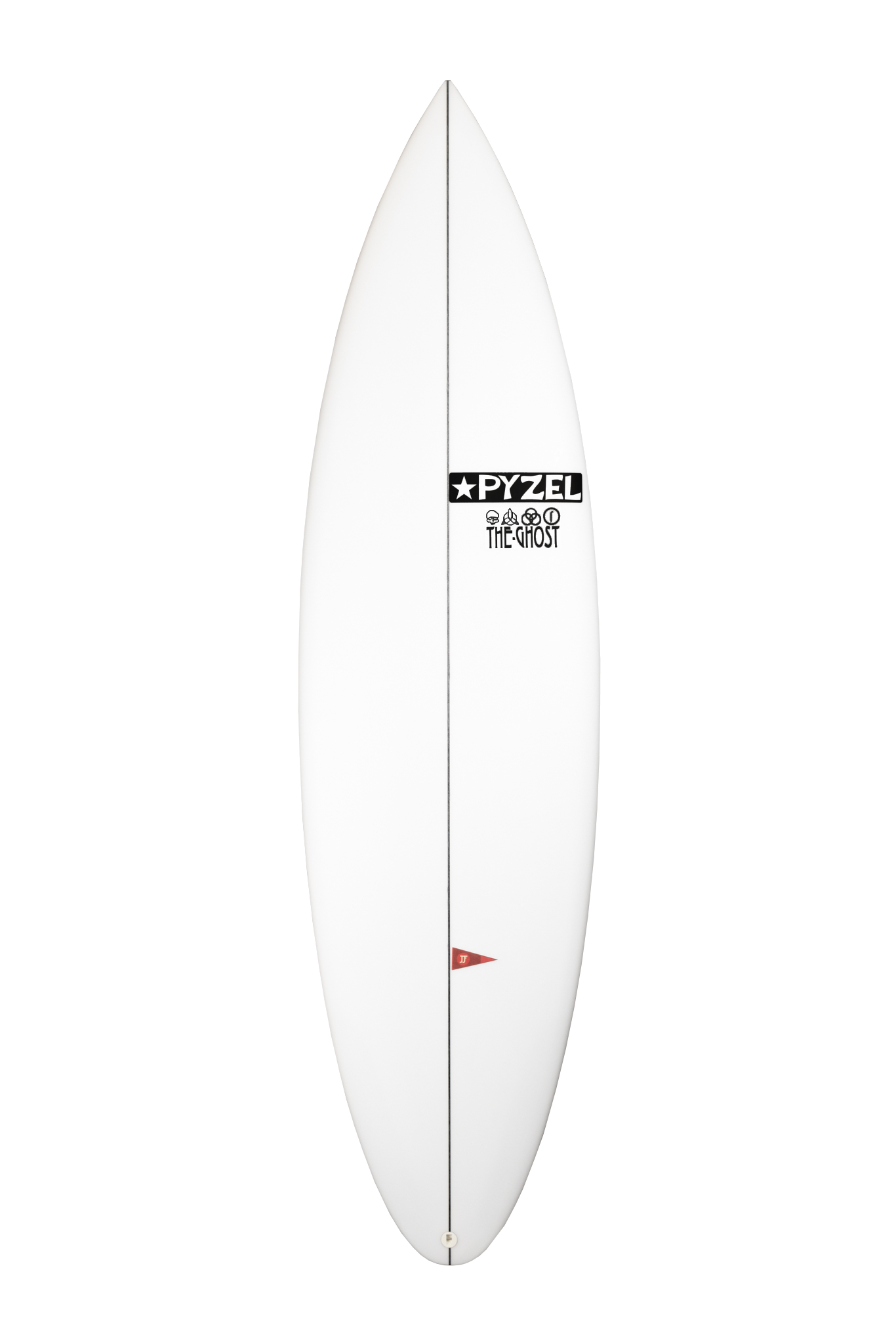
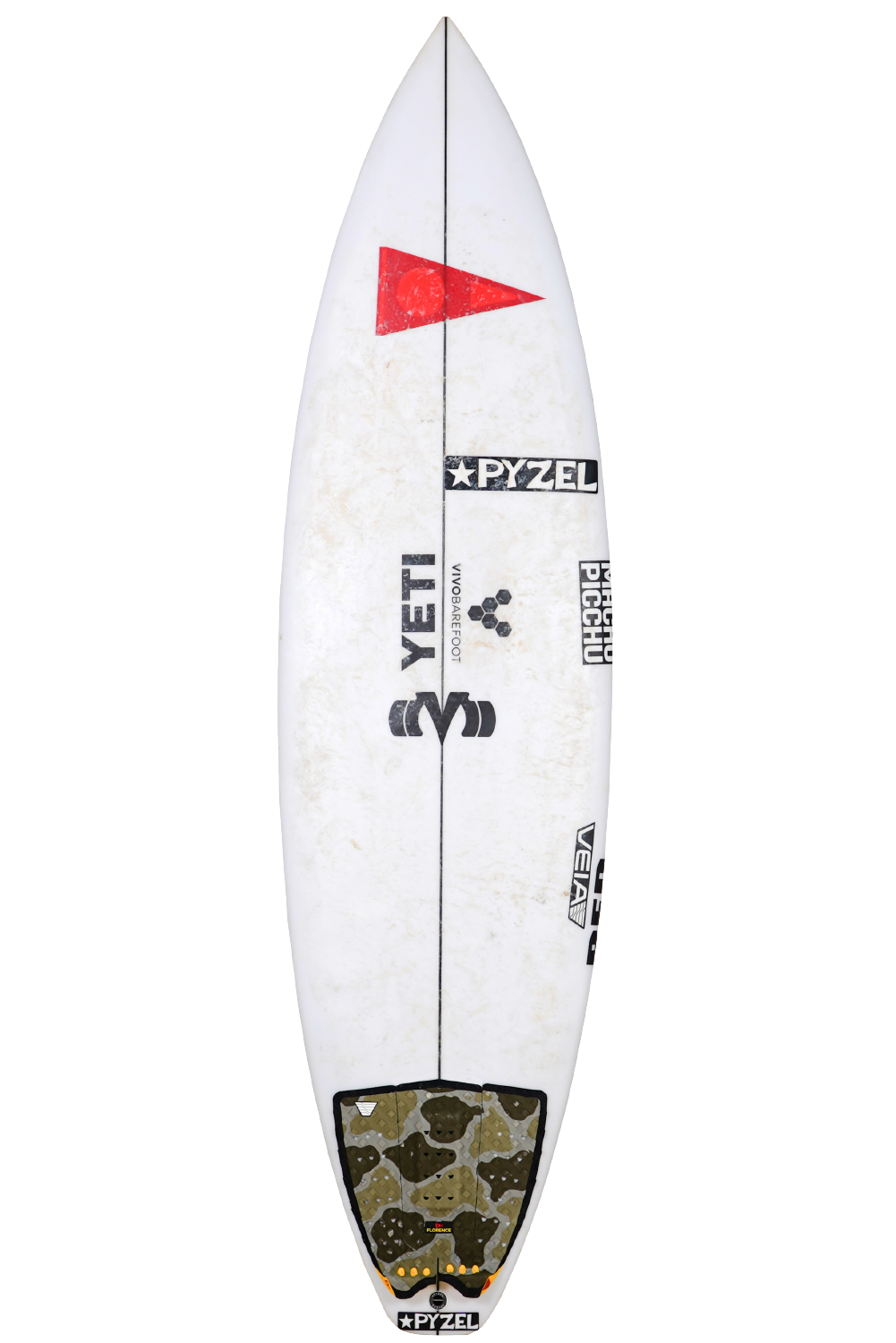
The listing says “Pyzel shortboard.” The photos show a logo, a blurry stringer and what might be a squash tail. You can probably narrow the search. You cannot responsibly name the exact model from the logo alone. Here is a way to move from plausible to well supported before you travel to see the board—or pay for it.
Ask for photos that answer different questions
Start with a full, straight-on shot of the deck and bottom, nose to tail. Ask for a side view showing the rocker, a close-up of the tail, and clear pictures of the fin boxes. Then request close-ups of every bit of writing, decal and serial number, even if it seems like a factory code. A board bag, heavy wax or large traction pad can hide useful details, so ask what is underneath rather than filling in the gaps yourself.
This is not overkill. When Hot Buttered researches one of its older boards, it asks owners for photos of the deck, bottom, rocker, foil, fins and ID numbers. A manufacturer looking at its own work wants more than one flattering outline photo; a buyer should too.
Read the writing before guessing from the shape
Brand logo: Useful for finding a maker's catalog, but it usually identifies the maker, not the model. A shaper may use the same logo across a large range. Logo position is not a reliable model code either: Pyzel's custom-order guide lets buyers change logo positions.
Model name: Look for small writing near the stringer, tail or under the glass, as well as printed model decals. Photograph the whole inscription and a tight close-up; one cropped letter can turn a model into a different one. A name written near the dimensions may even be the customer's name. Pyzel says its custom buyers can have a chosen name written on the foam near the dimensions.
Numbers: Separate a length-width-thickness string from a serial or order number. A common dimension line might read 6'0" × 19 3/8" × 2 9/16", sometimes followed by liters. A second number may be an internal board ID. Shapers Australia's dimensions guide explains what the three physical measurements describe. If the writing is illegible, ask the seller to measure the board rather than assigning a meaning to each digit from a low-resolution photo.
Signature or initials: Keep the photograph, but do not turn a mark into a claim that a famous person hand-shaped the board. For a collectible where provenance changes the price, ask the maker or a specialist. Hot Buttered treats authentication as research against its records, with multiple views and ID numbers—not a glance at a decal.
Compare the whole board with the catalog
Search the apparent maker and model in Board Hogs' board catalog. Put the listing photos beside the model's outline and product description. Check nose and tail shapes, fin setup, approximate length, any named construction, and whether a version or year is stated. Then open the maker's current or archived product page for its own dimensions and design notes. The catalog is a shortlist tool, not a certificate for the board in somebody's garage.
Here is why the dimensions alone do not settle it. Pyzel's published stock charts list both the 6'0" Ghost and 6'0" Ghost Squash at 19.38 inches wide, 2.56 inches thick and 29.9 liters. Pyzel says the changed tail outline is the point of the Ghost Squash. A seller who supplies only “6'0, 29.9 L” has supplied a size, not an identity. Compare the Ghost and Ghost Squash catalog entries, then ask for a square-on tail photo.
Expect exceptions. A custom order can change dimensions, tail, fins, artwork or glassing from a stock chart. Pyzel's order guide explicitly offers choices for tail, fin system, glassing and logo placement. Conversely, a board that looks exactly like a stock photo might be a different size or generation. Treat one mismatch as a reason to ask, not automatic proof that the seller is wrong.
Use fins and construction as supporting clues
Count the boxes and photograph them with the fins removed if the seller can do that safely. A twin, thruster, quad, 2+1 and five-box board offer different clues, but fin count is not a model fingerprint; custom boards may use a different setup. Identify the system separately. FCS II uses its own plug and tool-free fitting method, while Futures lists separate fin-box hardware. A fin brand printed on removable fins tells you even less about the board's model.
Look for an explicit construction label, order record or maker description. Do not infer “epoxy” solely from a white finish or assume a visible stringer proves the whole build. Firewire, for example, describes distinct Helium, I-Bolic and Proflex constructions; a clear photo of a construction mark can help narrow a version. If construction affects repair or price, ask for documentation or the maker's confirmation.
When the evidence still does not agree
Ask the seller three direct questions: What exact model and version was it sold as? Is it stock or custom? Do you have the original order, receipt or serial number? A missing receipt does not by itself make a used board illegitimate, but an answer can help you decide how much certainty you actually have.
Manufacturers may be able to help with the right evidence. Rusty South Africa says it can use an older board's dimensions, model information, photos or serial details as a reference, while warning that exact replication is not guaranteed. Firewire asks for a serial number when an owner contacts it about a board issue; Surftech's warranty policy also treats a visible serial as important. Neither statement means every serial is publicly searchable or that a number alone proves a seller's story. Send the maker clear photos and the number if the identification matters to your purchase.
If the answer remains uncertain, describe the board honestly: “Pyzel, 6'0", likely Ghost family; exact model unverified” is more useful than a confident but unsupported model tag. When browsing used boards in the Board Hogs marketplace, save the listing photos and ask the same questions before committing. The goal is to know which board is in front of you, not to win a guessing game from a thumbnail.
Sources and further reading
- Hot Buttered: what it requests for surfboard authentication
- Pyzel: custom options, logo positions and stringer writing
- Pyzel: Ghost and Ghost Squash design and size charts
- Shapers Australia: reading surfboard dimensions
- FCS II fitting guide and Futures fin boxes
- Firewire: construction overview, quality pledge, Rusty support and Surftech warranty