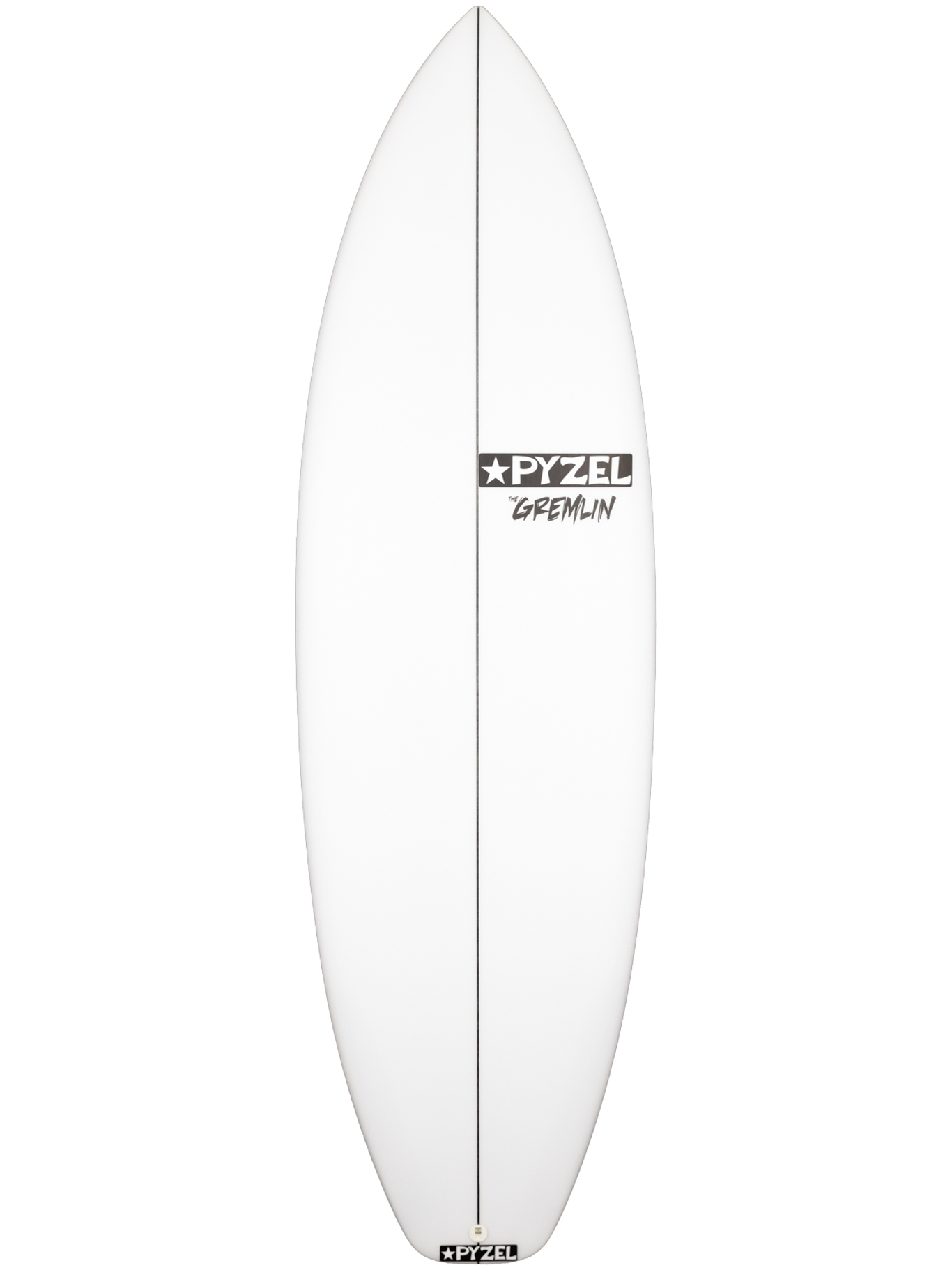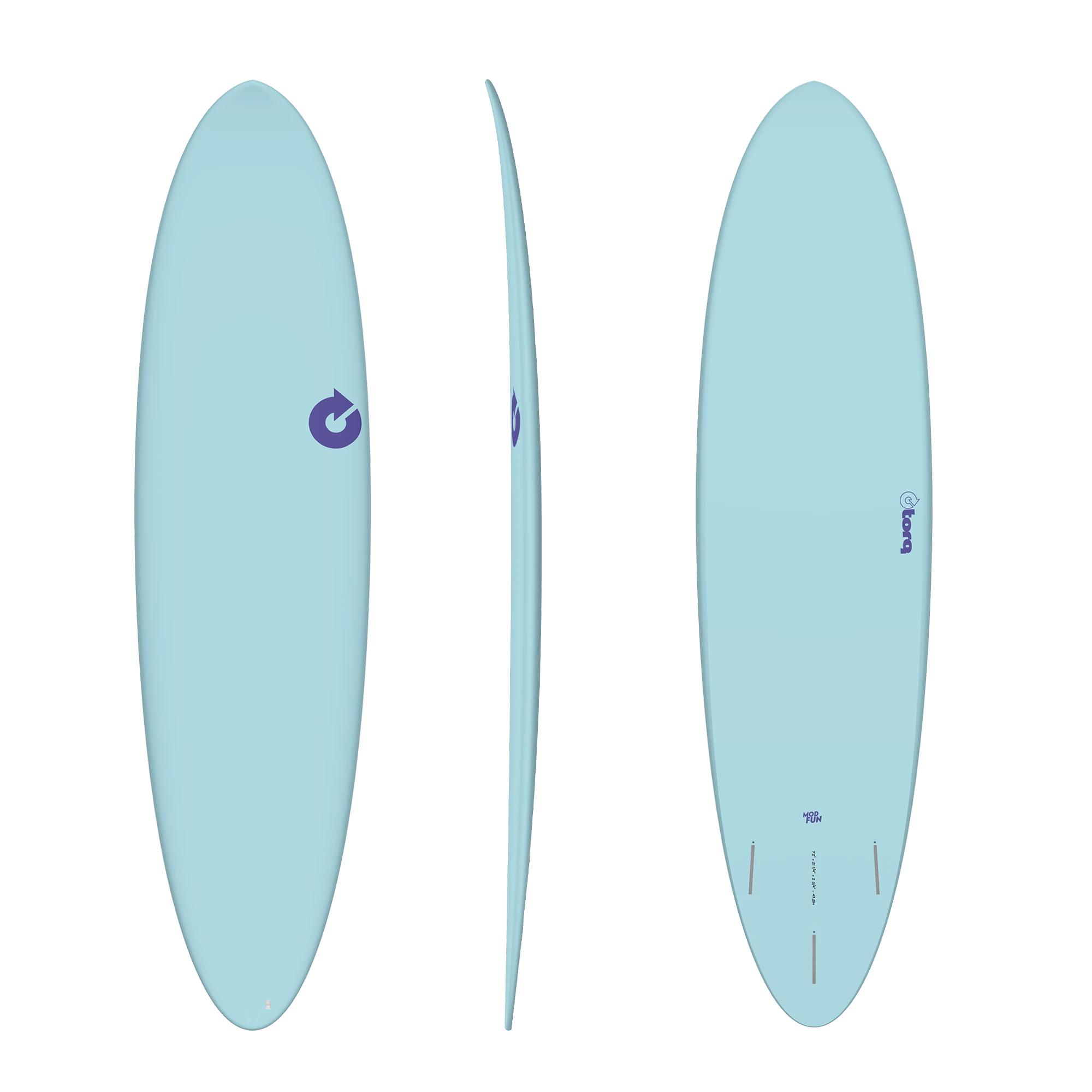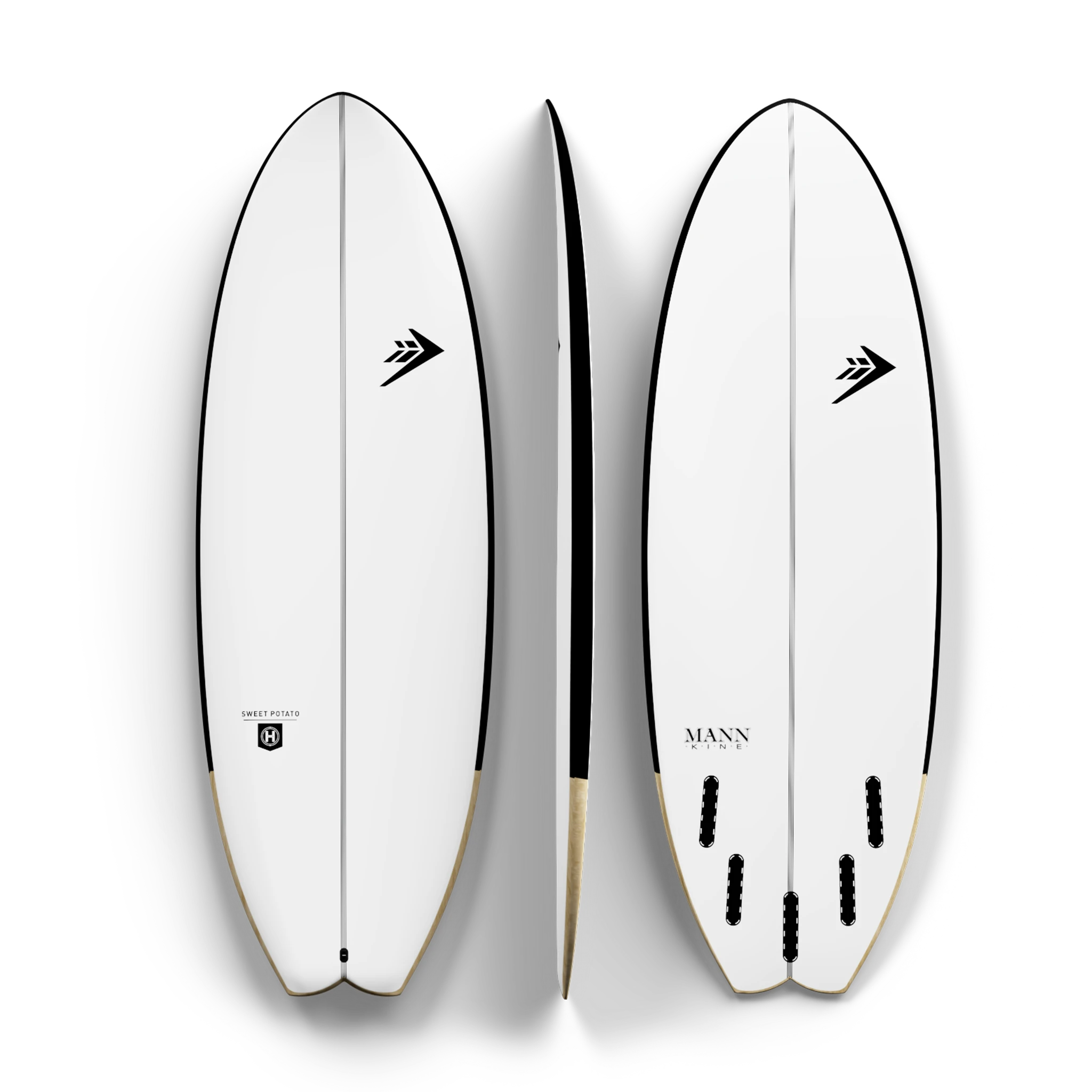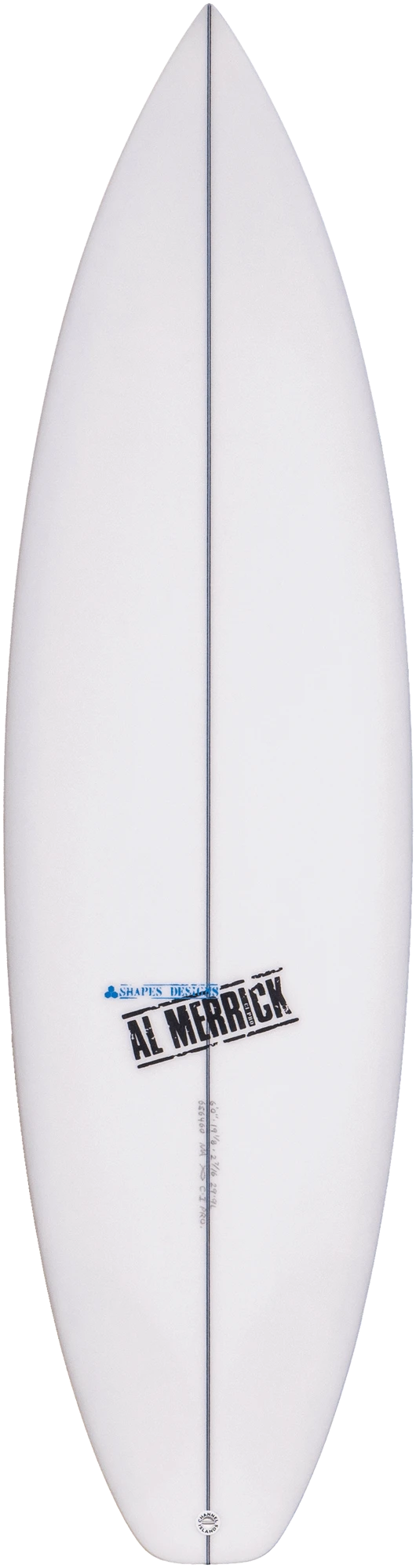
The little number followed by “L” is useful. It can also send you shopping in circles. You find a board you love at 30 liters, decide 30 is your number, and dismiss everything at 28 or 32. Meanwhile, two 30-liter boards can have different lengths, widths, rockers and reasons to exist.
So how much volume do you need? Start with a board you know in waves you actually surf. Use its volume as a reference, then ask what you want the next board to do differently. If you don't have a useful reference board yet, borrow or demo a few shapes before treating any calculator's output as a purchase order.
What the liter number tells you
Volume is the space a board occupies, measured in liters. More volume generally means more flotation for the same surfer, which can make paddling and catching waves easier. Your weight matters to that relationship: 40 liters under a 55 kg surfer and 40 liters under a 95 kg surfer are different starting points. Surf Simply's volume-to-weight explainer lays out the reasoning and, refreshingly, says there is no hard-and-fast correct size.
That number cannot tell you where the foam is. It doesn't describe a wide nose, a thin rail, the curve of the rocker, or how much length is in the water when you paddle. It also doesn't tell you whether a board suits the slow waves at home or the punchier beachbreak you visit twice a year. That's why a volume calculator can help you narrow a range but cannot choose a model for you.
Two boards, exactly 29.4 liters
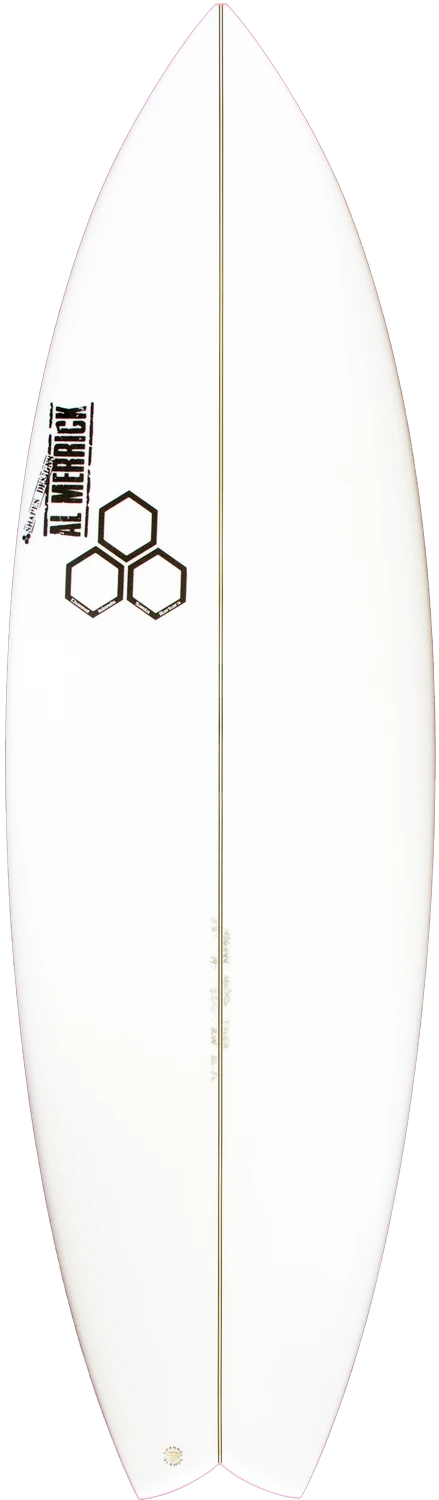
Consider the stock 5'9 Channel Islands Happy Everyday and 5'7 Firewire Dominator 2.0. Both manufacturer charts list 29.4 L. The CI is 5'9 × 19½ × 2 7/16; the Firewire is 5'7 × 19⅞ × 2⅜. Same displacement on the spec sheet, but the Dominator is shorter and wider.
The design briefs diverge, too. Channel Islands positions the Happy Everyday between its performance shortboard and a groveler, with lowered entry and exit rocker and a curvier outline than its Two Happy. Firewire describes the Dominator 2.0 as an accessible shortboard with a squash tail, refined rails and a double-barrel-to-vee exit. Those details don't prove which one you will prefer; they show why equal volume isn't an equal-shape comparison. See the manufacturers' Happy Everyday design notes and Dominator 2.0 design notes before picking from the charts.
The lesson holds across more distant board families. A long, narrow mid-length and a much shorter, wider hybrid might sit close in liters while asking for different positioning, lines and turns. If your aim is earlier entry and long, drawn-out lines, adding liters to a shortboard may be less helpful than considering the different shape. If you want tight turns in pockety surf, a mid-length with your familiar volume may still be the wrong tool. Those are design-based expectations, not ride-test findings.
Find a starting range from your own sessions
Think about the board you ride most often, and answer these before opening a product chart:
- Are you getting into enough waves? If you routinely miss catchable waves while paddling well and positioning sensibly, more flotation or a different outline and length may help. If you're already catching plenty, buying liters for their own sake may solve nothing.
- What happens after the takeoff? A board can paddle comfortably but feel cumbersome through the turns you're trying to learn. Another can turn easily yet leave you arriving late to every wave. Write down which problem is real, rather than calling both “wrong volume.”
- What are your usual waves? A forgiving shape for a slow, soft face may feel misplaced in a steeper wave. Read each model's intended conditions, then compare that brief with your local break.
- How often are you surfing? Fitness and consistency change how useful your current size feels. A number copied from a professional rider, or from a version of yourself who surfed every day, may be a poor target now.
Surf Simply makes a helpful distinction: choose a board that lets you practice the maneuver you want to improve, rather than treating a shorter board as proof of progress. Its coaching guide uses volume-to-weight ranges as learning aids, not universal prescriptions. That's a better way to use a calculator: a prompt for a demo, conversation or shortlist.
When the number is particularly easy to misuse
Sizing up a performance shortboard. If your shortboard is frustrating in weak surf, the answer may be a fuller, flatter or wider small-wave design. A long version of the same performance shape still carries that design's outline and intended waves. Compare the model's size chart and its design description.
Buying across constructions. Volume measures displacement, not construction. A PU/polyester board and an EPS/epoxy board at the same listed liters can differ in weight and feel. Don't assume the construction difference changes the printed volume, or that identical liters guarantee an identical ride.
Making a big category jump. Going from a foamie or longboard to a shortboard changes far more than a ratio. Length, stability, wave entry and the skills the board asks of you all change. Keep the board you can catch waves on while you test a smaller one, if you can.
Trying to predict duck-diving from one cutoff. Your body weight, technique, board width and the way foam is distributed all matter. Test the actual board if duck-diving is a buying requirement; “under X liters” isn't a promise.
A better way to compare candidates
Pick two or three boards intended for the waves and turns you care about. Compare volume, length, width, thickness, outline, rocker, fin setup and construction together. Then ask a shaper or knowledgeable shop what the foam distribution and rails do that the four numbers miss. Surf Simply's explanation of board hydrodynamics is a useful reminder that how a board travels on a wave involves more than flotation alone.
You can start a shortlist in Board Hogs' model catalog and put candidates side by side in the board comparison tool. Keep your current board in the comparison, too. The most useful question isn't “What literage should someone like me ride?” It's “What would I gain, and what would I give up, compared with the board I know?”